
Nikro Air Duct Cleaning in Spring Branch: A Homeowner’s Guide
Here’s a question we hear more than we’d like: “The machine was running, so it must have been working, right?” Not always. A Nikro unit pulling the wrong negative-air pressure in a leaky flex-duct system can stir fine dust into the air your family breathes instead of capturing it. The equipment’s reputation holds only when the setup is right. This guide explains what Nikro’s machines actually do, and what you should watch for while a technician is in your Spring Branch home.
If reading this makes you realize you’d rather have someone set it up correctly than puzzle through it yourself, call (855) 359-1727 and we’ll talk through your system.
What does a Nikro negative-air machine actually do?
Nikro’s HEPA-filtered negative-air machines do one job: they keep the working zone under slightly lower pressure than the rooms around it, so airborne debris moves toward the filter instead of into your living space. Suction strength is almost a side effect. Containment is the point.
Mechanically, the unit draws air through a HEPA filter and discharges it clean, creating a pressure differential. When that balance is right, dust dislodged from the duct interior travels into the collection point and stays there. When it’s wrong, the same dust goes wherever the pressure gradient pushes it, and that can be your hallway.
Three things determine whether the setup works:
- Duct volume. A larger system needs enough airflow to establish real negative pressure. Too small a unit and you get motion without capture.
- Leak rate. Every disconnected joint and torn flex section leaks. Before the machine goes on, those open ends need sealing or the pressure simply bleeds away.
- Collection point placement. Where the hose connects, and how well it’s sealed to the register or plenum, decides how much of the system is actually under control.
In our experience, the difference between a clean job and a dust cloud in the hallway comes down to these three variables, not the brand on the machine.
Why containment matters more than suction strength in Spring Branch homes
Spring Branch sits in a part of Texas with long, mild stretches and plenty of dry, windy days. That means fine particulate is a constant. Attic insulation fibers, pollen, and construction dust all find their way into return air. Those particles are small enough to stay airborne a long time once disturbed. That’s why a machine that agitates without containing is worse than no cleaning at all.
Containment means three things are handled before the equipment runs:
- Supply and return registers are sealed off except the one the collection hose connects to.
- Open duct ends are capped or taped so the machine isn’t fighting an open chase in the attic.
- The air handler is isolated so debris can’t get pulled into the blower or coil.
When those three are done, a Nikro unit’s negative pressure does exactly what it’s supposed to. When they’re skipped, fine dust can aerosolize into living space. If you’re scheduling air duct cleaning in Spring Branch, ask how the technician plans to contain debris before anyone touches a hose.
Which duct types does Nikro work best on, and where does it fall short?
Nikro is a collection system, not a standalone cleaning method. It captures what other tools loosen. Where it shines and where it needs help depends entirely on your duct material.
- Flex duct: The ribbing traps dust in every groove. Nikro captures the debris, but you still need a rotary brush or air whip to knock it loose first. This is where the pressure-balance problem is most obvious, because flex leaks at joints and fittings.
- Sheet metal: Smoother interior, fewer places for dust to hide, so Nikro alone paired with air agitation does well. The limitation is tight turns and long horizontal runs where agitation tools can’t reach.
- Fiberboard duct: The interior is porous. Negative air holds fine debris well, but fiberboard liners can shed their own material if brushed aggressively. Slow, low-agitation collection is the right approach here, and Nikro handles that well.
A technician who reaches for Nikro without any agitation tool on a flex-duct system is using half the toolkit. The equipment is designed to work in tandem with brush systems. If a job involves hvac cleaning of the full air pathway, the same logic applies to the blower and coil, which also need independent agitation before collection.
What can I check during a job to confirm the setup is right?
You don’t need to know the pressure numbers. You can check the physical signs. These are the visual cues a homeowner can observe without any technical background:
- Are the registers taped off? Every supply and return except the active collection point should be sealed. If you see open registers while the machine runs, dust is being pushed into those rooms.
- Is the machine’s discharge visibly clean? A HEPA-filtered unit should discharge air you can’t see through. If you see visible dust at the exhaust, the filter is compromised or wasn’t sealed correctly.
- Does the hose connection look airtight? The hose from the machine to the register or plenum should be taped snugly, not just pushed on.
- Is the air handler isolated? A plastic sheet or tape barrier over the blower opening is standard before the machine runs.
- Before and after photos. Any professional setup will show you what the duct interior looked like before and after. If photos aren’t offered, ask.
These checkpoints are also useful during dryer vent cleaning, where the same collection principle applies to a much shorter, much more fire-critical run of duct. A lint-blocked dryer line in Spring Branch is a separate hazard from HVAC dust, and it deserves the same contained approach.
Why is Nikro common in post-remediation and construction-dust work?
Nikro negative-air units show up in mold remediation, water-damage drying, and construction-site cleanup because those fields require verifiable containment. The equipment is designed to hold a defined work zone under negative pressure, filter the exhaust through HEPA, and keep particulate from migrating. That’s the same demand a heavy dust load in a residential system creates after a renovation, a roof replacement, or a large drywall project.
Abatement Technologies HEPA equipment follows the same design logic, which is why those two brands show up in the same conversations. If your home recently had work done and you’re seeing a fine gray film on surfaces, negative-air collection is a more appropriate response than a standard shop-vac pass. We reach for Nikro or Abatement Technologies for those jobs, alongside a Guardsman-branded sanitizing step after cleaning to treat what dust leaves behind.
Honeywell and Aprilaire filtration products also come into the picture after a heavy-dust event. Capturing debris is step one. Better filtration at the air handler keeps the next batch out.
How does Nikro integrate with Rotobrush and manual agitation?
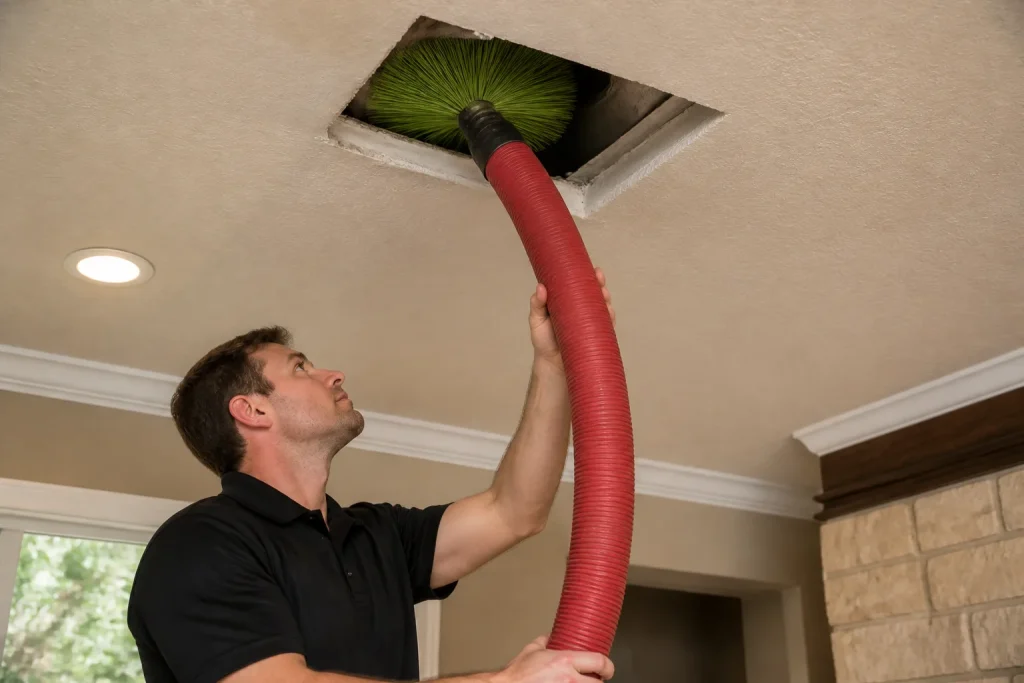
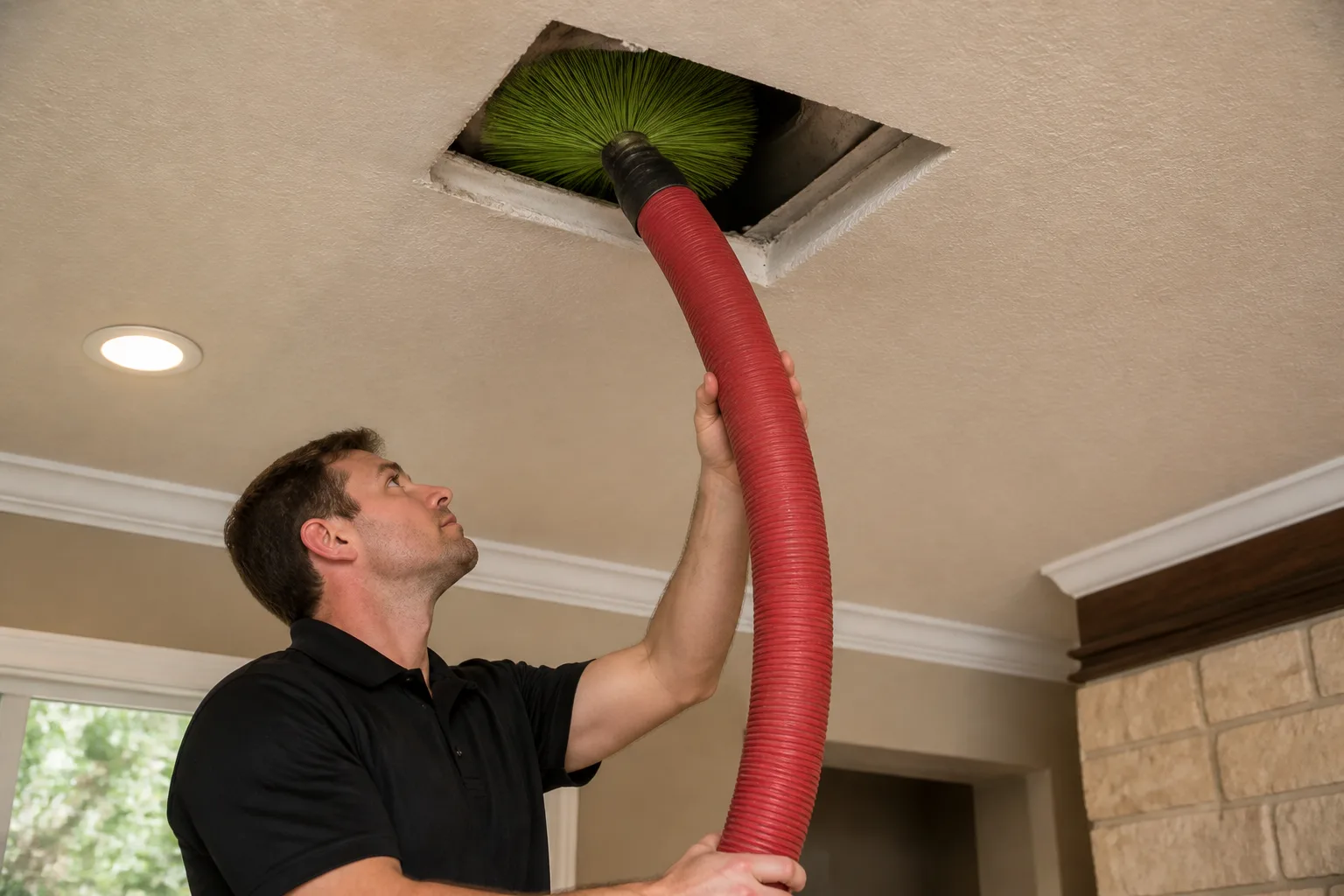
Think of it this way: the Rotobrush loosens, the Nikro collects. Neither does the other’s job. Rotobrush rotary brush systems and air whips agitate the interior surfaces where dust clings. Nikro then holds the dislodged material under negative pressure until it reaches the filter. Run only the brush and you make a mess. Run only the Nikro and you filter the air without cleaning the walls of the duct.
The order matters too. A proper sequence:
- Contain and seal the system.
- Set negative air running.
- Agitate section by section, working toward the collection point.
- Sanitize (Guardman-branded, if included).
- Replace filters and confirm before-and-after condition.
Any duct repair or sealing found during the inspection, like a disconnected elbow, should be addressed before the final pass so the system holds pressure afterward. Doing it in that order is why we offer duct repair and sealing in-house, on the same visit.
If you’re on the fence about tackling this yourself, the short answer is: don’t. Containment pressure is real engineering, and the downside of getting it wrong is dust in your home, not a clean duct. When to call a pro: when the duct count is high, the system leaks, or you’ve recently had construction work. Call (855) 359-1727. We answer 24/7. Fast dispatch from 7am to 7pm, Sunday through Friday.
Related services in Spring Branch: if you’re considering a full Air Duct Cleaning Spring Branch visit or wondering how the whole system was set up in the first place, start there.
The Bottom Line
Nikro equipment is only as good as the setup around it. The brand matters less than whether the technician sealed open duct ends, isolated the air handler, and balanced negative pressure against your system’s actual volume and leak rate. Any Duct Repair & Sealing or full-pathway job in Spring Branch gets the same measured treatment. If you can’t verify the setup, ask. If you’d rather not think about it, call and we’ll handle it.
If you’re in Spring Branch and need help, Air Duct Cleaning Spring Branch offers free estimates, call (855) 359-1727. One flat price, agreed before work starts, with before-and-after photos of your own ducts. Our technicians have up to 14 years of experience with this equipment, and estimates are free.
Frequently Asked Questions
Yes, in every way that matters. A shop vac pulls air and dust into a small container that can aerosolize fine particles back into the room. A Nikro negative-air unit is HEPA-filtered and designed to hold a system under pressure so debris travels toward the filter instead of floating free. The unit itself is only part of the job, though. Sealing and setup determine whether it works correctly. Call (855) 359-1727 for a free estimate on your Spring Branch home.
You should see the unit connected to a sealed register or plenum, and you should see taped-off registers around the house before any agitation starts. Ask for before-and-after photos of your duct interiors. A technician who set up correctly can show you exactly that. Call (855) 359-1727 if you’d like a walkthrough of what the visit will look like.
It can, but flex duct is the hardest case because every joint and rib is a source of both dust and pressure loss. A technician using Nikro on flex needs to pressure-seal open ends first and pair the machine with a rotary brush from Rotobrush or similar. Call (855) 359-1727 and we’ll talk through your specific duct setup.
Every three to five years is typical for most homes, sooner if you’ve had a renovation, a new pet, or a noticeable musty smell. Spring Branch homes that run the system hard during dry, dusty stretches may need a look sooner. It’s about condition, not a calendar. Call (855) 359-1727 and we’ll give you an honest read on whether it’s time.
Written by the team at Air Duct Cleaning Spring Branch.
Need Air Duct Cleaning Help?
Call Air Duct Cleaning Spring Branch - the local pro we connect you with is licensed and insured, with free written estimates in Spring Branch.
(855) 359-1727