
Last updated November 25, 2026
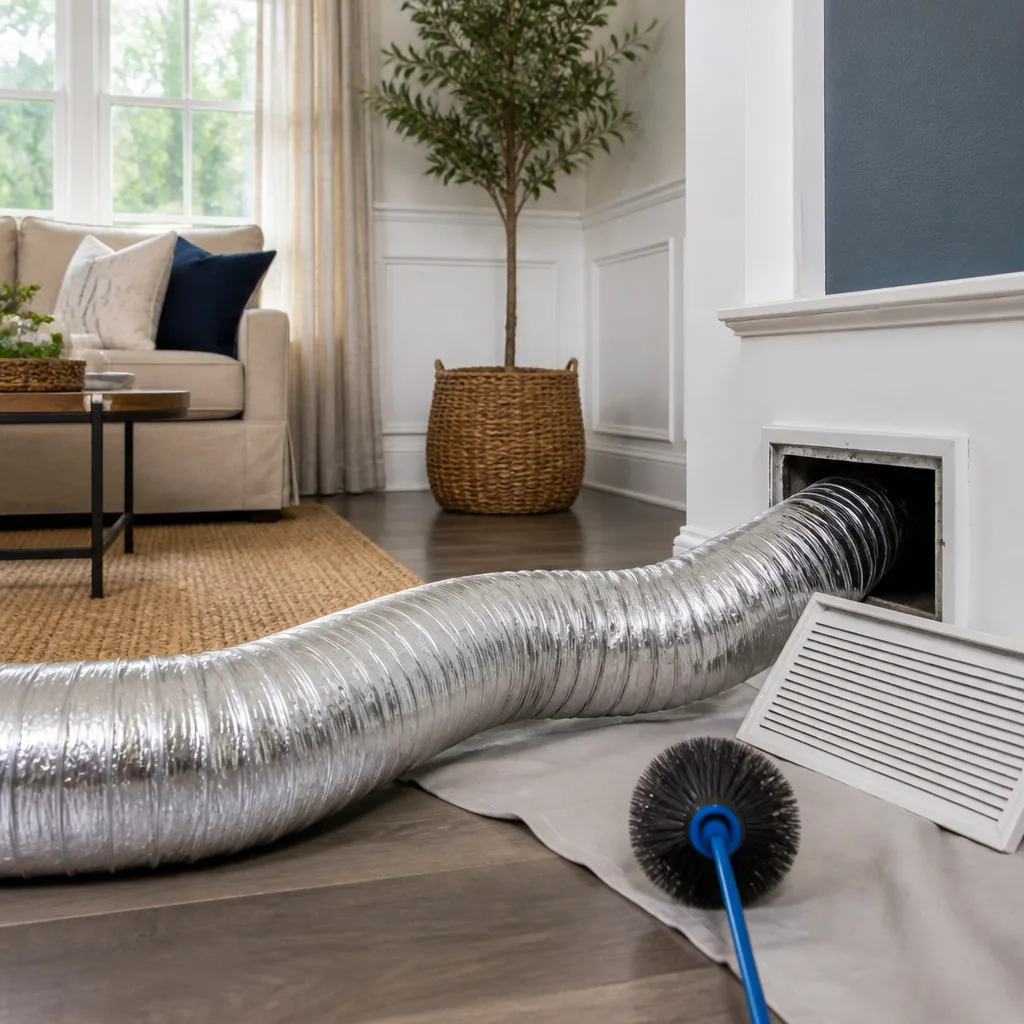 Whole-home duct cleaning
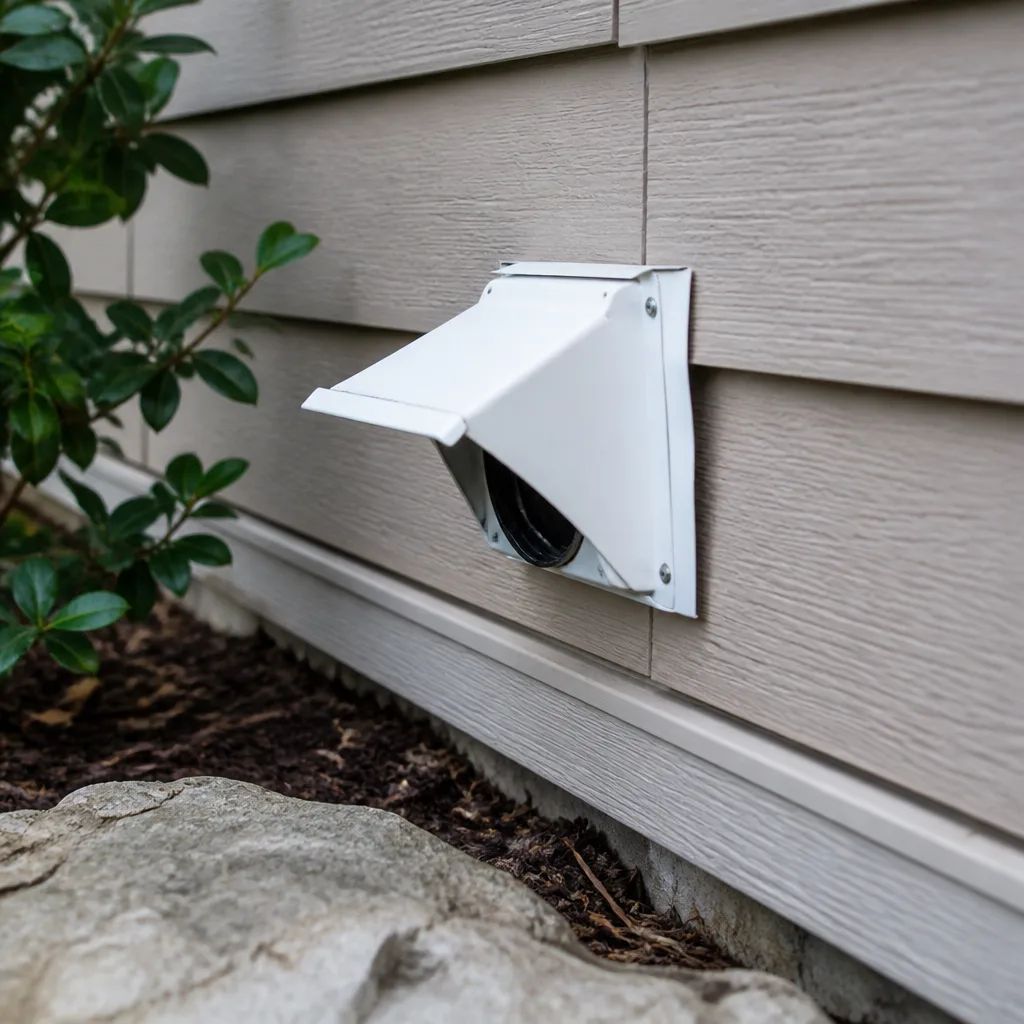 Dryer vent cleaning
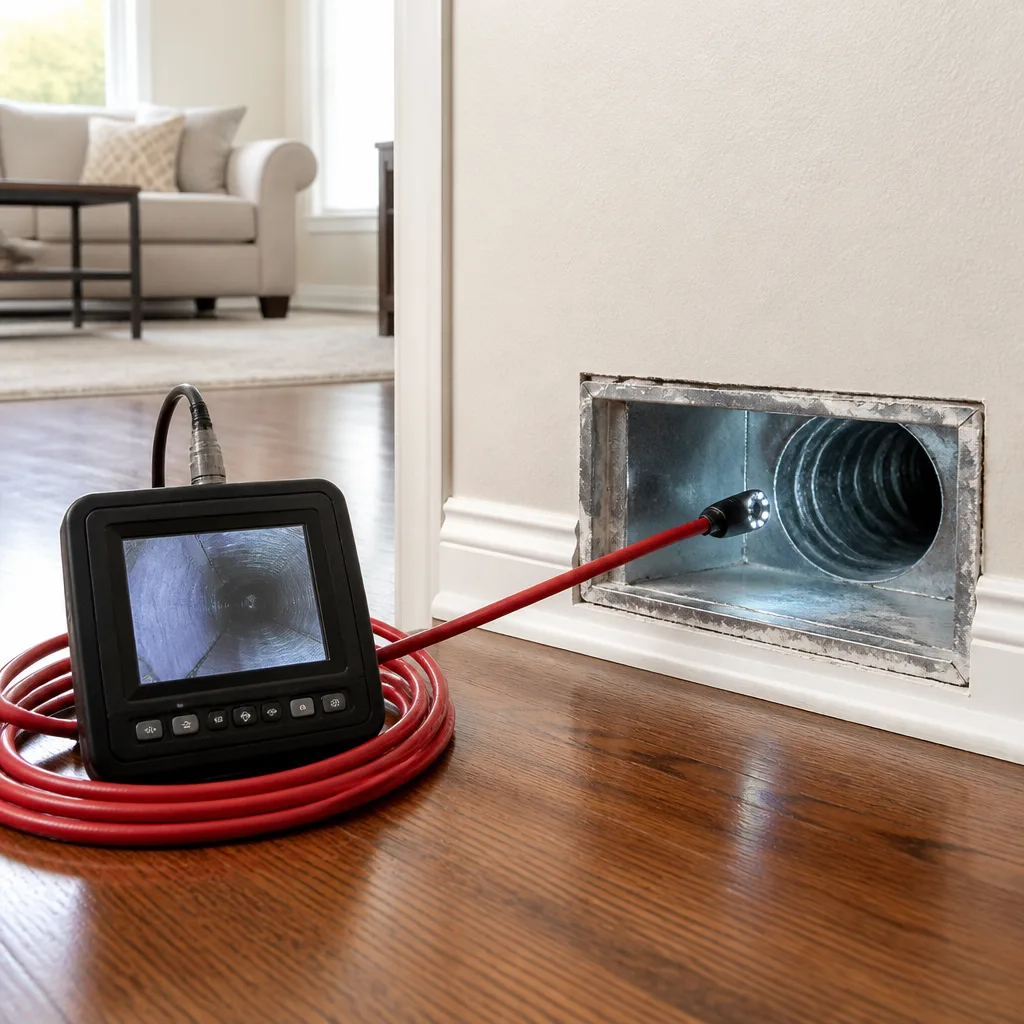 Camera inspection
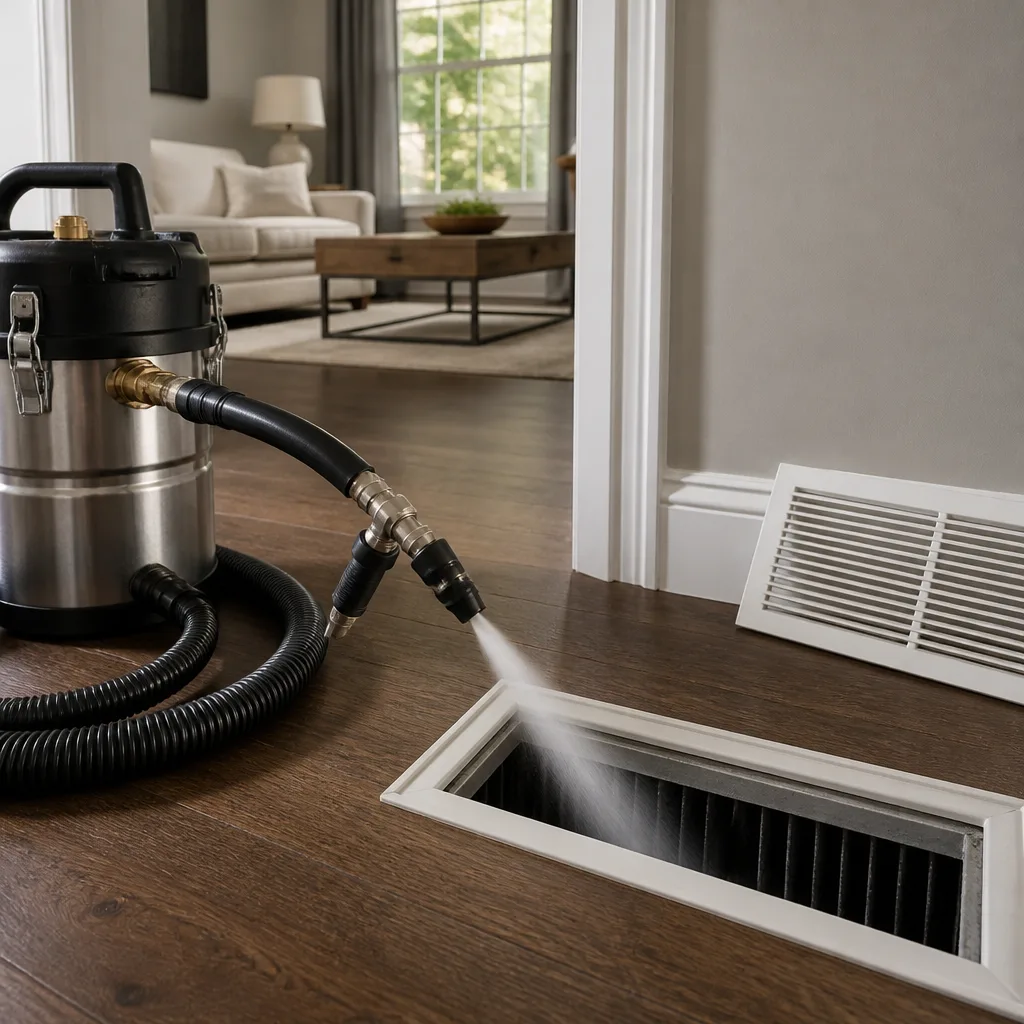 Sanitizing & deodorizing
Whole-system duct and dryer vent check with before-and-after photos - you see exactly what came out of your vents
That "$99 whole-house special" is a bait ad - the real number appears once they are in your hallway, or the "clean" is a shop-vac at the register. We photograph the inside of your ducts before and after instead.
The Complete Guide to Air Duct Cleaning in Spring Branch
Most duct cleaning advice you’ll read online was written for a generic house in a generic climate. Spring Branch isn’t generic. This part of Harris County runs humid through the summer, houses sit on slab-on-grade foundations, and the clay-heavy soil underneath holds water in ways that change how your return-air system behaves. That combination creates a contamination profile a shop-vac and a hose can’t touch. Below, we explain what actually builds up inside Spring Branch ductwork, what a real source-removal job involves, and how to tell the difference between a thorough cleaning and a quick surface pass.
Quick Answer
Air duct cleaning in Spring Branch means removing accumulated dust, debris, and microbial growth from the entire system – supply and return ducts, the air handler, the coil, and the drain pan – using source-removal methods rather than a blow-and-collect pass. Because Spring Branch summers average 75%+ humidity, ducts here collect condensation and biofilm that require professional agitation and HEPA negative-air capture to remove properly. A complete job is documented, includes the air handler, and addresses leaks so the system stays clean.
Styles & brands we work with
- Whole-home duct cleaning
- Dryer vent cleaning
- Camera inspection
- Sanitizing & deodorizing
Table of Contents
- Why Spring Branch’s Humidity Changes What a Duct Cleaning Needs to Do
- Source-Removal Cleaning vs. Blow-and-Collect: What the Equipment Tells You
- How Slab-on-Grade Construction Shapes Return-Air Contamination
- What a Full-System Inspection Should Document Before Any Equipment Runs
- Why the Air Handler Coil and Drain Pan Decide Whether the Job Is Complete
- The Step-by-Step Process of a Professional Duct Cleaning
- Signs Your Spring Branch Home Needs Duct Cleaning
- How Much Does Air Duct Cleaning Cost in Spring Branch?
Why Spring Branch’s Humidity Changes What a Duct Cleaning Needs to Do
Spring Branch sits in one of the most humid corridors in Harris County. Through summer, outdoor relative humidity averages above 75%, and every time your air conditioner runs, supply ducts carry cold air through a warm attic or wall cavity. The outer surface of the duct sweats. On older duct systems with failing insulation or loose joints, that moisture finds its way inside. Once moisture is inside a duct, dust stops being dust – it becomes a food source for microbial growth. A thin biofilm layer forms along the interior walls, particularly in the last sections of runs and near diffusers where airflow slows.
That biofilm layer is the reason a generic vacuum pass doesn’t solve the problem in Spring Branch. Compare it to a drier Texas metro where ducts stay dry most of the year: dust there is loose and can be pulled out with a strong negative-air setup. Here, the film clings to the duct surface and needs mechanical agitation – a rotary brush system like Rotobrush – before any vacuum can capture it. That’s the actual difference. It isn’t marketing language; it’s what the material requires.
What high indoor humidity does to a duct system over time
- Condensation forms on cold supply duct exteriors during cooling cycles.
- Insulation that’s been compromised by moisture loses R-value and can’t stop further condensation.
- Dust and skin cells deposit on the moist interior surface and bind to it.
- Microbial growth colonizes the film inside the duct, especially in the last segment before the register.
- Airflow through the affected run drops, which increases run time on the air handler and can raise energy use.
That sequence is why we treat source removal and moisture control as one problem rather than two. Cleaning removes the accumulated material; HVAC cleaning of the air handler coil and drain pan addresses the moisture source itself.
Source-Removal Cleaning vs. Blow-and-Collect: What the Equipment Tells You
The duct cleaning industry has a persistent quality gap. At one end is source-removal cleaning, which follows the NADCA standard: agitate the contaminants mechanically, capture them with HEPA-filtered negative air, and clean the entire system rather than just what’s reachable. At the other end is a blow-and-collect pass that uses a shop-vac-grade machine to stir up dust while pulling a fraction of it out. The visual difference between these approaches is minimal right after the job. The difference shows up six months later when the ducts still look clean – or don’t.
Equipment is the clearest signal of which method a company actually uses. When a technician shows up with a Rotobrush rotary brush system, a Nikro negative-air machine, or Abatement Technologies HEPA equipment, you’re looking at the commercial and remediation-grade tools that accomplish source removal. Those brands are also what mold abatement companies and commercial duct crews use, which tells you something about the standard they’re built to.
What each equipment category actually does
- Rotary brush systems (Rotobrush): A motorized brush head pushed through the ductwork agitates the interior surface and loosens biofilm, dust, and debris that suction alone can’t move.
- Negative-air machines (Nikro): HEPA-filtered vacuum units create a pressure differential across the duct system so loosened contaminants are pulled toward the capture point, not blown into the living space.
- HEPA vacuums (Abatement Technologies): The capture side of the process. Filtration at HEPA level means particles captured don’t re-enter the air, which matters on high-humidity jobs where fine particulates stay suspended longer.
If a company can’t name the equipment it uses, or describes “a powerful vacuum,” that’s information. See what’s actually inside your ducts – then decide. A company confident in its equipment will be glad to show you.
How Slab-on-Grade Construction Shapes Return-Air Contamination
Most of Spring Branch’s residential housing stock sits on slab-on-grade foundations, and that matters for ductwork in ways that rarely come up in general duct cleaning articles. In a slab-on-grade house, the return-air system is often configured with a central return chase or a plenum built into the slab or the wall cavity. That design pulls air from the living space back to the air handler through pathways that can be less airtight than the supply side.
Where the return trunk passes through unconditioned space – a garage wall cavity, a soffit, a slab chase – negative pressure draws in whatever air surrounds it. In Spring Branch, that air carries the soil moisture the clay-heavy ground holds onto. It also carries the fine dust that comes off the ground when it dries out between rain events. So the return side of a Spring Branch system often shows heavier contamination than the supply side, even though most people assume the opposite.
What we look for on the return side in slab-on-grade homes
- Loose or disconnected return ducts inside wall chases or soffits.
- Gaps at the air handler cabinet where the return plenum meets the unit.
- Filter grilles that are undersized for the system and pull unfiltered air through gaps.
- Dirt tracks visible at duct joints, which indicate air bypass.
- Return-air contamination concentrated near the floor where dust settles.
Finding those issues is why we offer air duct cleaning in Spring Branch with repair built in. Leaks found during cleaning can be sealed the same visit rather than leaving you to schedule a second contractor.
What a Full-System Inspection Should Document Before Any Equipment Runs
A proper duct cleaning begins before a single piece of equipment powers on. The inspection should document the system’s condition so the cleaning report has a baseline. Without that baseline, a cleaning company can tell you the job went well, but you can’t verify it. In Spring Branch homes with long duct runs and high humidity, the inspection is also where we decide which method will actually work on a given system.
What a documented inspection should include
- Access-point mapping: Where the technician will cut access openings and how each duct run, plenum, and trunk will be reached. The count matters: a three-register system and a twenty-register system require entirely different access plans.
- Static pressure readings: Measurements at the supply and return side of the air handler to show how restricted the system is. High static pressure before cleaning tells you how much the airflow is being blocked; a reading after cleaning tells you what changed.
- Visual documentation of contamination: Photographs inside a representative sample of ducts before cleaning so the report shows what was there. Before-and-after photos of your own ducts are the single most useful proof a job was actually done.
- Air handler condition: Coil, drain pan, blower wheel, and cabinet seal – not just the ductwork.
- Leak and disconnect assessment: Any duct joints, flex connections, or plenum gaps that need sealing.
- Filter condition and sizing: A filter that’s too small for the system or the wrong MERV rating pulls air from around the edges instead of through the media.
You should receive a written summary of that inspection before the cleaning starts. In our experience, the homeowners who feel most confident about a job are the ones who saw the inspection report first.
Why the Air Handler Coil and Drain Pan Decide Whether the Job Is Complete
Here’s the point that separates a full-system job from a duct-only job, and it’s the one most duct cleaning crews get wrong in Spring Branch. The air handler coil and drain pan sit in the most humid part of the system. Every day of cooling season, the coil sweats and the drain pan collects the condensate. If those two components aren’t cleaned, they become the primary microbial growth site no matter how thoroughly the ducts were cleaned.
Picture it: the ducts are spotless, and the evaporator coil is still carrying a layer of biological growth on the fins. The air passing through the coil picks up what’s growing there on the way to the supply ducts. The ducts are clean for about a week before the contamination re-establishes itself.
What cleaning the air handler actually involves
- Cleaning the evaporator coil fins so airflow through the coil stays even.
- Flushing and clearing the drain pan and condensate line so standing water can’t accumulate.
- Cleaning the blower wheel, which collects dust on its blades and loses efficiency when dirty.
- Sealing the cabinet so return air doesn’t bypass the filter or coil.
- Verifying the condensate line drains properly after cleaning, so the pan doesn’t refill.
If a duct cleaning quote covers only the ducts and doesn’t mention the air handler, ask specifically. Cleaning is step one. Handling the coil and drain pan is what keeps the ducts clean.
The Step-by-Step Process of a Professional Duct Cleaning
Here’s what a thorough duct cleaning in Spring Branch should look like, from the first phone call to the final walkthrough. We outline it this way so you can compare it against any other quote you’re considering. If a company’s process skips several steps, the quote probably reflects that.
Step 1: The free estimate and initial walkthrough
A technician walks your system, counts supply and return registers, checks the air handler, and gives you a written estimate. Any legitimate estimate should tell you exactly what will be cleaned and what equipment will be used. One flat price per system, agreed before work starts – not a per-vent add-up.
Step 2: The full-system inspection
Before any equipment runs, the technician documents what’s inside the system: static pressure readings, visual contamination, the air handler condition, and any leaks. This becomes the “before” record.
Step 3: Setting up containment and negative air
HEPA negative-air equipment hooks up to the system and creates a pressure differential. This ensures that when contaminants are agitated, they get pulled out through HEPA filtration instead of into your living space.
Step 4: Mechanical agitation
Rotary brush systems run through each duct run from the trunk out to the register, loosening the biofilm and dust bound to the interior surface. The brush size is matched to the duct dimension.
Step 5: Cleaning the air handler
The coil, drain pan, blower wheel, and cabinet get cleaned, and the drain line is cleared. This is where the moisture source that started the contamination gets addressed.
Step 6: Sanitizing with Guardsman
After cleaning and drying, a Guardsman-branded sanitizing treatment is applied. It’s a named, traceable product, not a generic spray added at the end as an upsell.
Step 7: Duct repair and sealing
Any leaks, loose joints, or disconnected ducts found during cleaning get sealed the same visit. This is where air duct cleaning and repair combine rather than getting split across two contractors.
Step 8: The before-and-after walkthrough
Photographs of your ducts before and after, the static pressure re-read, and a written summary of everything that was done. This is what you keep.
One visit covers the full air pathway: ducts, vents, and the dryer line. That’s why dryer vent cleaning runs as its own service – the dryer vent is structurally separate from HVAC ductwork and has its own fire-safety implications, but it’s part of the same whole-home air pathway.
Signs Your Spring Branch Home Needs Duct Cleaning
Duct cleaning is one of those services where the need is easy to ignore until it’s severe. If any of the following apply, it’s worth an inspection. In Spring Branch specifically, the humidity patterns mean the timeline from “mild buildup” to “visible contamination” is shorter than in a drier climate.
- Musty odor when the AC kicks on. That’s the most direct evidence of microbial growth reaching you through the supply ducts.
- Visible dust on the register faces that comes back within a few days of wiping clean.
- Increased allergy symptoms indoors that track with air conditioning use and ease when you’re outside.
- Recent renovation work. Drywall dust and construction debris migrate into ducts and stay there through several cleaning cycles.
- A new pet in the home. Pet dander accumulates in return ducts faster than most homeowners realize.
- Energy bills climbing without a clear cause. Restricted airflow from contamination forces longer run times.
- An undersized or wrong-MERV filter pulling air through gaps. This lets unfiltered air bypass the filter entirely.
- No documented cleaning on record for a home you’ve owned for several years.
If two or three of these apply, get an inspection before assuming you need anything more expensive. A thorough inspection will tell you whether the ducts actually need cleaning or whether the issue is somewhere else.
How Much Does Air Duct Cleaning Cost in Spring Branch?
Air duct cleaning pricing in Spring Branch is set per system, not per vent, and a typical full-system job falls in the $400-$950 range depending on the number of registers, the amount of contamination, and whether repair or sealing is needed. Per-vent pricing is where the bait-and-switch industry reputation comes from; it encourages a stripped-down cleaning on a high count and an upcharge on each step. We quote one flat price per system before the job, and the written estimate sets the final price.
| Service | Typical Estimated Range |
|---|---|
| Full-system air duct cleaning (residential, up to ~10 registers) | $400-$650 |
| Larger systems (11-20 registers) with air handler cleaning | $550-$950 |
| Duct repair and sealing (per section or per run) | Priced by written estimate |
| Dryer vent cleaning | Priced by written estimate |
| Guardsman sanitizing treatment | Included with full-system cleaning when applicable |
| Honeywell or Aprilaire filtration upgrade | Priced by written estimate |
The ranges above are typical estimates for this market, not quotes. The written estimate sets the final price. If a company quotes you $99 with per-vent add-ons, you’re looking at a job that won’t include the coil, the drain pan, or the sealing – and those are the parts that determine whether the cleaning lasts.
How often does it really need doing?
For Spring Branch homes, we generally recommend a full-system inspection every two to three years and a full cleaning when the inspection shows it’s warranted. High-humidity climates like this one push the interval shorter than the national guidance. If you have pets, allergies, or recent renovation work, the interval shortens further. If the ducts were cleaned and sealed properly the first time, the second clean is usually a lighter job.
Call (855) 359-1727 for an exact quote – estimates are free. We answer 24/7. Fast dispatch from 7am to 7pm, Sunday through Friday.
Common Mistakes to Avoid
- Choosing a quote based on per-vent pricing alone. Per-vent pricing rewards companies for a stripped-down cleaning and upcharges for every additional step. Ask for a flat per-system price so you know what’s covered.
- Letting the ducts be cleaned without the air handler. In Spring Branch humidity, cleaning the ducts but leaving the coil and drain pan untouched means the contamination source is still in the system.
- Accepting a cleaning with no inspection first. Without static pressure readings and before-photos, you have no baseline and no way to verify what was done.
- Using too-high a MERV filter in an undersized cabinet. A filter that’s too restrictive or the wrong size pulls air around its edges, bypassing filtration entirely and dumping dust straight into the return.
- Cleaning the ducts without sealing the leaks. Ducts with gaps pull contaminants back in within weeks. Sealing is what makes the cleaning last.
- Forgetting the dryer vent. The dryer vent is a completely separate pathway with its own fire-safety risk. A duct cleaning that doesn’t include it leaves half the air pathway unaddressed.
- Accepting an unnamed antimicrobial spray as a sanitizer. A named, traceable product is a documented process. A generic spray is an upsell with no paper trail.
See the difference
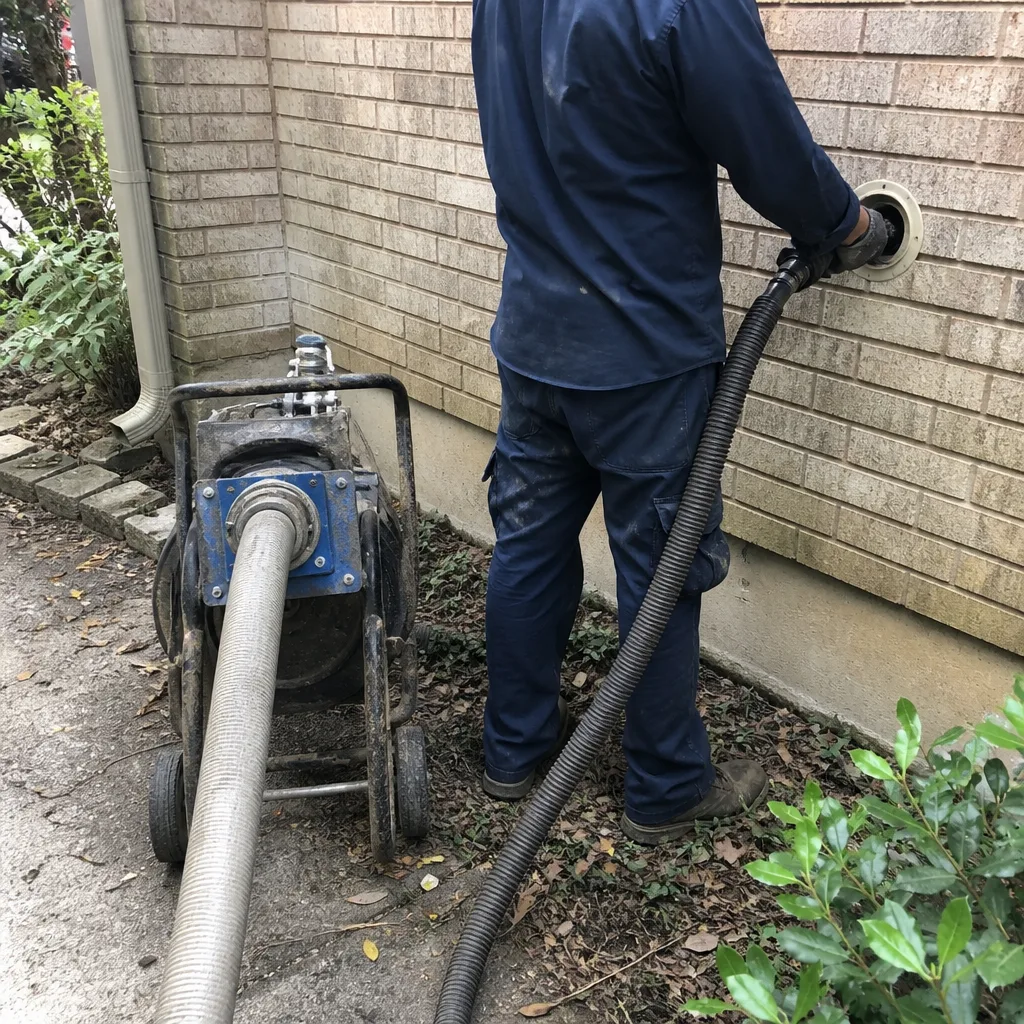 Before
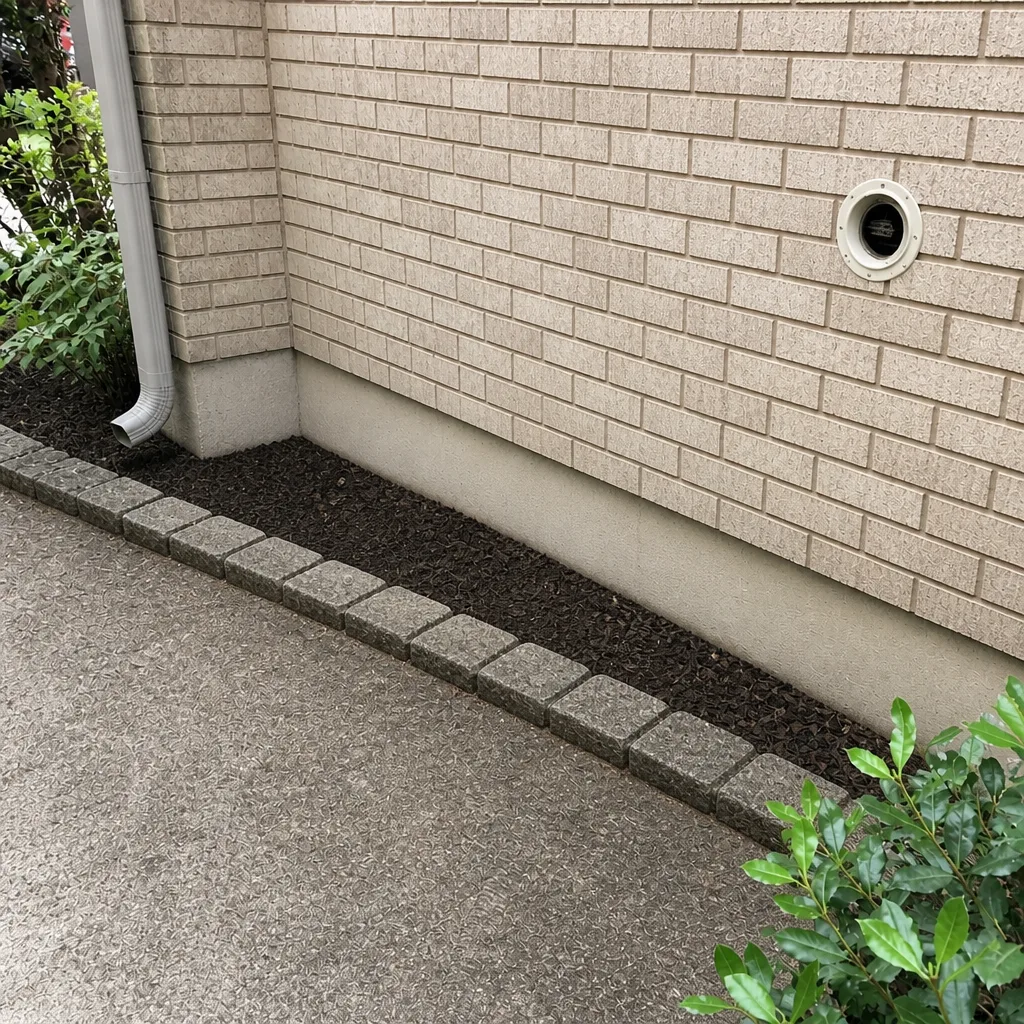 After
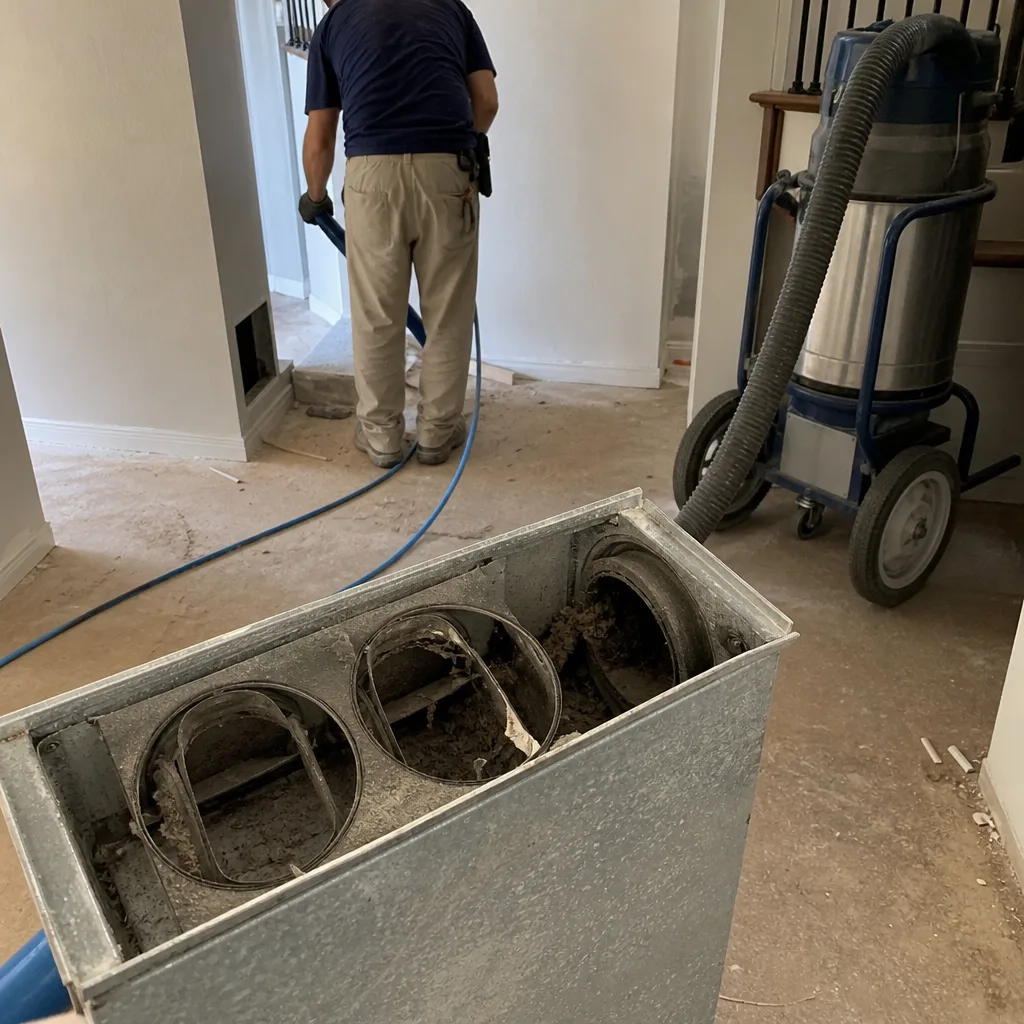 Before
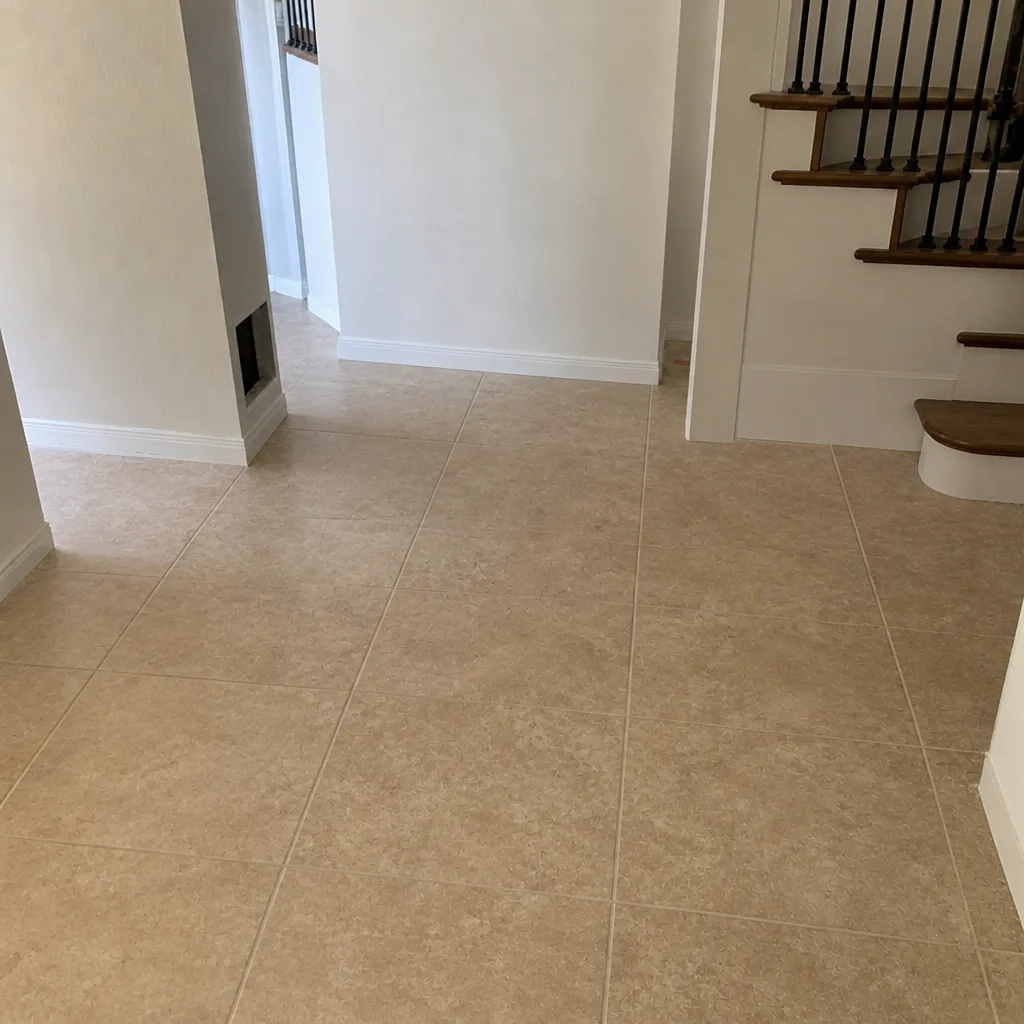 After
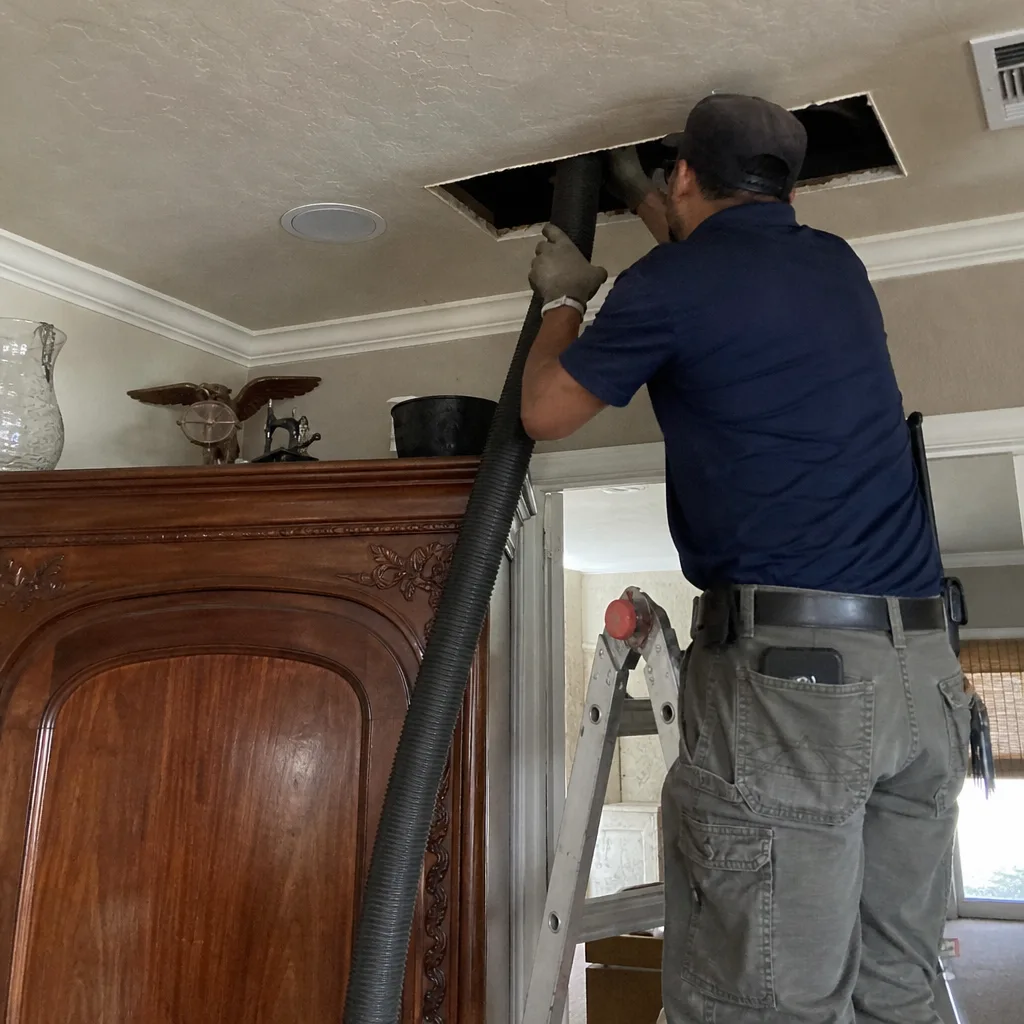 Before
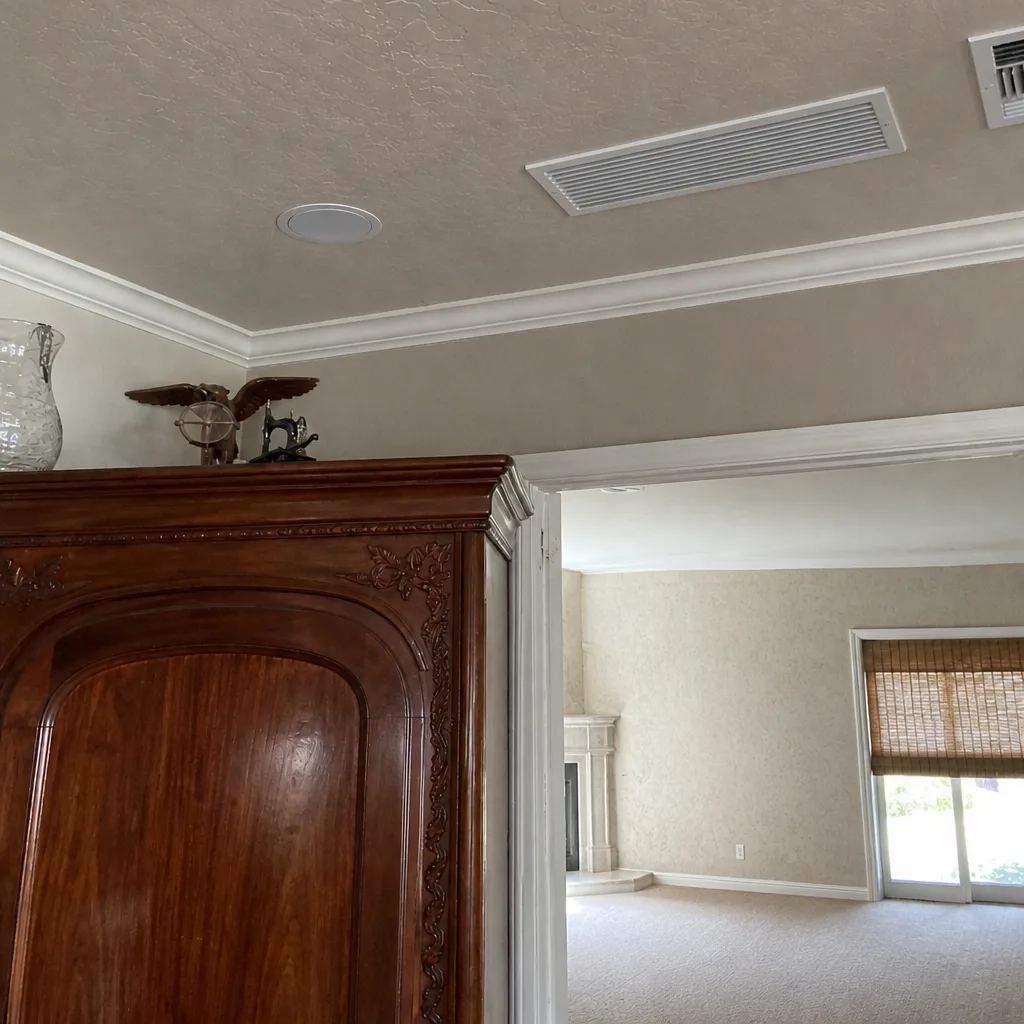 After
When to Call a Professional
Some duct problems are pure maintenance and can wait for a scheduled cleaning. Others have a specific signal that shouldn’t. If you smell a musty odor from your registers every time the air conditioner starts, that’s a direct indicator the system needs inspection. If you’ve just finished a renovation, drywall dust has migrated into the ducts and needs source removal to get out. If a pet has joined the household or allergy symptoms have worsened indoors over a season, that’s enough reason to get a documented inspection. And if the energy bills have climbed with no other explanation, restricted airflow is a likely cause.
What you don’t want to do is let a small duct problem turn into a system-wide one because nobody looked. Air Duct Cleaning Spring Branch offers free estimates in Spring Branch – call (855) 359-1727. A technician will inspect the system, document what’s there, and give you a written estimate before any equipment runs.
Frequently Asked Questions
Air duct cleaning in Spring Branch typically runs $400-$650 for a standard residential system and $550-$950 for larger systems that include air handler cleaning. Those are estimated ranges; the written estimate sets the final price. Call (855) 359-1727 for an exact quote – estimates are free.
Cheaper quotes usually exclude the air handler, the coil, the drain pan, and duct sealing, and they often use consumer-grade vacuums instead of HEPA negative-air equipment. That’s not a stripped-down version of the same job – it’s a fundamentally different job. A cheap cleaning that leaves the contamination source in place costs more over two years than one done properly. Call (855) 359-1727 and we’ll walk you through what a full-system job includes.
Before-and-after photographs of your own ducts, the inspection report with static pressure readings before and after, and a written summary of what was cleaned. A company that documents the job this way is accountable for what it did. Call (855) 359-1727 to schedule an inspection and see the report before deciding.
For most Spring Branch homes, we recommend a full-system inspection every two to three years and a cleaning when the inspection shows it’s needed. The high humidity here accelerates microbial growth compared to drier Texas metros, so the interval is generally shorter than national guidance. Homes with pets, allergies, or recent renovation may need it more often. Call (855) 359-1727 to schedule an inspection.
Yes, if the source of the allergens is in the ductwork and the air handler, and if cleaning includes the coil and drain pan. Removing accumulated dust, dander, and microbial growth from the full air pathway reduces what recirculates through the home. Cleaning the ducts but leaving a contaminated coil in place won’t give you the result. Call (855) 359-1727 for a free estimate and a documented inspection.
Rotobrush is a rotary brush system that agitates the interior duct surface mechanically; a standard shop-vac-style vacuum only pulls loose dust and can’t move the biofilm that binds to duct walls in high-humidity climates like Spring Branch. That’s why the equipment matters more here than in a dry climate. Call (855) 359-1727 to ask what equipment a technician will use on your system.
It doesn’t have to, but it’s the same visit and the same technician. The dryer vent is a separate pathway from your HVAC ductwork, but it carries the same fire-safety importance. Once you have the equipment set up and a technician on site, it’s the most efficient time to do both. Call (855) 359-1727 to ask about scheduling both during one visit.
We install Honeywell and Aprilaire filtration and purification products as part of the service scope, properly sized and installed for your system – not just sold. Filter sizing matters in Spring Branch homes where undersized filter cabinets are common. Call (855) 359-1727 to ask about air quality products during the inspection.
The Bottom Line
Spring Branch’s humidity profile changes what air duct cleaning actually needs to accomplish. The 75%+ summer humidity means biofilm forms inside ducts that a vacuum can’t remove; the clay-heavy soil and slab-on-grade construction push more contamination into the return side; the air handler coil and drain pan become a growth site that determines how long a cleaning lasts. A complete job means source-removal cleaning with commercial equipment, air handler cleaning, and duct repair and sealing, all documented with before-and-after photos. It means Guardsman sanitizing, not an unnamed spray. It means one flat price per system agreed before the work starts. See what’s actually inside your ducts, then decide. Call Air Duct Cleaning Spring Branch at (855) 359-1727 for a free estimate. We answer 24/7. Fast dispatch from 7am to 7pm, Sunday through Friday.
Written by the team at Air Duct Cleaning Spring Branch.