
Last updated November 25, 2026
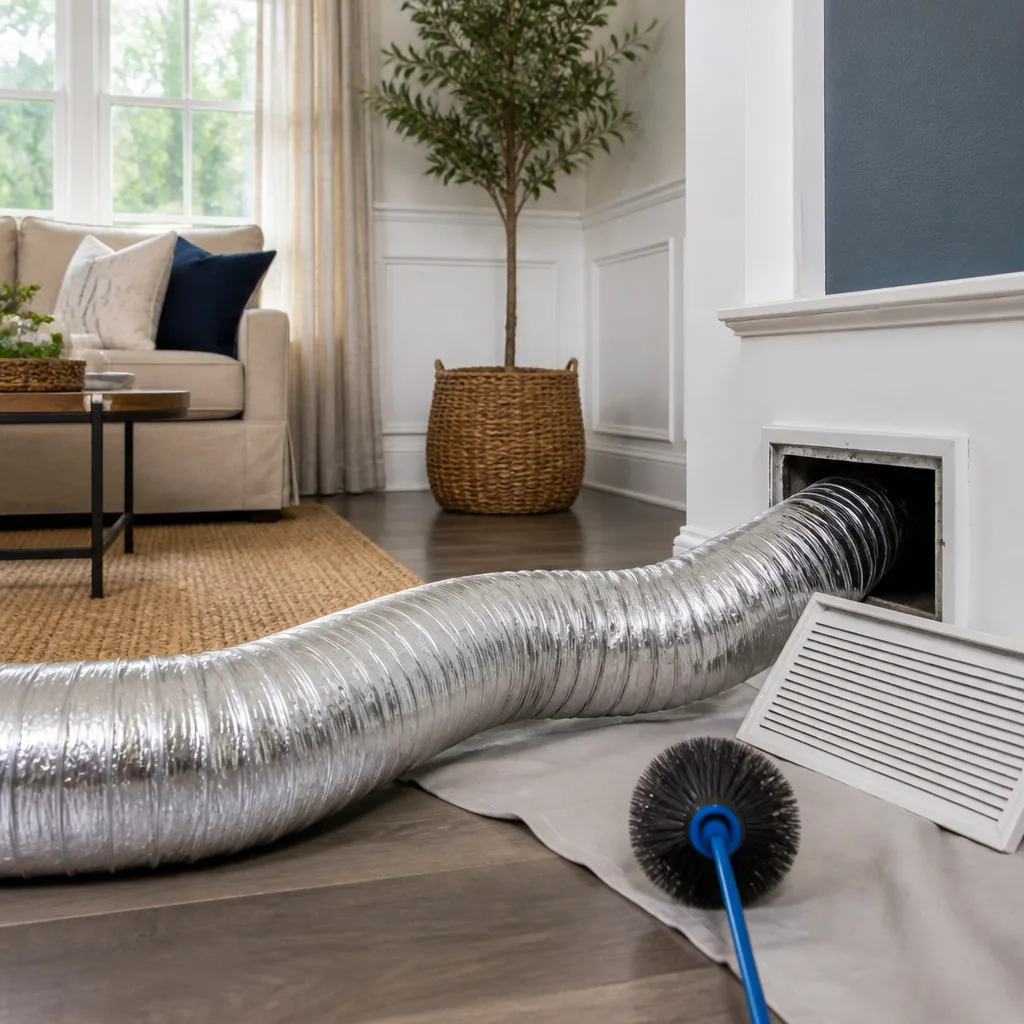 Whole-home duct cleaning
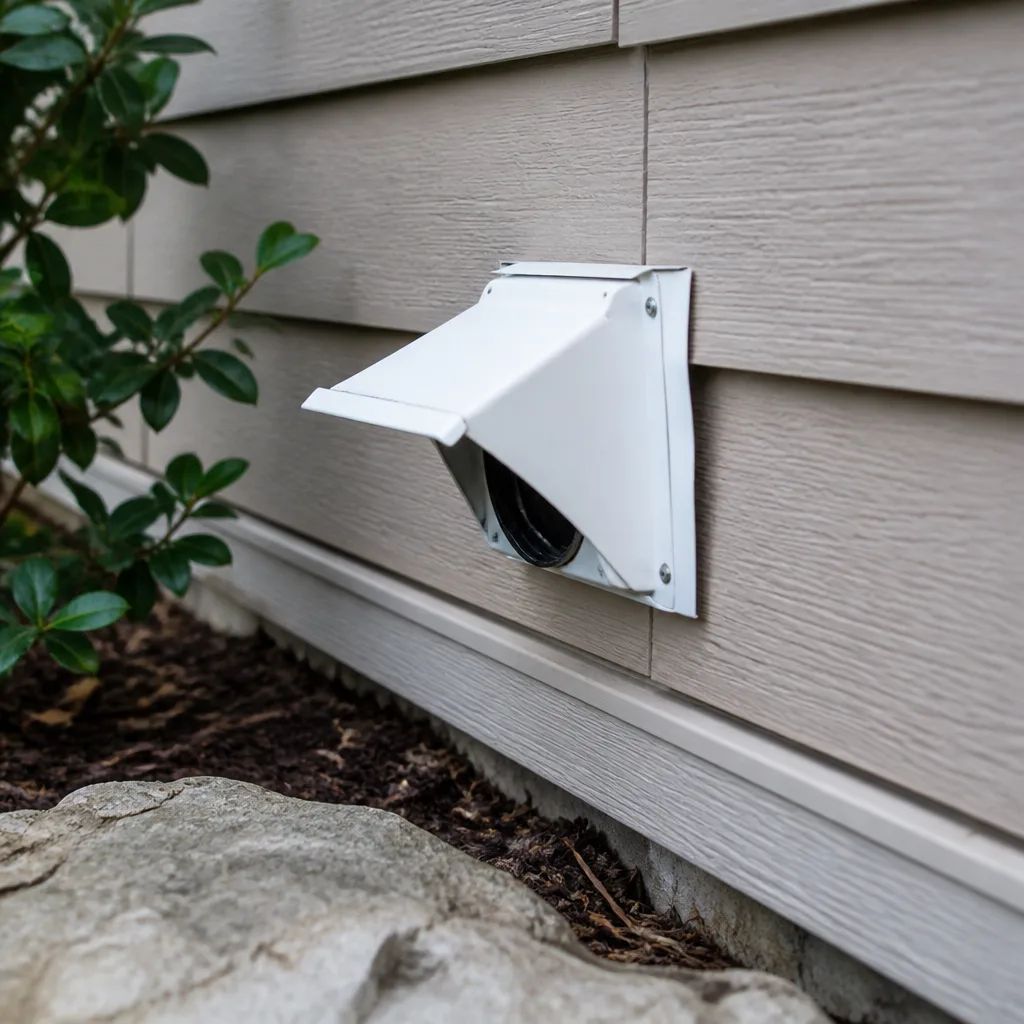 Dryer vent cleaning
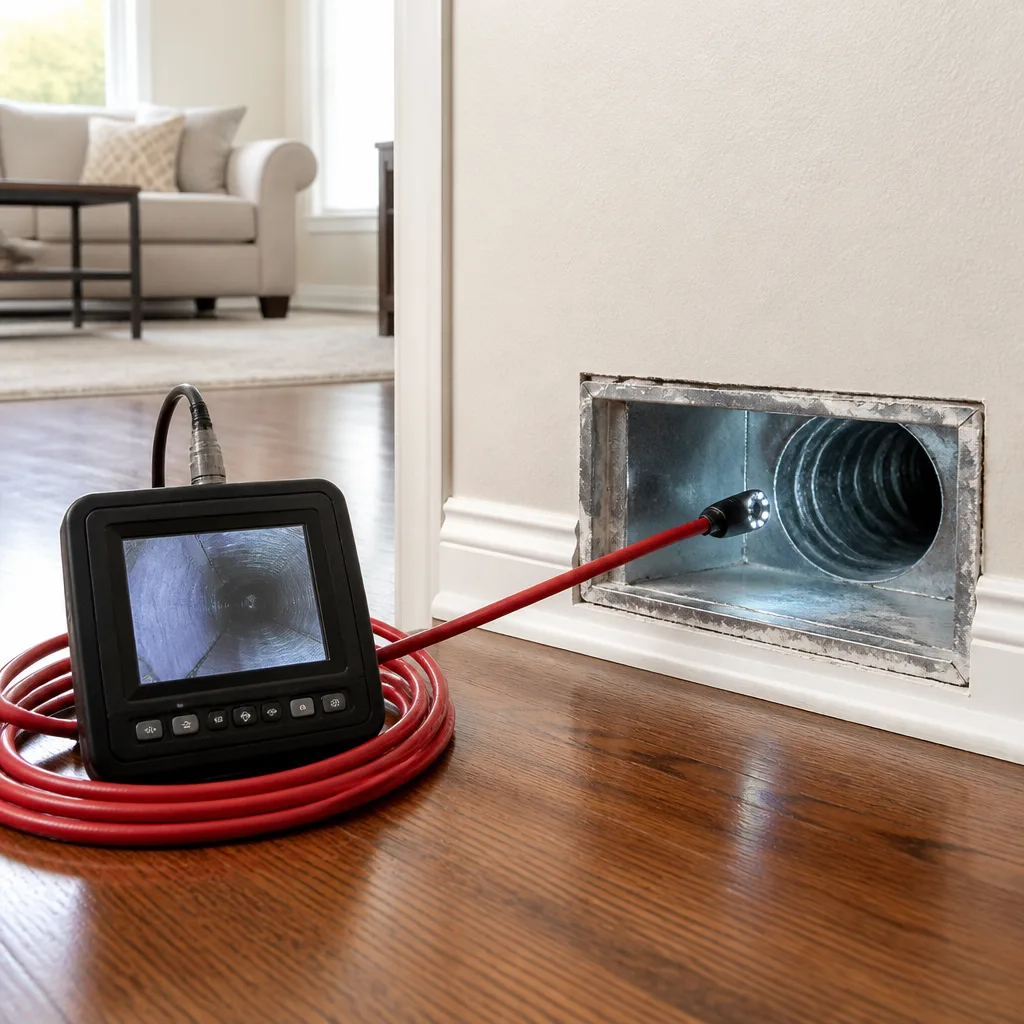 Camera inspection
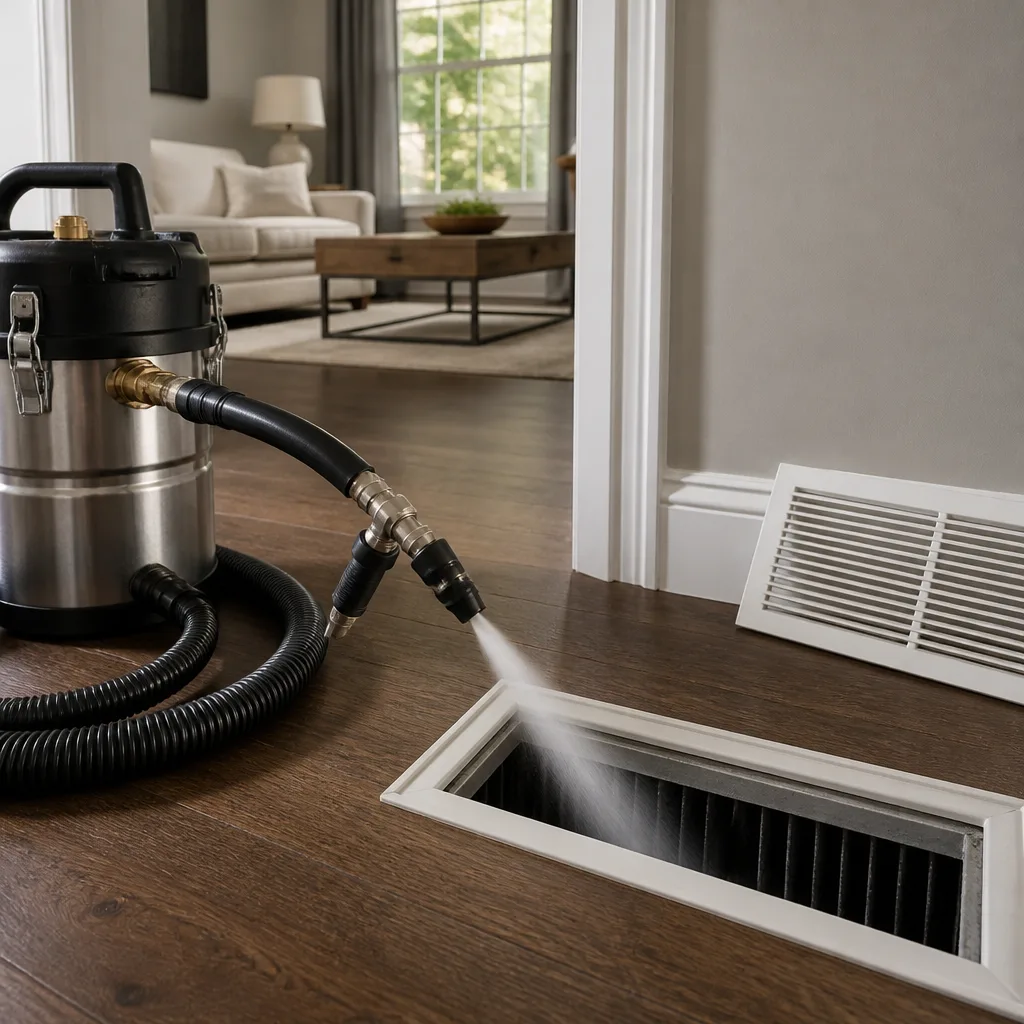 Sanitizing & deodorizing
Whole-system duct and dryer vent check with before-and-after photos - you see exactly what came out of your vents
That "$99 whole-house special" is a bait ad - the real number appears once they are in your hallway, or the "clean" is a shop-vac at the register. We photograph the inside of your ducts before and after instead.
DIY vs Professional Air Duct Cleaning: The Spring Branch Homeowner’s Decision Guide
Here’s the part most articles get wrong about air duct cleaning: it isn’t a simple “you can” or “you can’t.” A homeowner with a rented shop vac and a dryer-vent brush can clean a register cover and reach the first 18 inches of visible duct, and that’s genuinely worth doing. But the moment you need to pull dislodged debris out of the deep system, the equation changes, because capturing that debris requires negative pressure in the range of 1,500 to 2,000 CFM, and no consumer rental unit moves that kind of air. The difference between partial cleaning and full cleaning isn’t effort or tools at hand; it’s airflow, machine class, and knowing when the job stops being maintenance and becomes remediation. This guide breaks down exactly which tasks belong to you and which ones need a pro, with the specific Spring Branch humidity and housing context that makes some decisions harder than they look.
Quick Answer
Homeowners in Spring Branch should handle register cleaning, filter replacement, and periodic visual inspection themselves, but should bring in a professional for whole-system cleaning, anything involving visible mold, and any ductwork with known leaks or disconnect. Consumer-grade vacuums and $200 kits cannot generate the negative pressure needed to capture dislodged particulate, so partial DIY cleaning can redistribute contamination rather than remove it. Call Air Duct Cleaning Spring Branch at (855) 359-1727 for a free estimate when in doubt.
Styles & brands we work with
- Whole-home duct cleaning
- Dryer vent cleaning
- Camera inspection
- Sanitizing & deodorizing
Table of Contents
- What DIY Can Legitimately Handle (And What It Can’t)
- Why Partial DIY Cleaning Redistributes Contamination
- Consumer Equipment Reality Check: What a $200 Kit Actually Does
- The Mold Scenario in Spring Branch’s Humidity
- The Dryer Vent: A Separate Fire-Safety Question
- The Hybrid Approach: DIY Maintenance That Extends the Interval
- Cleaning Is Step One. Sealing Is How You Keep It Clean.
- Narrowing the Decision in a Spring Branch Home
What DIY Can Legitimately Handle (And What It Can’t)
The first step in any honest DIY-versus-professional conversation is sorting tasks by what they actually require. Many of the jobs people assume need a pro are genuinely homeowner territory. Some of the jobs people assume are easy are the ones where partial effort actually causes problems.
What homeowners can do well
- Remove and wash register covers. Once a season, pull every supply and return grille, wash it in a utility sink, dry it, and put it back. This alone cuts down on visible dust accumulation at the points where air enters each room.
- Replace HVAC filters on schedule. Most homes do better on a 60-to-90-day cadence than on the once-a-year habit many people slip into. High-MERV filters load faster and need replacing more often, not less.
- Do a flashlight inspection. Shine a light into each register boot and the return drop at the air handler. Note what you see: dust, debris, dark staining, moisture, pests. Photograph it. That record is useful when you do call a pro.
- Keep the immediate area around the air handler clean and clear. Debris piled near a return pulls straight into the system.
- Watch for condensation at vents. A wet vent in a Spring Branch summer is a humidity signal worth logging.
What genuinely requires professional equipment
- Whole-system cleaning of the trunk lines and main runs. The machines that do this are the Rotobrush rotary brush system paired with negative-air capture, and the Nikro negative-pressure units that hold debris under containment while the brush works.
- Source removal under containment. That’s Abatement Technologies HEPA equipment, the same class of machine used in commercial and mold remediation work, brought into a residential duct system.
- Duct repair and sealing. Sealing breaches in flex or rigid duct during a cleaning is a distinct skill, not a DIY add-on.
- Sanitizing after cleaning. Because the correct sequence is clean first, then treat with a named product (Guardsman-branded sanitation in our case), doing this out of order is worse than not doing it.
For the deeper professional side of this work, our air duct cleaning service page describes how the full system gets handled start to finish. The best way to sort your own list is to walk the house with a flashlight and a notebook before you decide anything else.
Why Partial DIY Cleaning Redistributes Contamination
This is the single most important technical point in the whole DIY-versus-professional debate, and it rarely gets explained clearly: brushing or agitating duct surfaces without simultaneous negative-air capture doesn’t clean the system, it moves the load around. A homeowner brushes dust off the duct wall, it goes airborne, and the blower fan carries it deeper into the trunk, into the return, or into the room. What was settled becomes respirable.
In our experience, the symptoms that follow partial DIY cleaning look a lot like the symptoms people call us to fix in the first place: a fine dust film returning to furniture faster than before, visible haze at supply registers shortly after running the system, musty or dusty odors that seem worse right after “cleaning,” and allergy complaints that spike in the weeks following a weekend project. The homeowner is often surprised because the ducts looked cleaner when they finished.
What proper cleaning does instead is hold the debris under negative pressure while agitating it loose. The rotary brush dislodges material, the containment machine keeps that material from escaping into the living space, and the two have to run simultaneously, at the same touchpoint. That’s why the tools are always deployed as a pair. It’s also why “brush the ducts and vacuum afterward” is a fundamentally different operation than professional cleaning.
The practical takeaway: don’t agitate duct surfaces you can’t simultaneously capture. If the goal is to remove material, both halves of the operation have to be present.
Consumer Equipment Reality Check: What a $200 Kit Actually Does
Walk through the home-improvement aisle or scroll an online listing and you’ll find “air duct cleaning kits” pitched as everything you need. What they are, in reality, is a lightweight brush on a flexible rod, sometimes paired with a shop-vac adapter. Here’s what that kit can actually do, and what it’s marketed as doing.
What the kit can actually accomplish
- Reach into a register boot and loosen surface dust within the first few feet.
- Scrub a supply run that’s short, straight, and accessible.
- Do basic agitation where the homeowner can see the duct from inside the register.
What it cannot do, no matter how carefully it’s used
- Hold negative pressure. A shop vac pulls perhaps a couple hundred CFM in the best case, and that’s at the hose, not at the far end of a 30-foot trunk line. Professional containment is in the 1,500 to 2,000 CFM range for a reason.
- Reach the trunk lines and main returns. The rod length that ships with consumer kits reaches maybe a third of the way through a typical Spring Branch home’s longest run.
- Handle the air handler or the coil. That requires disassembly and cleaning methods that aren’t in the consumer toolset.
- Filter to HEPA standard. A shop vac exhausts fine particulate back into the room. HEPA containment captures it.
The gap between what the kit is sold as and what it can do is the gap that turns a weekend project into a bigger mess than the one it started with. If you’ve already run a consumer kit through your ducts and noticed dust returning faster, the system probably needs a proper pass with the right equipment, not another pass with the same kit.
The Mold Scenario in Spring Branch’s Humidity
Spring Branch sits in a part of Texas where summer humidity is high and air conditioning runs nearly continuously through the warm months. That combination creates conditions inside ductwork that homeowners don’t see: the interior surfaces of a metal trunk in a hot attic, or the inside of a wet coil pan, are places where moisture can linger. If you’re shining your flashlight and you see dark staining, fuzzy growth, or a musty smell that tracks to a specific register, that’s the point where DIY cleaning stops being a good idea.
It’s not just that a consumer vacuum can’t capture mold spores well. It’s that in Texas, cleaning visible mold contamination in HVAC ductwork is a regulated activity. The Texas Department of State Health Services (TDSHS) has specific rules about who can perform mold-related work and how it must be handled. Disturbing visible mold with DIY tools can spread spores through the home and can put a homeowner in a position where remediation costs more than it would have, because the contamination was dispersed first.
What proper handling looks like on a job with visible contamination: HEPA containment equipment (the Abatement Technologies class used in remediation work), sealing off the affected runs so nothing escapes into the living space, source removal under containment, and then a branded post-cleaning sanitizing treatment (Guardsman, in our process) to address what remains on the cleaned surfaces. That’s a different operation than standard duct cleaning, and it’s not a job for a rental machine.
If you’re not sure what you’re seeing, don’t agitate it to find out. A free inspection by a company that runs containment equipment is the safer move. Call (855) 359-1727 to schedule one. We answer 24/7. Fast dispatch from 7am to 7pm, Sunday through Friday.
The Dryer Vent: A Separate Fire-Safety Question
Homeowners often fold the dryer vent into the same weekend project as duct cleaning, and that’s a mistake on two counts. First, the dryer vent is structurally separate from HVAC ductwork. Second, a poorly serviced dryer vent is a fire risk in a way that a dusty HVAC duct isn’t. Lint accumulates in a dryer line the way dust accumulates in a supply run, but the failure mode is different and it’s serious.
The consumer version of this job is usually a vent brush on a flexible rod, pushed through from the outside, followed by a shop vac at the dryer connection. That can work for short, straight runs, and we’d rather a homeowner do a rough pass of that than leave lint to accumulate for years. But a long run, a run with elbows, a run routed through an attic or behind a wall, or a run that’s been neglected long enough to have compacted lint, needs negative pressure and proper containment to actually clear. Skimping on the dryer side of the air pathway is where the consequences are most serious.
Our dryer vent cleaning service is designed to pair with duct work, so a single visit covers the full air pathway of the home. If you want to assess the condition of the dryer line yourself first, run the dryer on a no-heat cycle and feel the outside vent exhaust. Weak airflow, a long dry time, or visible lint at the exterior hood are the signals to stop and call.
The Hybrid Approach: DIY Maintenance That Extends the Interval
The most useful thing a homeowner can do, in our opinion, is use DIY maintenance to make professional cleanings last longer instead of trying to replace them. That’s the hybrid approach, and it’s what we recommend to homeowners across Spring Branch as a practical routine rather than a pitch.
Monthly: five minutes
- Replace or vacuum the air filter. If it’s dark enough to see through the fibers, it’s past due.
- Wipe down the return grille with a damp cloth.
- Check the dryer’s lint trap and clean the exterior vent screen if accessible.
Every season
- Remove and wash every register cover.
- Flashlight into each boot; photograph anything you see.
- Walk the attic or crawl space air handler; look for disconnected flex duct, kinked connections, or visible moisture.
- Log anything unusual (odor, dust pattern, condensation) with the date. That log is what tells you when it’s time for a professional pass.
Every few years, depending on the log
When your log shows a return of the same symptoms you had cleaned up, that’s the signal. Partial DIY maintenance keeps the visible system clean. It doesn’t touch the deep runs and the air handler, which is where the accumulated load actually sits.
One more point on the hybrid approach: it’s worth pairing routine maintenance with an air quality check if someone in the house has allergies, a pet has recently joined the family, or you’ve just finished a renovation. Those are the moments when post-cleaning filtration and purification hardware make a bigger difference than another round of cleaning. Honeywell and Aprilaire products, properly sized and installed, treat the source of contamination rather than just removing the evidence of it.
Cleaning Is Step One. Sealing Is How You Keep It Clean.
Here’s a fact that rarely gets mentioned in DIY-versus-pro articles: a duct system can be cleaned perfectly and still make a house unhealthy if it’s leaking. Cleaning removes what’s already inside. Sealing addresses what keeps getting in. In older Spring Branch housing stock, especially where flex duct has been added or rerouted over the years, disconnected joints and pinhole leaks in the trunk are common findings during a cleaning.
Most duct-cleaning-only operators don’t handle sealing. That means the homeowner either has to book a second visit from a different trade, or accepts that the cleaning will need redoing sooner than it should because the system keeps pulling attic or crawl space air back in. We handle seal and repair in-house, alongside cleaning, so that what the inspection finds can be fixed in the same visit.
What a reasonable sequence looks like on a job that needs both:
- Inspect and document. Photograph the inside of the runs and the connections found during cleaning.
- Clean under containment. Rotobrush agitation with simultaneous negative-air capture, using the right machine for the job (Nikro for larger-volume systems, HEPA equipment where the contamination calls for it).
- Seal. Close up connects and breaches discovered during cleaning before the system is put back into service.
- Sanitize where appropriate. Apply Guardsman-branded treatment to cleaned surfaces, only after cleaning.
- Verify airflow and document. Before-and-after photos so the homeowner can see what was actually removed and what was sealed.
That’s a full-system scope, and it’s what you can expect when you book through us. See what’s actually inside your ducts, then decide. Our HVAC cleaning handles the coil and air-handler side that duct cleaning alone doesn’t reach.
Narrowing the Decision in a Spring Branch Home
The honest answer to “DIY or professional” depends on a few specifics about your home. Here’s how we’d sort it if you called us.
- Newer build, no pets, no recent renovation, no symptoms. DIY maintenance is enough. Keep filters fresh, wash registers, do the annual flashlight walk, and you’re ahead of most homes.
- Pet household. Pet dander loads faster than people expect, and the deep runs load faster than register work can reach. Professional cleaning every few years, with DIY in between, is the realistic plan.
- Recent renovation. Drywall dust is fine particulate that travels deep into the system. This is a case where cleaning should happen after renovation wraps, and where partial DIY effort is more likely to make the situation worse than better.
- Allergy symptoms that track to the home. Worth a full inspection with a camera and containment equipment, not a shop vac pass.
- Musty smell anywhere in the system. Stop DIY. Call for inspection. The humidity context in this part of Texas means musty often means moisture.
- Older home with flex duct additions. Have the system inspected for disconnected runs and disconnected boots. Sealing is likely to matter more than cleaning.
For a fuller picture of what we offer beyond the guide, see our main page on Air Duct Cleaning Spring Branch.
Common Mistakes to Avoid
- Brushing without negative-air capture. Agitating duct surfaces without simultaneously pulling the debris into containment just redistributes it. If you can’t run both at the touchpoint, don’t run either.
- Buying a $200 kit expecting it to clean the system. A consumer kit reaches the first few feet of the shortest, straightest runs. It cannot reach the trunk lines, the air handler, or a long run in a two-story Spring Branch home.
- Renting a shop vac and pushing it into a supply run. A shop vac exhausts fine particulate back into the room. You’ll end up with a fine dust film on every surface within hours.
- Cleaning visible mold yourself. In Texas, visible mold contamination in HVAC systems is a regulated activity. Disturbing it without containment can spread spores through the home and increase remediation cost.
- Sanitizing before cleaning. Spraying a treatment onto a dusty duct just coats the dust. Sanitizing is the final step, on a cleaned surface, and it should be a named product (Guardsman, in our process), not an unnamed spray added as an upsell.
- Skipping the dryer vent. Lint buildup in the dryer line is a fire-safety concern, separate from duct cleanliness. Treat it as its own job, not an afterthought.
- Cleaning without inspecting for leaks. A cleaning on a leaking system starts re-contaminating the moment the blower comes back on. Sealing has to be part of the same scope.
See the difference
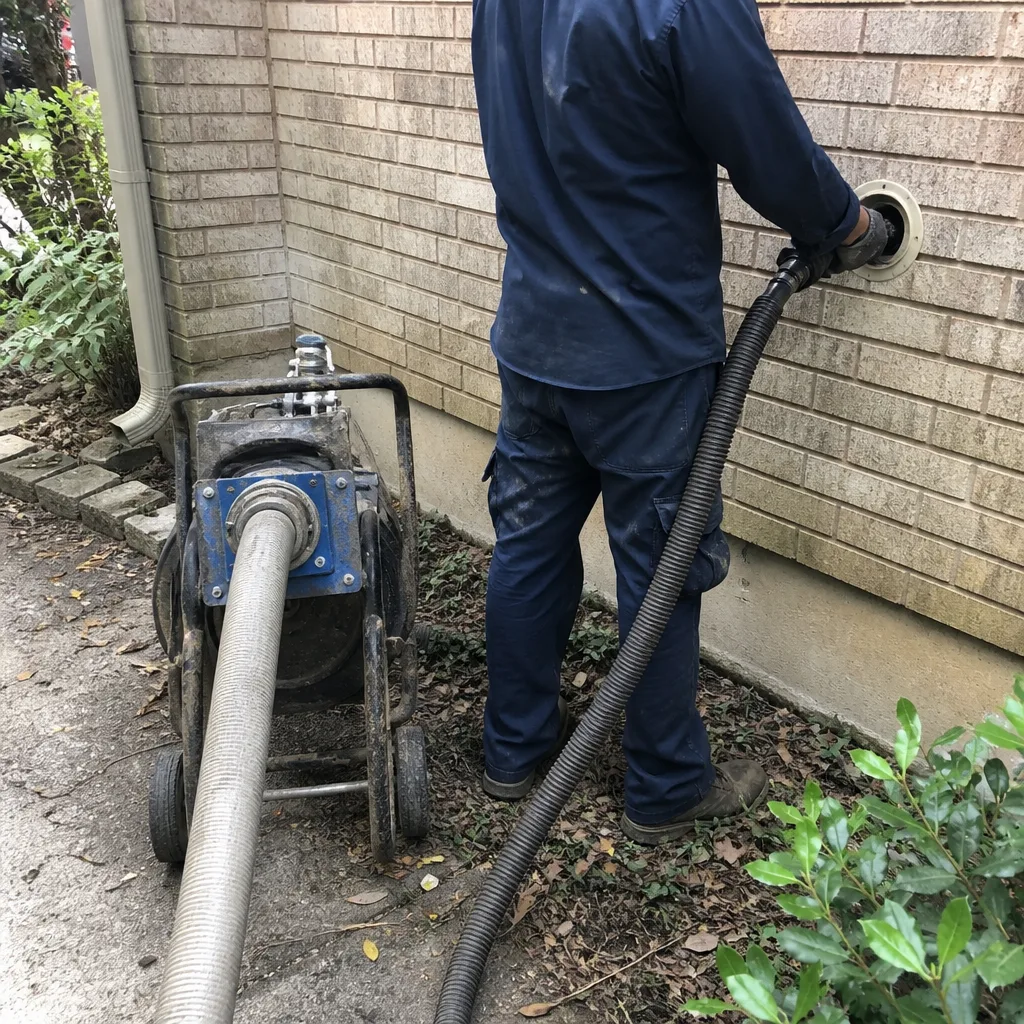 Before
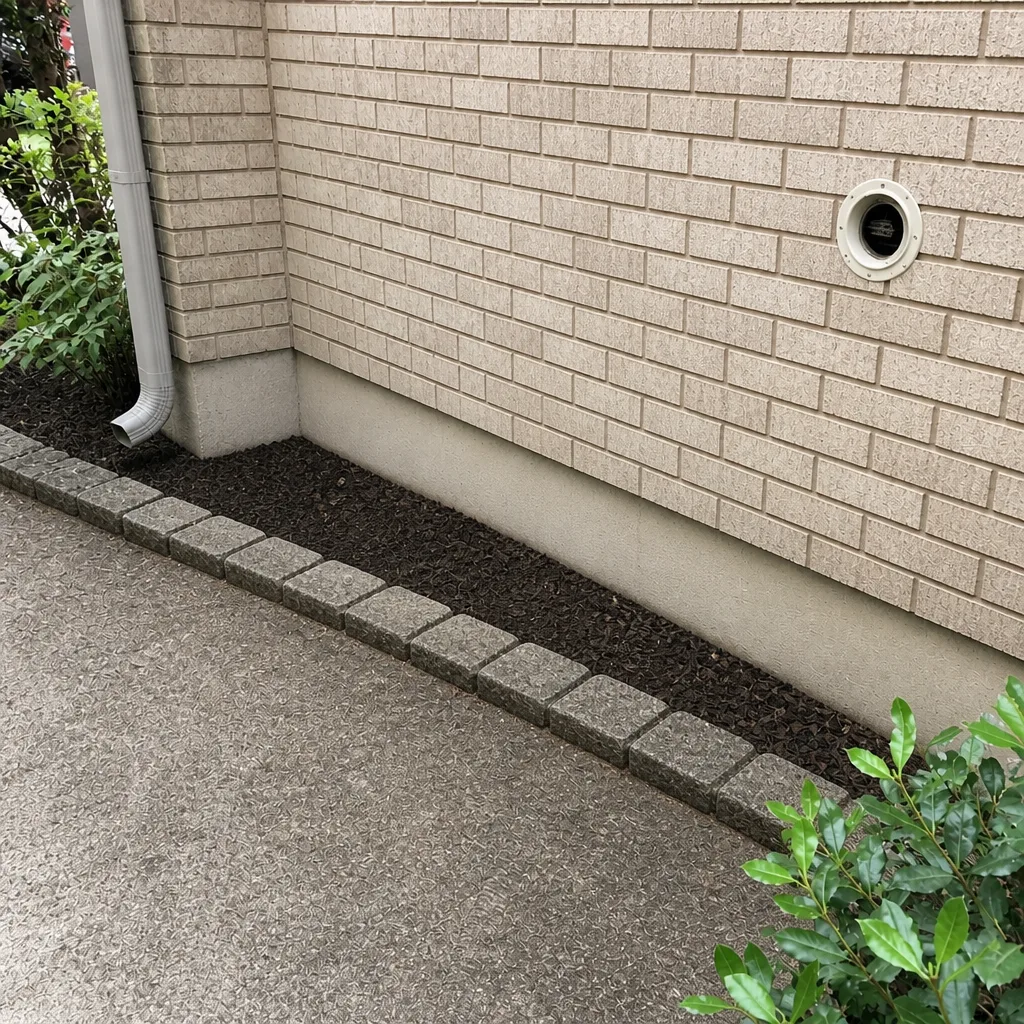 After
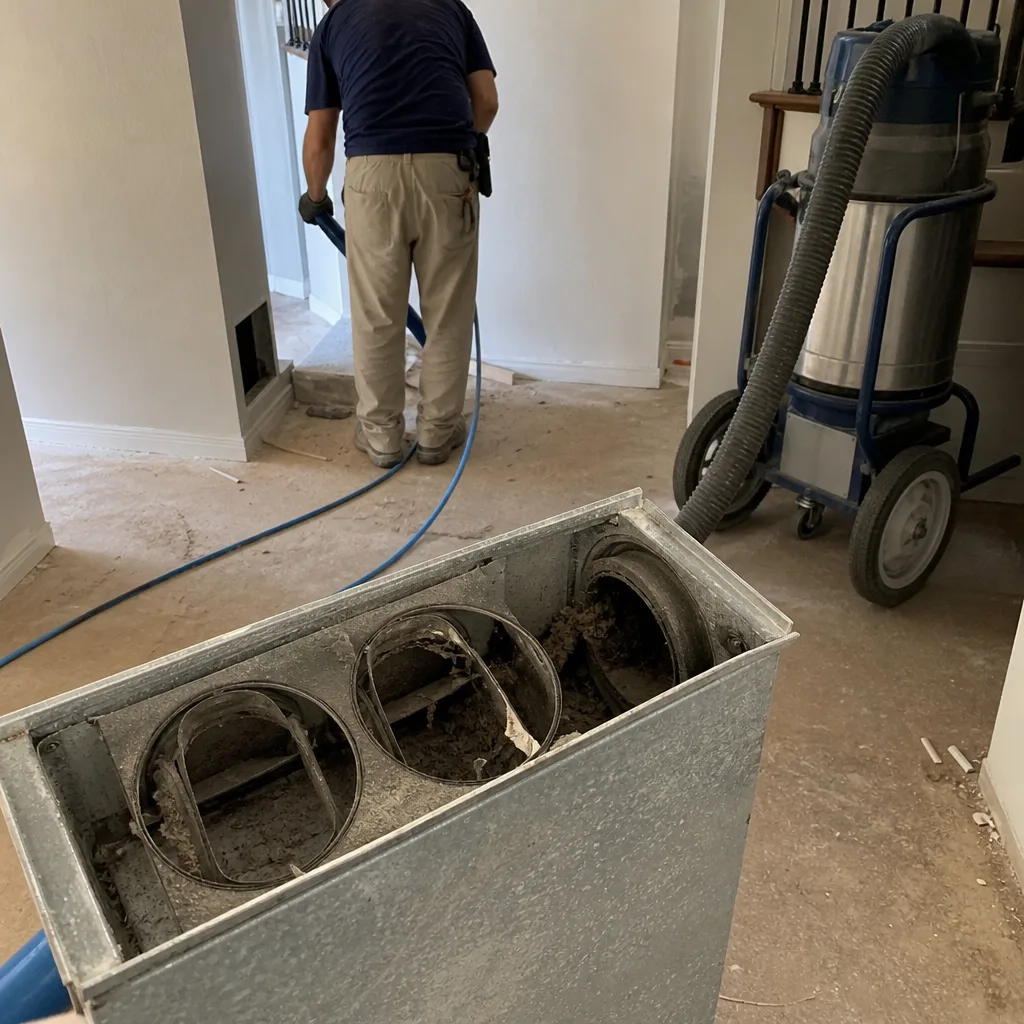 Before
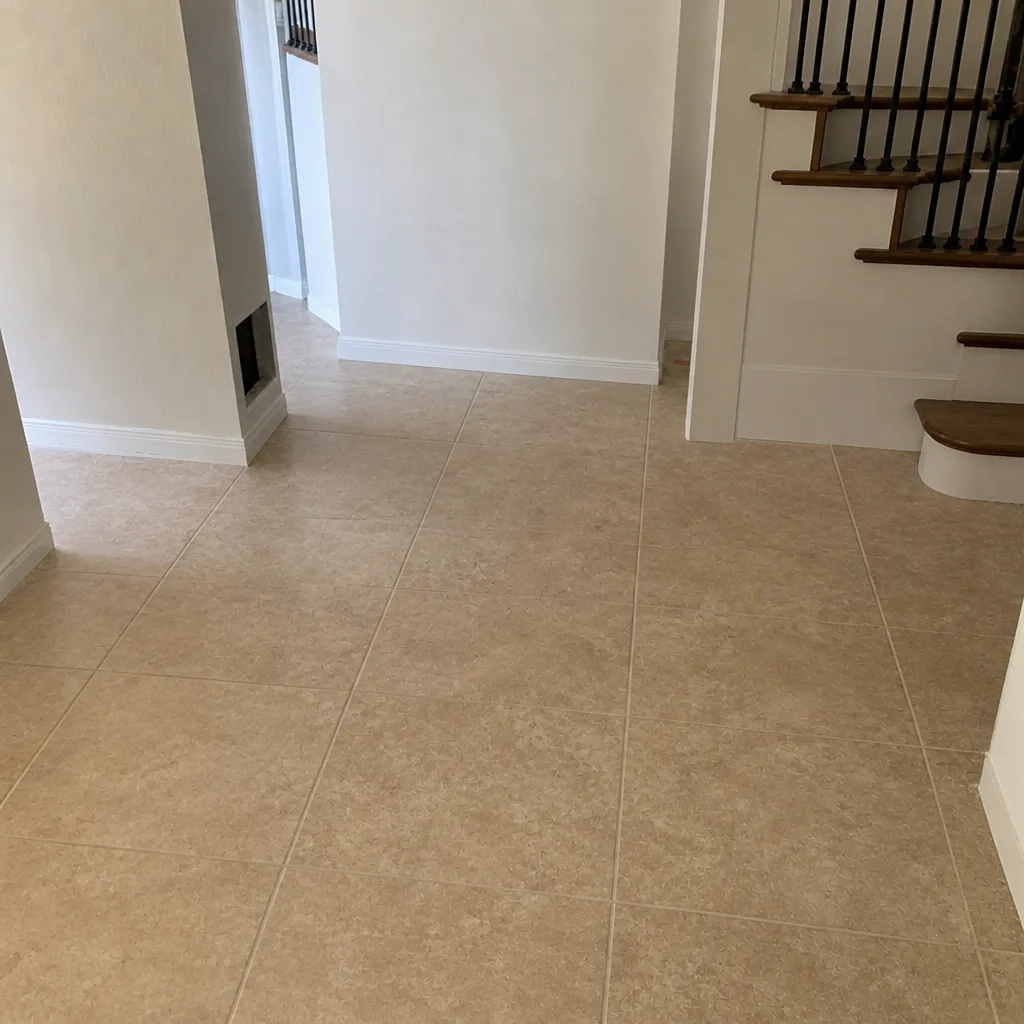 After
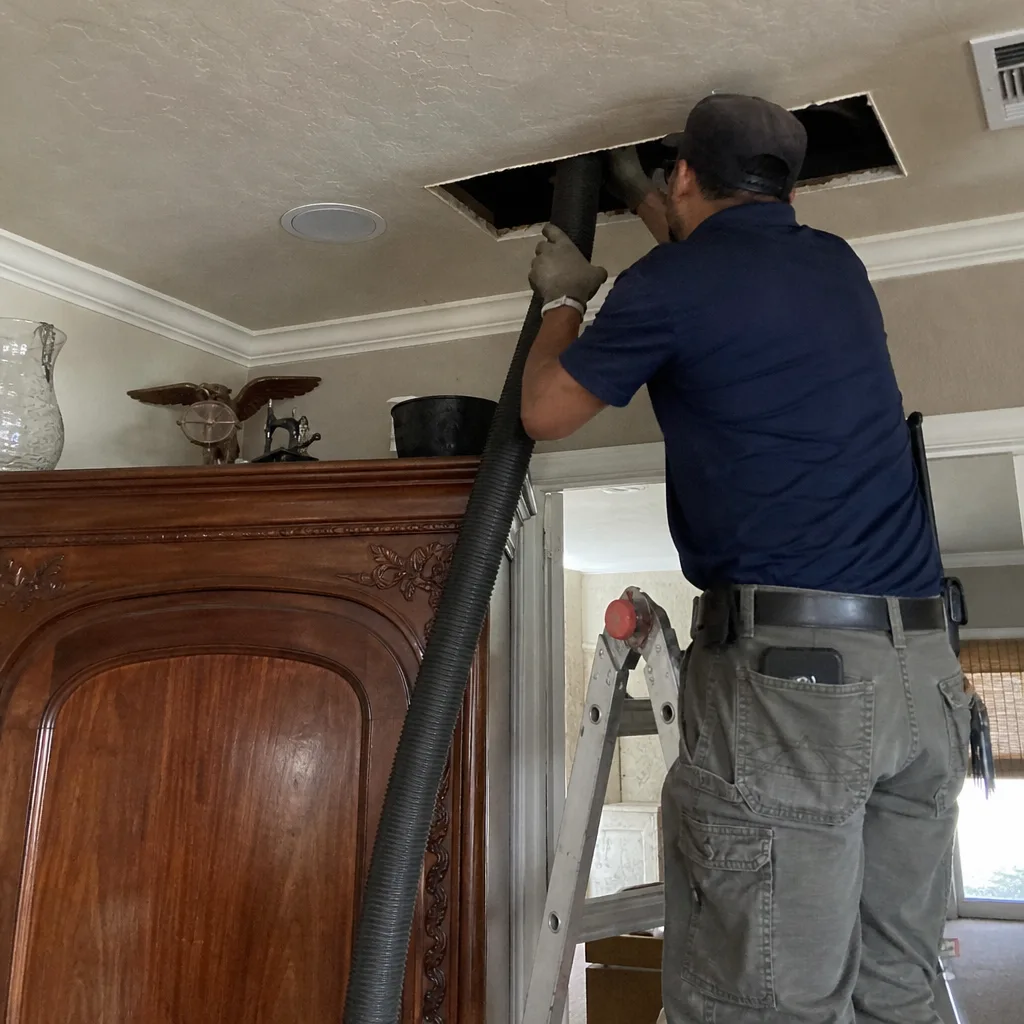 Before
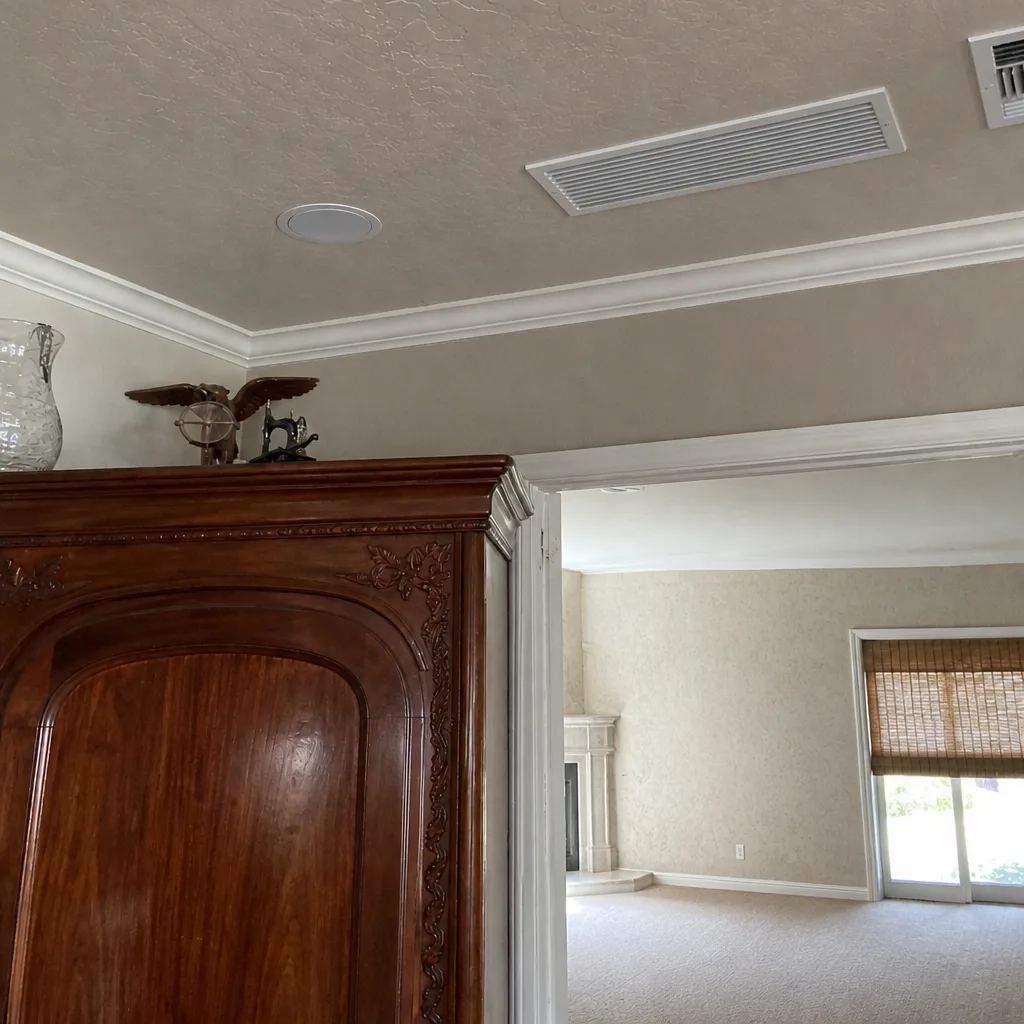 After
When to Call a Professional
Call a professional when you hit any of these: visible mold or dark fuzzy growth anywhere in the ductwork, a musty smell that tracks to a specific vent, a recent renovation that’s left fine dust throughout the home, a return of the same dust pattern within weeks of a DIY pass, a dryer that dries slower than it used to, a duct system you’ve never had inspected and don’t have a maintenance log for, or a home with allergy complaints that have worsened indoors this season. Air Duct Cleaning Spring Branch offers free estimates in Spring Branch; call (855) 359-1727. We answer 24/7. Fast dispatch from 7am to 7pm, Sunday through Friday. Our technicians have up to 14 years of experience, and we’re happy to walk you through what a full-system cleaning involves for your specific home before you commit to anything.
Frequently Asked Questions
Yes, for the maintenance-level tasks: register cover cleaning, filter replacement, and annual flashlight inspections. Those are genuinely homeowner tasks and worth doing on a schedule. Deeper cleaning, whole-system cleaning under containment, mold scenarios, and duct sealing all need professional equipment that no consumer machine can substitute for.
Pricing is per job by written estimate, and it depends on the size of the system, the number of runs, the level of contamination, and whether sealing or sanitizing is included. Call (855) 359-1727 for an exact quote. Estimates are free.
Because they’re not the same job. A low headline price is usually a per-vent pass with a shop-vac-class machine and no containment, no sealing, no sanitizing, and no before-and-after documentation. It looks like cleaning but doesn’t remove the load from the deep runs, and it can leave the home dustier than it started. One flat price per system agreed before work starts, with photos you see, is the alternative to that pattern.
Ask for before-and-after photos of your own ducts, taken in the deep runs and at the air handler, not of a stock image or someone else’s job. Before-and-after photography is standard on our jobs, and it’s the reason we document rather than just describe.
Most Spring Branch homes do well on a professional cleaning every few years, with DIY maintenance in between. Households with pets, recent renovations, allergy sufferers, or high-humidity conditions on the ductwork may need a shorter interval. Let your maintenance log guide the decision rather than a fixed calendar.
Filter replacement protects the system from new load, but it doesn’t remove what’s already accumulated in the trunk lines, the boot connectors, and the air handler. Filters are a maintenance layer; cleaning removes what’s already there. If you’ve been diligent about filters and the ducts have never been cleaned, they still deserve a look.
The Bottom Line
The DIY-versus-professional debate is really a question of task, not category. Homeowners who wash registers, replace filters, and inspect their system annually are doing exactly the right thing. That maintenance keeps a duct system healthy and extends the interval between professional cleanings. But brushing dust loose without the negative pressure to capture it is worse than not cleaning at all, and it’s the most common way a weekend project goes sideways. Visible mold, known leaks, dryer vents that are clearly compromised, and any thought of “deep cleaning” are all professional territory, and in Spring Branch’s humidity those are the cases most likely to catch people. If anything in this guide matches your situation, call for an inspection before you buy a kit or rent a machine.
Get a Free Estimate From Air Duct Cleaning Spring Branch
If your situation looks like one of the professional cases above, or you’re not sure which category you fall into, call Air Duct Cleaning Spring Branch at (855) 359-1727 for a free estimate. We answer 24/7. Fast dispatch from 7am to 7pm, Sunday through Friday. One flat price per system, agreed before work starts, with before-and-after photos of your own ducts so you can see what changed. We bring commercial-grade equipment to residential jobs, do the inspection and sealing in the same visit, and treat the full air pathway of the home as one system, from the deepest trunk to the dryer line.
Written by the team at Air Duct Cleaning Spring Branch.