
Last updated November 25, 2026
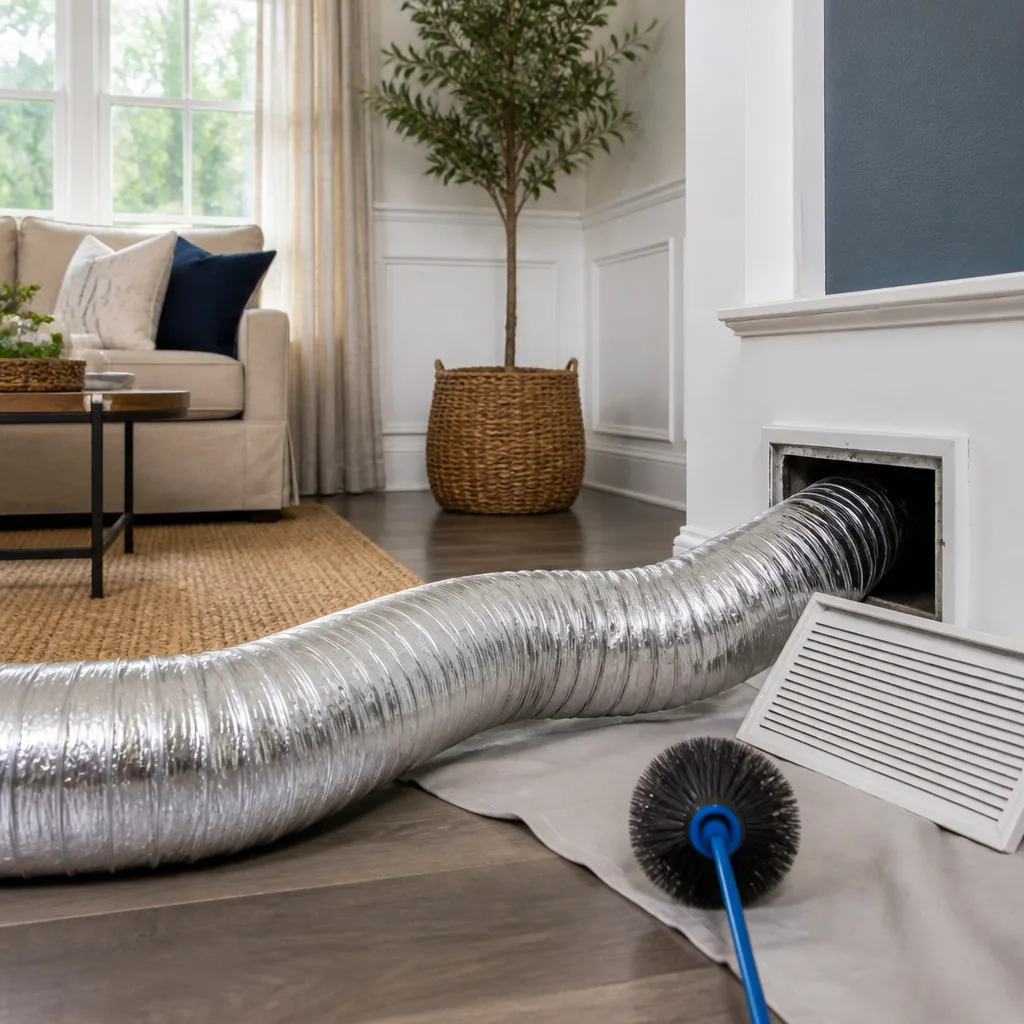 Whole-home duct cleaning
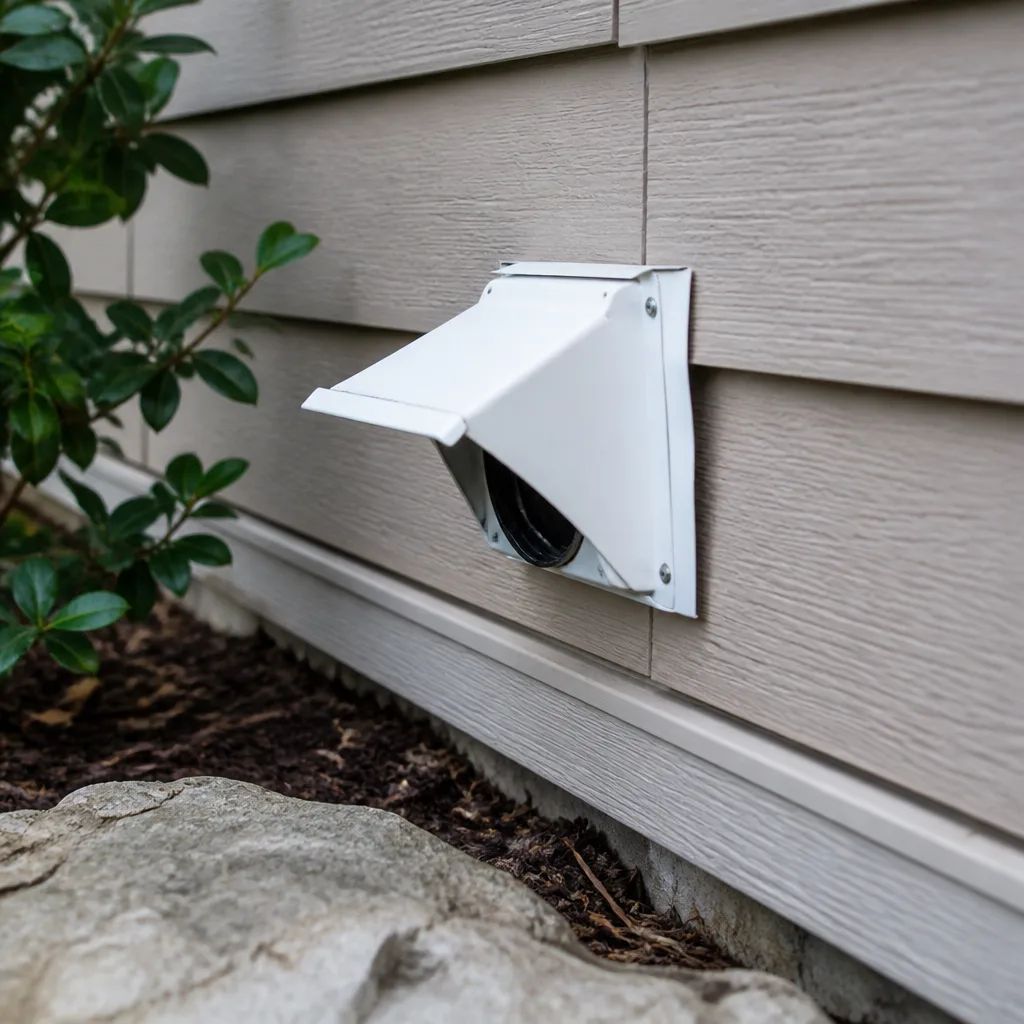 Dryer vent cleaning
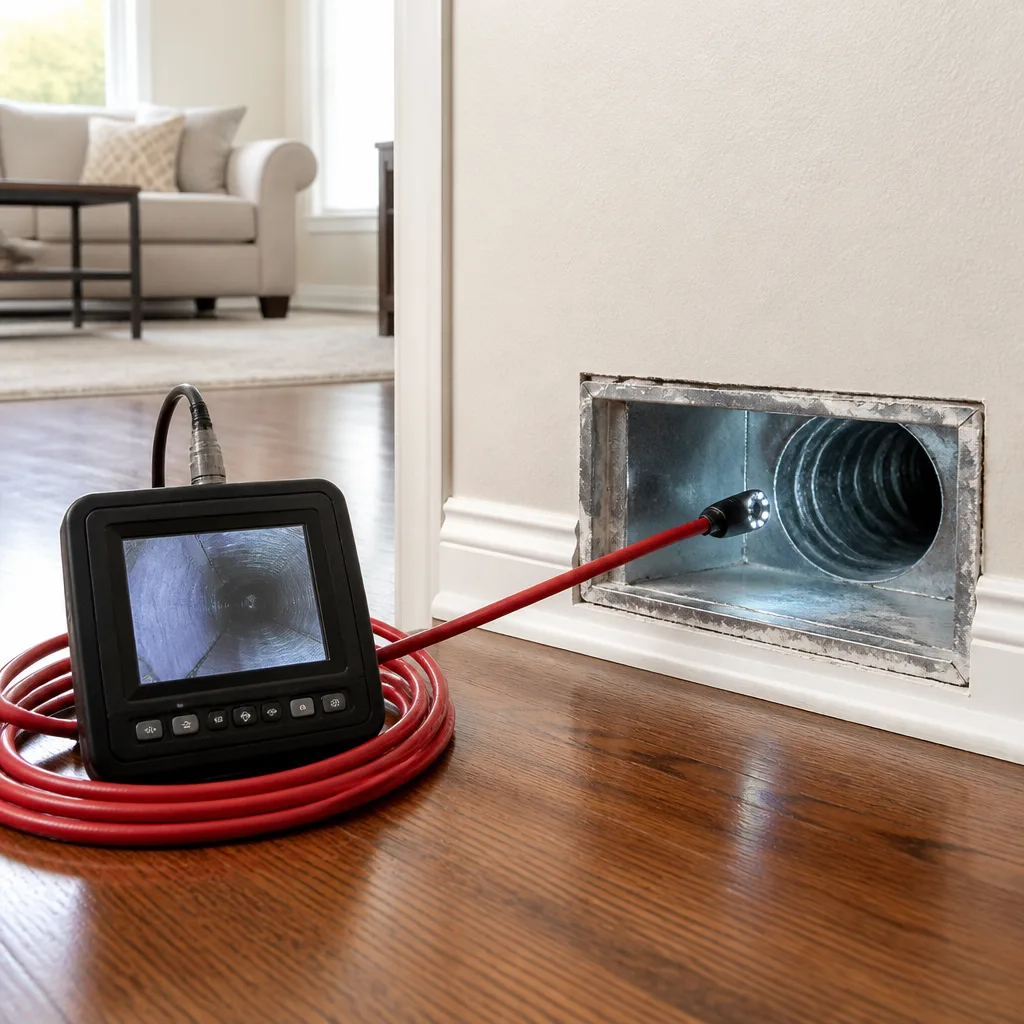 Camera inspection
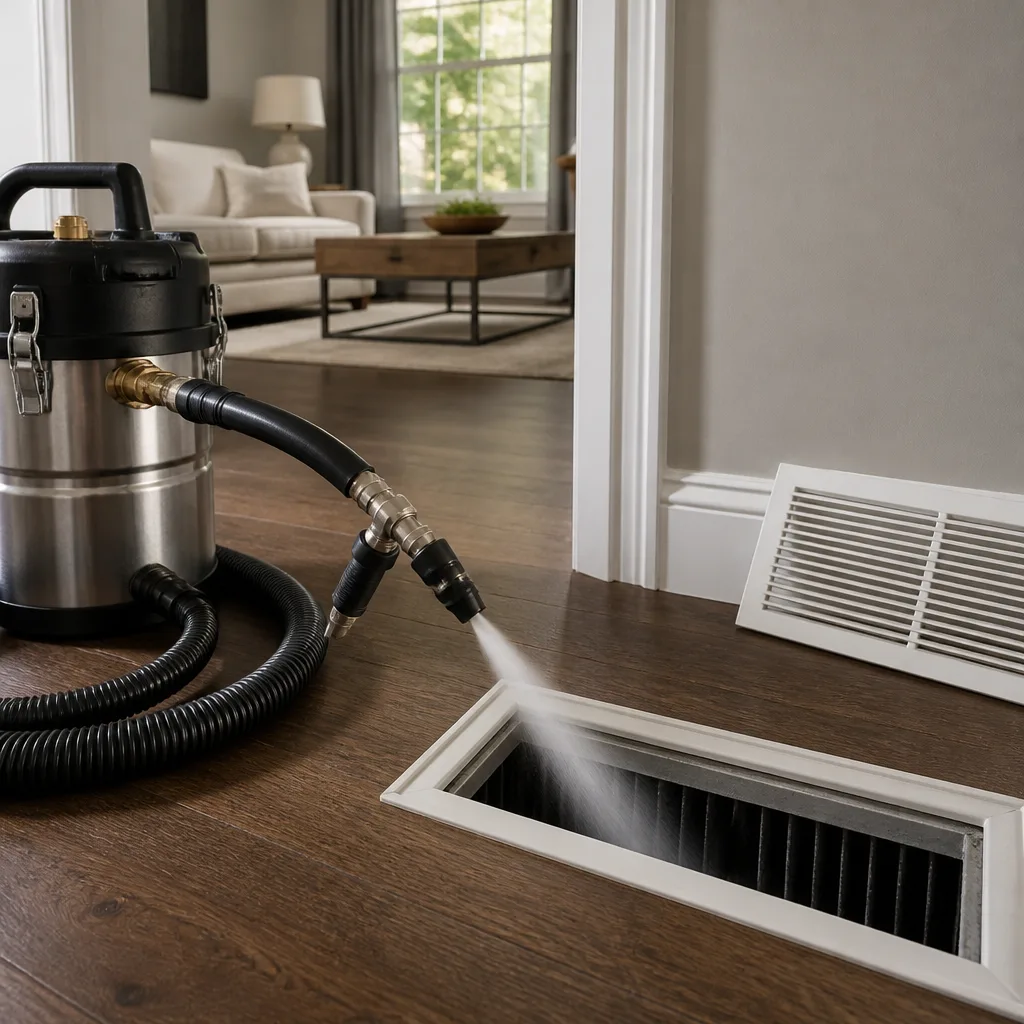 Sanitizing & deodorizing
Whole-system duct and dryer vent check with before-and-after photos - you see exactly what came out of your vents
That "$99 whole-house special" is a bait ad - the real number appears once they are in your hallway, or the "clean" is a shop-vac at the register. We photograph the inside of your ducts before and after instead.
Air Duct Cleaning Maintenance Checklist for Spring Branch Homeowners
Most homeowners treat the furnace filter as the whole story. Change it every few months, maybe write the date on the edge with a marker, and assume the ductwork beneath is fine because nothing looks wrong. But filter condition is a lagging indicator, not a leading one. By the time a filter looks visibly clogged, fine dust and debris have already migrated past the filter frame into the duct lining, the register boots, and the plenum. The real protocol is different: a set of routine checks that catch contamination, loose connections, and airflow loss while they’re small.
What follows is a working maintenance checklist built for Spring Branch homes, organized by how often you should run each check and what a technician should measure when they come out. You’ll learn what to inspect yourself, what to leave alone, and the red-line signals that mean stop the schedule and call someone now.
Quick Answer
The core air duct maintenance checklist for Spring Branch homeowners covers four cadences: monthly visual checks of registers, flex-duct connections, and the condensate pan; quarterly checks timed to the seasonal switch from heating to cooling; a room-by-room airflow log that flags partial blockages before they become comfort complaints; and an annual professional inspection that measures and documents airflow, not just vacuums the ducts. When any red-line condition appears – musty odor at startup, dark staining around registers, visible dust trails at seams – skip the checklist and get an assessment.
Styles & brands we work with
- Whole-home duct cleaning
- Dryer vent cleaning
- Camera inspection
- Sanitizing & deodorizing
Table of Contents
- The Monthly Visual Walkthrough
- Quarterly Checks for Spring Branch’s Seasonal Shift
- Logging Airflow by Room With the Tissue Test
- What an Annual Professional Inspection Should Measure
- Red-Line Conditions That Bypass the Checklist
- The Dryer Vent: A Separate Line on the Same Checklist
- Keeping a Duct Maintenance Log That’s Actually Useful
The Monthly Visual Walkthrough
A monthly walkthrough takes about ten minutes and requires no tools. The point isn’t to clean anything; it’s to notice changes while they’re still cheap to fix. Here in Spring Branch, where ceilings and attic spaces cook through long warm months, small issues like a separated duct connection can escalate into larger ones fast. You’re looking for changes against last month, not perfection.
Work through the home in the same order every time so a missed room stands out. Here’s what the walkthrough covers:
- Register covers: Pop off one or two and look at the grille surface from both sides. A light dust film is normal. A fuzzy, gray mat, or any dark spotting, is not. Note which rooms are worse than others – that pattern tells a technician where to look first.
- Visible flex-duct connections: In an accessible attic or crawlspace, glance at the joints where flex duct meets the plenum or a boot. Loose tape, a slipped collar, or a visible gap is a leak. Flex duct can sag or pull away from its fitting over years of expansion and contraction.
- Condensate drain pan: Look in the supply closet or attic for the pan under the air handler. Standing water, rust rings, or a slimy film point to a drainage issue that also feeds biological growth in nearby ductwork.
- Filter and filter frame: Beyond how loaded the filter looks, check whether it seats squarely. A filter slightly small for its slot lets air bypass entirely, which defeats the filter.
- Smell test at startup: When the system first kicks on, notice the air. A faint dust smell is common. Anything damp, sour, or distinctly musty is a signal worth logging.
Write down what you find, even if it’s nothing. The value of a monthly walkthrough comes from the comparison across months, not from any single visit.
Quarterly Checks for Spring Branch’s Seasonal Shift
Duct systems do different work in heating mode than in cooling mode. In Spring Branch, most homes run cooling for a long stretch and heating for a shorter one, and the switchover is the ideal time to check the parts of the system that one season stresses more than the other. Do these four times a year, ideally at each mode change plus twice mid-season.
Starting from the point where you switch the thermostat over, work through this sequence:
- Run the system for a full cycle before checking anything. Let the blower pull air through the system for 15 to 20 minutes so any dislodged dust settles where it will settle.
- Re-check every register you checked monthly. Cooling mode pushes more condensation risk through the system than heating does. Cold air moving through a warm, humid attic duct can sweat, and moisture in flex duct is the start of a biological problem.
- Compare airflow at the registers between seasons. If a room felt fine in heating mode but feels weak the first week of cooling, that’s a signal of either a duct leak or a blower setting that needs review – not a firmware glitch.
- Inspect the return-air path. The return grille is often in a hallway ceiling and rarely gets pulled. A loaded return grille starves the whole system; clean it before assuming the supply ducts are the problem.
- Look for condensation on any visible duct run. Beads of moisture or staining on insulated flex duct in the attic need a professional look before the season runs long.
The quarterly timing matters because it catches issues at the moment they change. A duct leak discovered in the first week of cooling season is a small repair. The same leak discovered in the middle of summer, after months of pulling humid attic air, is a large one.
Logging Airflow by Room With the Tissue Test
If filter and register checks are the visual side of maintenance, airflow logging is the measurement side, and it’s the one almost no homeowner does. The test is simple: hold a single-ply tissue or a strip of lightweight paper against each supply register and record how it moves. This isn’t a substitute for professional airflow measurement – it’s a screening tool that flags changes early enough to act on them.
Do this once a month and record the result on a sheet or a note on your phone. Score each register as strong and steady, moderate-but-fluttering, or weak-and-barely-moving. What matters is the trend over time, not the absolute score, since different rooms will never feel identical.
An acute change in a single room usually points to partial blockage: a damper accidentally shifted, a register closed to keep a room cool that was never reopened, or a flex duct that’s crushed or sagged against a joist. In Spring Branch homes, where attics can get hot enough to make even a brief inspection unpleasant, a sagging flex run clipped loosely at install often flattens across years and shows up as a single weak register.
A gradual drop across several registers – not one isolated room – usually points to something upstream of the ducts themselves: a dirty blower wheel, a filter that’s masking a bigger loading issue, or a return path that’s starving the system. That’s the pattern that clears the “how much does a filter change really fix?” question and moves the conversation toward professional air duct cleaning in Spring Branch or a full inspection.
The tissue test doesn’t cost anything and doesn’t require a meter. It gives you a documented baseline, so when you do call a technician, you can describe what changed and when.
What an Annual Professional Inspection Should Measure
A professional inspection isn’t a heavier version of the monthly walkthrough. It’s a measurement event with documentation, and you should expect to see numbers, not just a clean-looking vent. In our work around Spring Branch, the single biggest gap between a real inspection and a sales visit is whether the technician keeps a record of what they measured before they cleaned.
At minimum, an annual inspection should include the following:
- Static pressure readings at the return and supply side of the air handler, taken with the system running. These numbers describe how hard the system is working to move air, and they’re the measurement that most often justifies a deeper cleaning.
- Airflow measurements at a representative sample of registers, not just the ones easiest to reach. A sample should cover at least one register per zone or floor.
- A camera inspection of main trunk lines where accessible. A technician can see the inside of flex duct and trunk with a borescope without cutting access panels.
- Documented contamination findings: visual evidence of debris, moisture, or staining, with location noted.
- A written summary of the findings and recommendations before any work begins, so the scope is agreed and the price is set per job by the written estimate.
Equipment matters here. The systems we use – Abatement Technologies HEPA vacuums for negative-pressure containment, Rotobrush rotary brush systems for mechanical agitation of the duct lining, and Nikro negative-air machines to keep dust from escaping into the living space – are the same category of tools used in commercial and remediation work. A generalist HVAC company typically doesn’t own or operate them, and a cleaning crew without them is limited to what a shop vacuum can pull off a grille. The difference shows up in the numbers and the before-and-after photos, not in a pitch.
One practical note: if the inspection finds a compromised joint or a duct run pulled loose from its fitting, you want the same visit to include a fix. That’s why duct repair and sealing are part of our scope, and why we don’t hand the ductwork back over to a second contractor. Cleaning is step one. Sealing the leaks is how you keep it clean.
Red-Line Conditions That Bypass the Checklist
Some findings don’t belong on a monthly log because they’re not maintenance issues – they’re signals to get professional eyes on the system before anything else. Treat these as stop-the-checklist conditions. Don’t wait for the next scheduled inspection.
- Musty odor after system startup. Damp, sour, or distinctly earthy smells that appear the moment the blower comes on point to biological growth inside the duct system or the air handler closet. In Spring Branch’s humid season, a slow condensate leak or a sweating duct run can feed this quietly for weeks before the smell becomes obvious.
- Visible dark staining around a register or along a visible duct seam. A dark ring around a grille frame, or black spotting at a flex-duct joint, deserves a camera inspection before you clean anything.
- Persistent condensation on visible ductwork. Beads of moisture on insulated flex duct in a hot attic indicate a failing vapor barrier or a poorly sealed duct run that’s pulling humid air.
- Standing water or slime in the condensate pan. This ties the air handler to the ducts, and the risk extends to both.
- A sudden, home-wide drop in airflow with no filter change explanation. If the tissue test shows weak flow at most registers and the filter isn’t the cause, get a professional look at the blower and the trunk lines before making any other diagnosis.
None of these conditions should be handled with a consumer shop vacuum or a household antimicrobial spray. The right response is an assessment with proper equipment and negative-pressure dust containment, which is what commercial-grade HEPA and negative-air tools are built for.
The Dryer Vent: A Separate Line on the Same Checklist
The dryer vent is structurally separate from HVAC ductwork, but it belongs on the same maintenance schedule because it carries a fire risk rather than a comfort risk. Lint accumulates at bends and at the exterior termination, and the same positive-pressure airflow that moves lint also pushes the risk of a blocked exhaust. In Spring Branch, where homes often run dryers heavily through the warm season, lint that’s baked onto the termination flapper can slow exhaust enough that a homeowner never notices until the dryer starts taking two cycles to dry a load.
Once a month, check the flapper at the exterior termination with the dryer running: it should open freely and close fully. Once a year, look at the run behind the dryer for a crimped or crushed flex. If your own access to the run is limited or the exterior termination is on a high wall, this is a professional job – a lint load trapped deep in the run can’t be cleared by pulling the lint trap out and calling it done. Full dryer vent cleaning clears the whole run, not just the last few feet.
Keeping a Duct Maintenance Log That’s Actually Useful
A maintenance log only earns its keep if it answers a question a technician would ask. Date, room, and score for the tissue test, plus a short note on anything that looked different, is enough. Add the filter change dates in the same log, and you’ve got a record of the last twelve months of the system’s behavior – far more useful than a vague memory of “it seemed fine in spring.”
Two habits make the log worth keeping. First, do the checks in the same order every time so a skipped room stands out. Second, take a photo of any register or joint that looks unusual, with the date in the filename. Those photos give a technician a comparison on arrival and let you see whether a cleaning actually made a difference. We document every job with before-and-after photos for the same reason: it’s the only honest way to see what changed.
Pair the log with the seasonal filter schedule. A filter swapped on a rough monthly rhythm, plus a tissue-test log, plus one documented annual inspection covers the whole picture. If you want the annual inspection paired with proactive filtration, we carry Honeywell and Aprilaire filtration products and install them to fit your specific system, not as an off-the-shelf add-on.
Common Mistakes to Avoid
- Treating the filter as the whole maintenance program. A clean filter is a precondition for a healthy system, not proof that the ductwork is clean. The duct lining, register boots, and blower wheel are where the accumulated load actually sits.
- Spraying sanitizer into the ducts before addressing the source. A spray that isn’t tied to a named product and a documented process is a temporary smell-mask. Our sanitation treatments use Guardsman-branded products applied after cleaning and sealing, which means the growth source is addressed first.
- Leaving a discovered duct leak for “later.” In Spring Branch, a loose flex-duct joint in a hot attic pulls unconditioned attic air into the system with every cooling cycle. What’s a small fix in March can become a system-wide cleaning job by July.
- Replacing duct tape with duct tape. Standard cloth-backed duct tape fails on flex duct in the warm season. If a joint needs re-sealing, it should be sealed with the right material and inspected for the underlying cause, not re-taped and forgotten.
- Judging a cleaning job by the vent covers alone. If the only thing that got cleaned is the visible grille, the job is cosmetic. Ask what equipment was used beyond the vacuum, and ask for before-and-after photos of the inside of the ducts.
- Skipping the dryer vent because the HVAC system is the priority. Lint in the dryer exhaust is a fire risk independent of anything in the HVAC ducts, and it needs its own place on the schedule.
- Assuming a generalist HVAC company will do this job the same way a duct specialist will. A company that repairs air conditioners is not automatically equipped for duct cleaning. Ask directly whether they own and use professional-grade equipment, and which brands.
See the difference
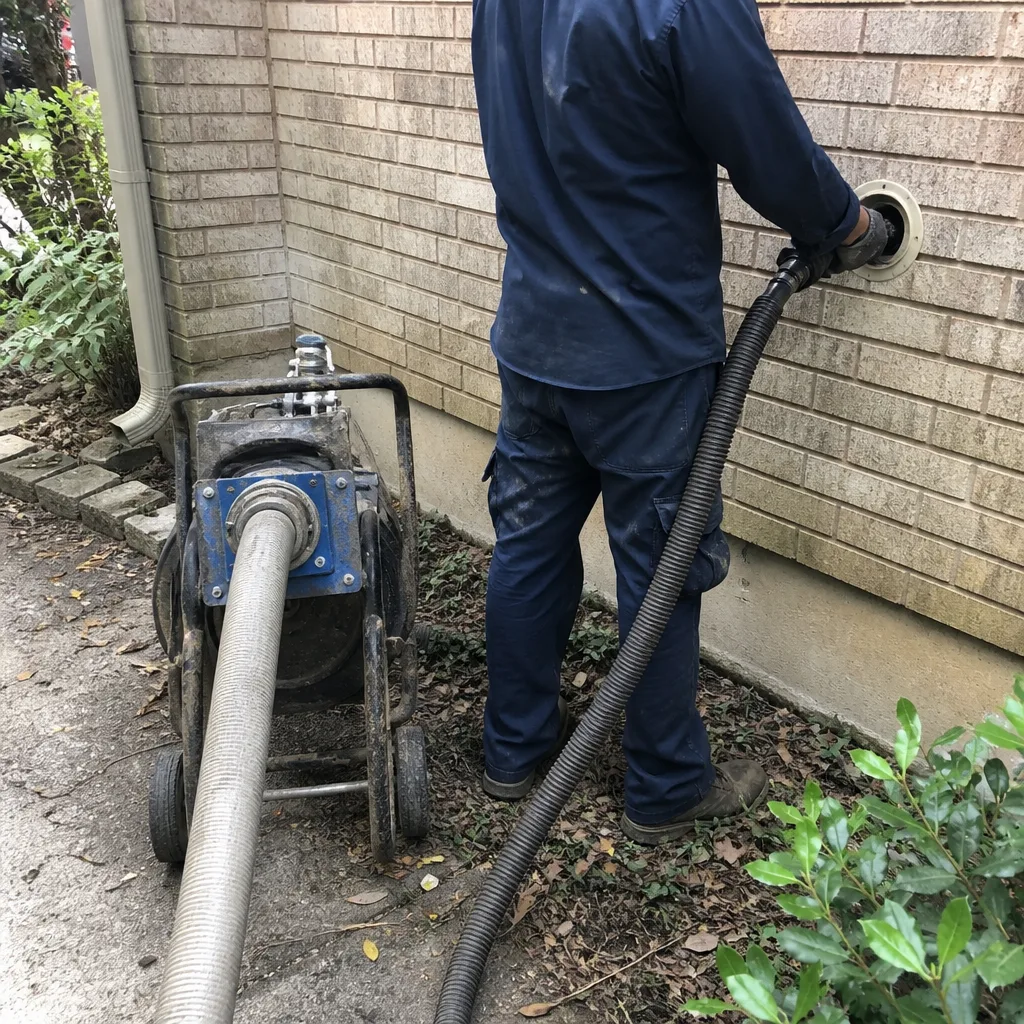 Before
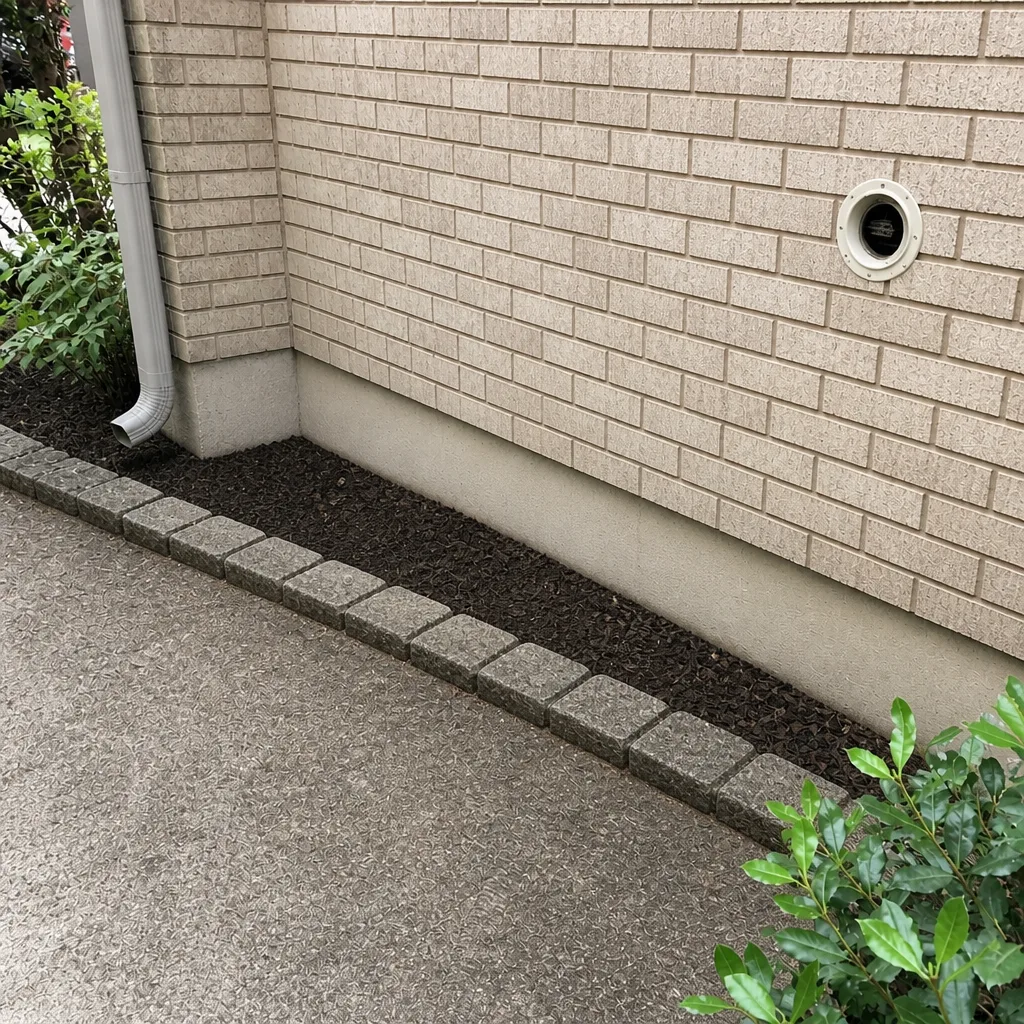 After
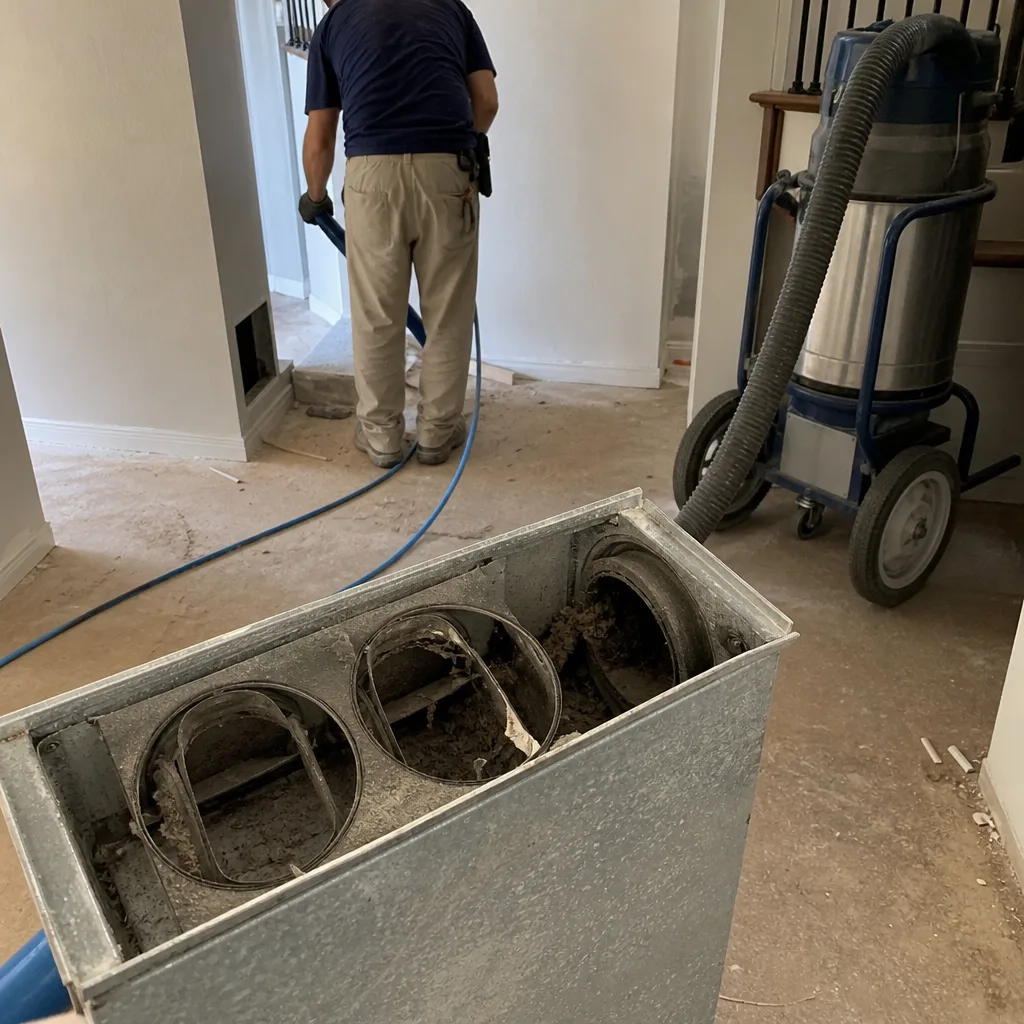 Before
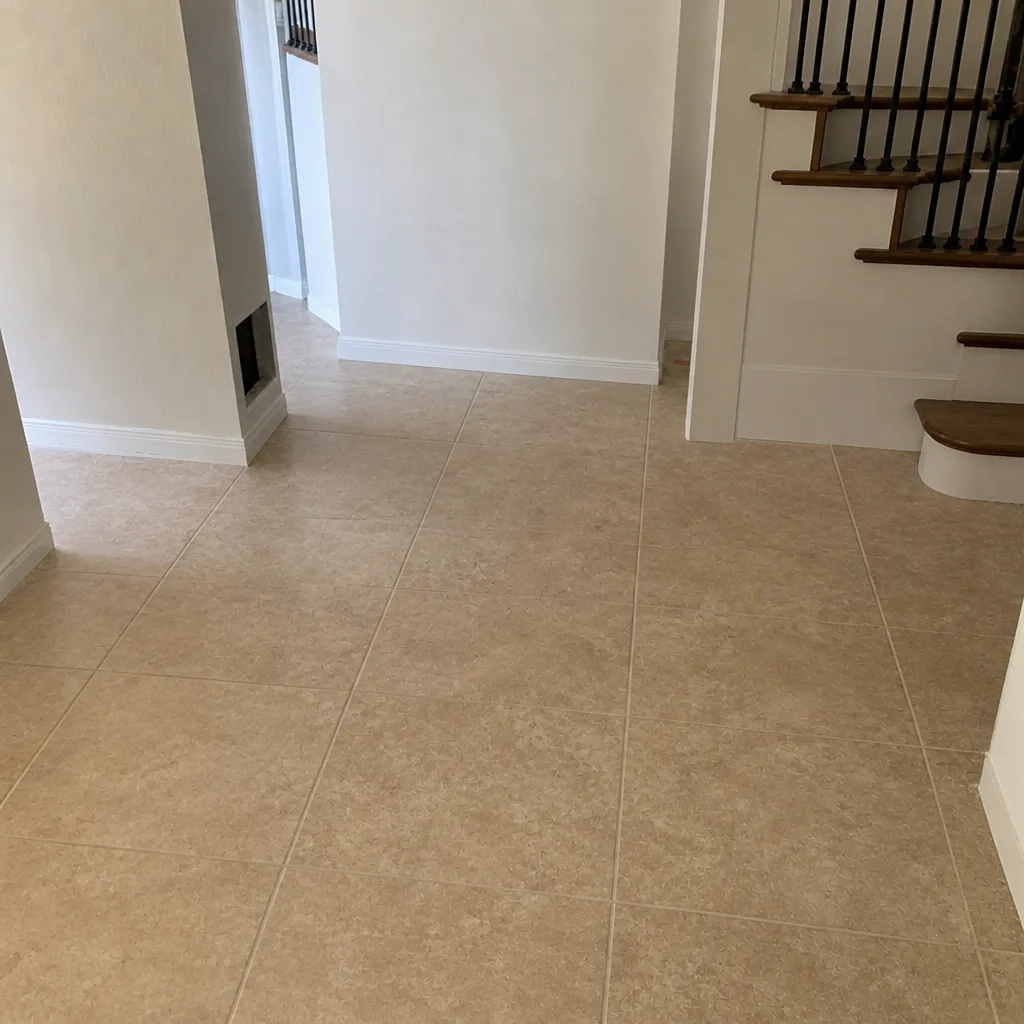 After
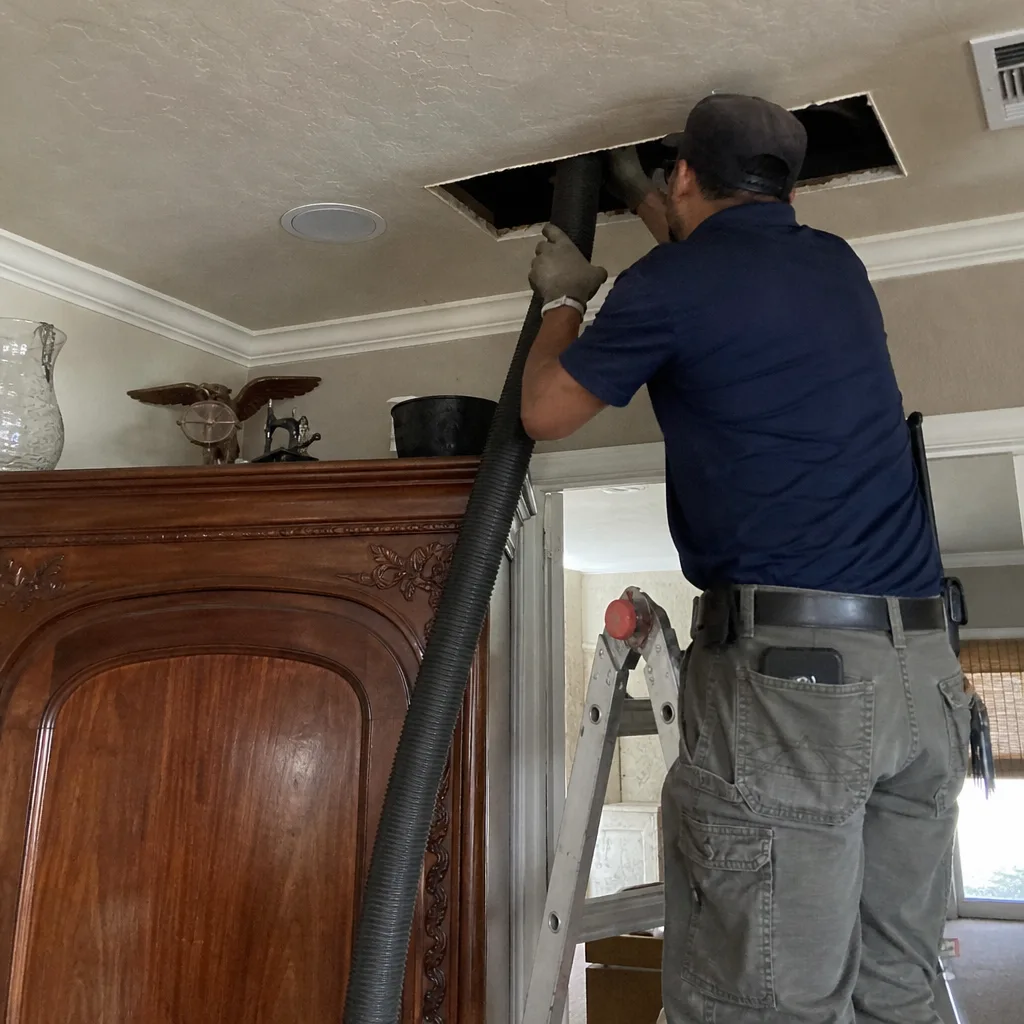 Before
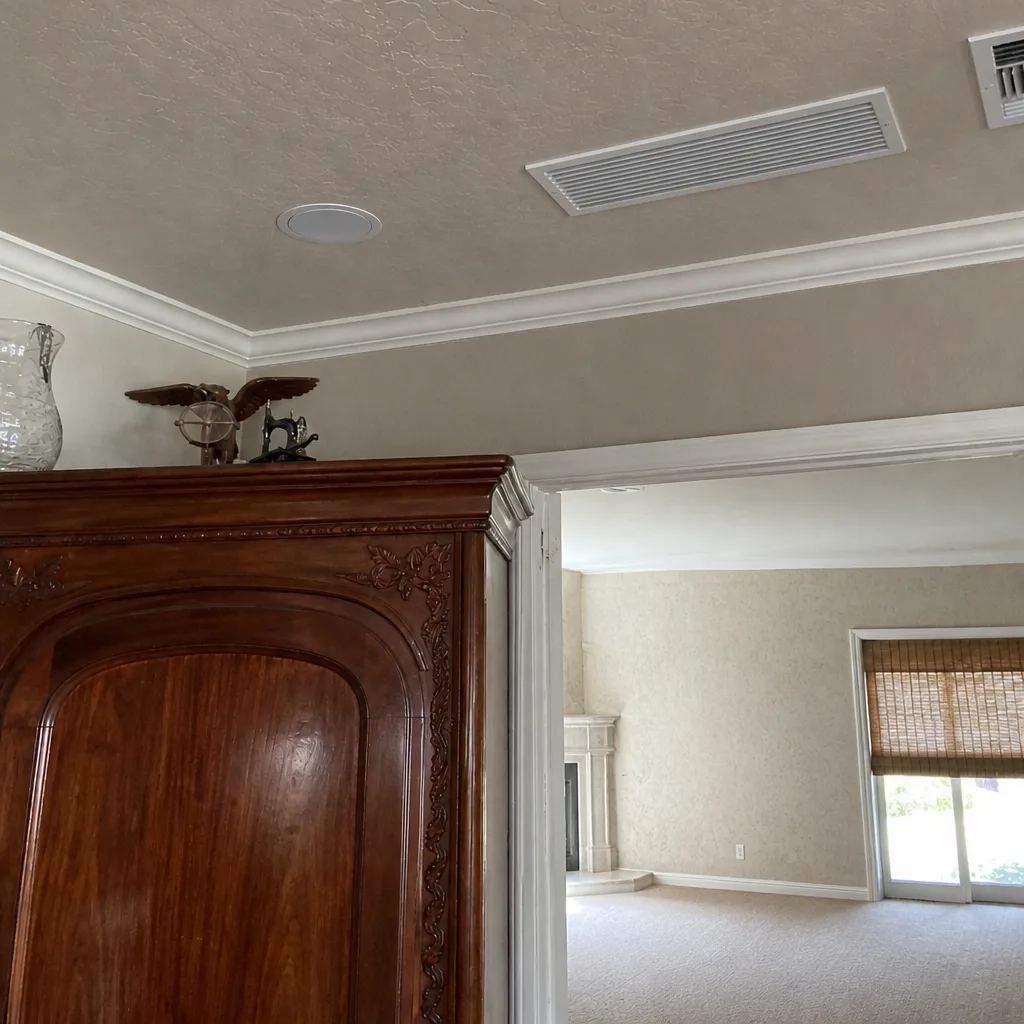 After
When to Call a Professional
Call us when a red-line condition appears, when the yearly inspection is overdue, or when the tissue-test log shows a trend you can’t explain. If your home has had a recent renovation, a new pet, or a noticeable uptick in allergy symptoms indoors, that’s also the moment to schedule an assessment rather than wait for a scheduled check. If the dryer vent hasn’t been cleared in over a year and the dryer is taking longer to dry, that goes on the same visit. A full-system HVAC cleaning combined with duct and dryer-vent service covers the whole air pathway in one window. Air Duct Cleaning Spring Branch offers free estimates in Spring Branch – call (855) 359-1727.
Frequently Asked Questions
Every two to three years for most homes, and more often if there are pets, allergy concerns, a recent renovation, or a red-line finding on the checklist. The annual inspection is the check that tells you when the next cleaning is due – not a fixed calendar. If your monthly log shows a gradual airflow decline across several rooms, that’s a stronger signal than counting years.
Static pressure at the air handler, airflow at a representative sample of registers, and a camera view of main trunk lines, all documented before cleaning. A technician should also record contamination findings with locations and leave you a written summary. If the visit doesn’t include measurements and photos, it’s a cleaning, not an inspection. Call (855) 359-1727 for a free estimate on the full inspection.
Usually because the equipment, the scope, or both are smaller. A low quote typically reflects a single-vacuum, one-visit pass without negative-pressure containment, mechanical agitation of the duct lining, or a camera inspection, and it usually doesn’t include any repair or sealing. The result is a job that looks done on the grilles but leaves the lining, seams, and flex-duct joints where they started. We set one flat price per system in the written estimate before work starts, and we include before-and-after photos so you can see exactly what changed. Call (855) 359-1727 for an estimate.
You should get before-and-after photos of your own ducts, not stock images, plus the measurements from the inspection. Ask what equipment was used – the named brands are the check: Abatement Technologies HEPA, Rotobrush rotary brush, Nikro negative-air. Those aren’t tools a one-vacuum crew brings, and they don’t show up in a photo if they weren’t there. Call (855) 359-1727 if you want to compare what a full-system job actually includes.
Yes. A duct leak that pulls attic air into the system doesn’t feel like a draft from inside the house; it feels like the system working harder. In Spring Branch, attic air in the cooling season can be much hotter than the air you want at the register, so a leak quietly costs comfort and efficiency at the same time. Sealing is the fix, and it’s a step that duct-cleaning-only operators typically can’t do without bringing in another contractor.
No. A shop vacuum creates a dust cloud inside the system rather than containing it, and it can’t reach the duct lining, seams, or flex-duct interior where contamination actually sits. For any red-line condition – musty odor at startup, dark staining around a register, visible condensation – the safe move is a professional assessment with negative-pressure containment. For the routine parts of the checklist, the daily visual and tissue tests are safe to do yourself. Call (855) 359-1727. We answer 24/7. Fast dispatch from 7am to 7pm, Sunday through Friday.
The Bottom Line
Duct maintenance in Spring Branch is a monitoring protocol, not a spring-cleaning ritual. The monthly walkthrough catches what changed, the quarterly checks ride the seasonal shift from heating to cooling, the tissue-test log flags airflow loss before it becomes a comfort complaint, and the annual professional inspection gives you the measurements and photos that make the next decision clear. Red-line conditions skip the checklist entirely. Build the log, keep the schedule, and let the numbers tell you when a full-system cleaning is due. When it is, or when something looks off, we’re a phone call away.
Written by the team at Air Duct Cleaning Spring Branch.
Contact
Whether you’re catching up on overdue maintenance or your tissue-test log just flagged something, a full-system assessment starts with a conversation. Call (855) 359-1727 for a free estimate. We answer 24/7. Fast dispatch from 7am to 7pm, Sunday through Friday. One flat price per system, agreed before work starts, with before-and-after photos so you can see what changed. You can also read more about air duct cleaning and how we handle the full air pathway in a single visit.
Written by the team at Air Duct Cleaning Spring Branch.