
Last updated November 25, 2026
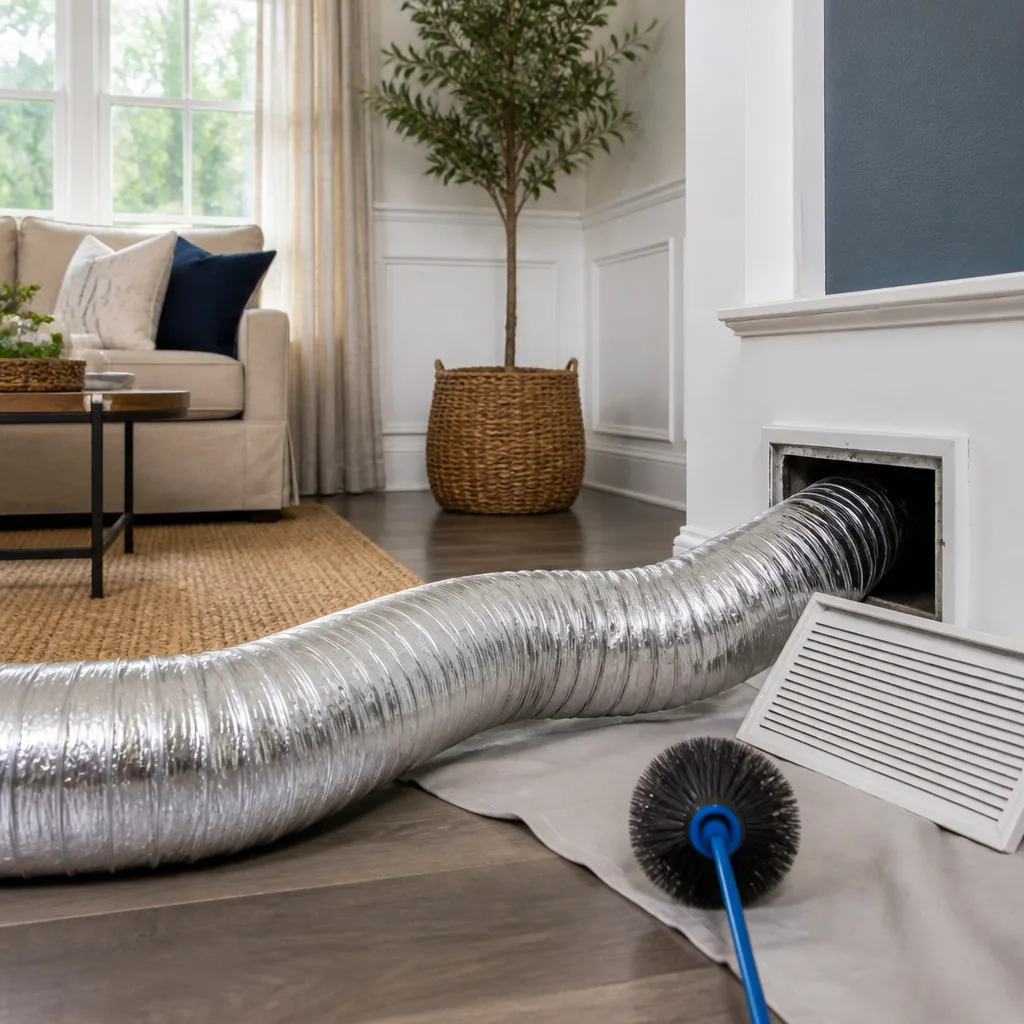 Whole-home duct cleaning
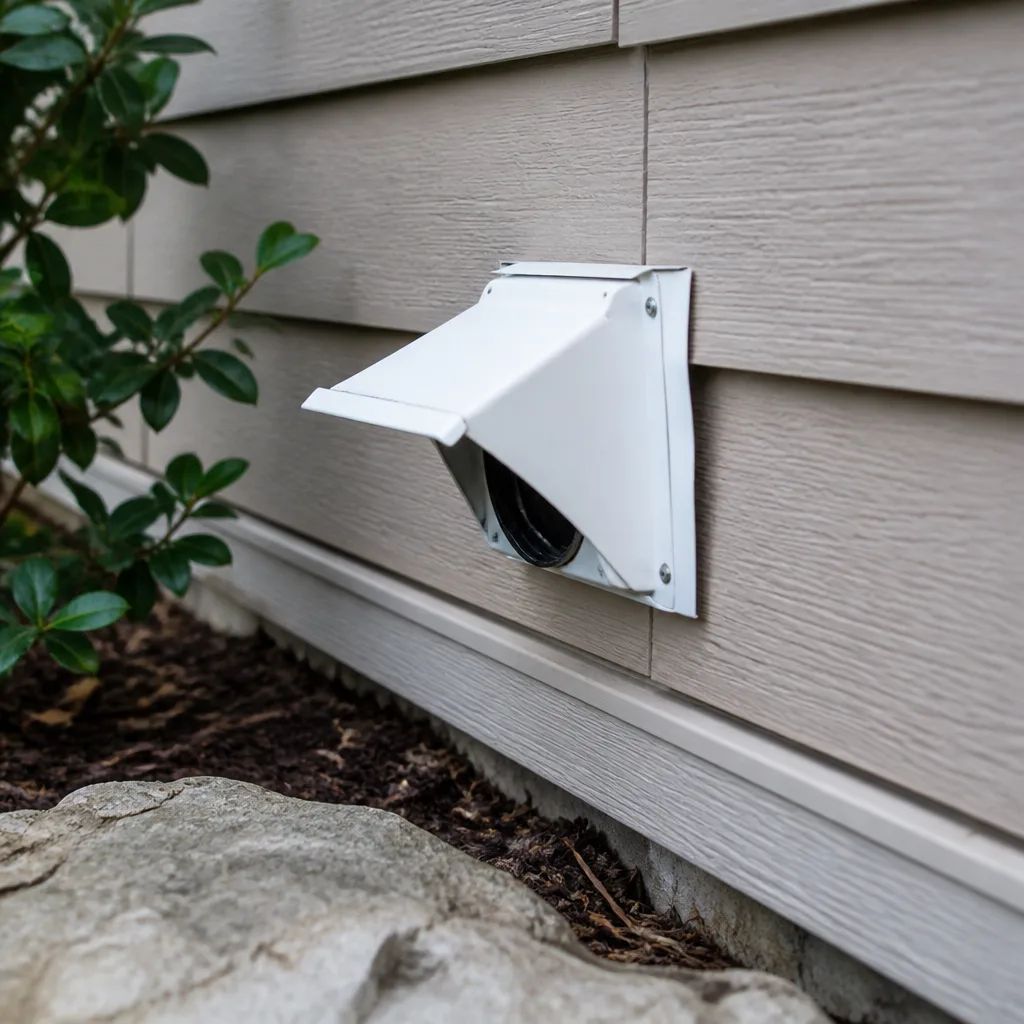 Dryer vent cleaning
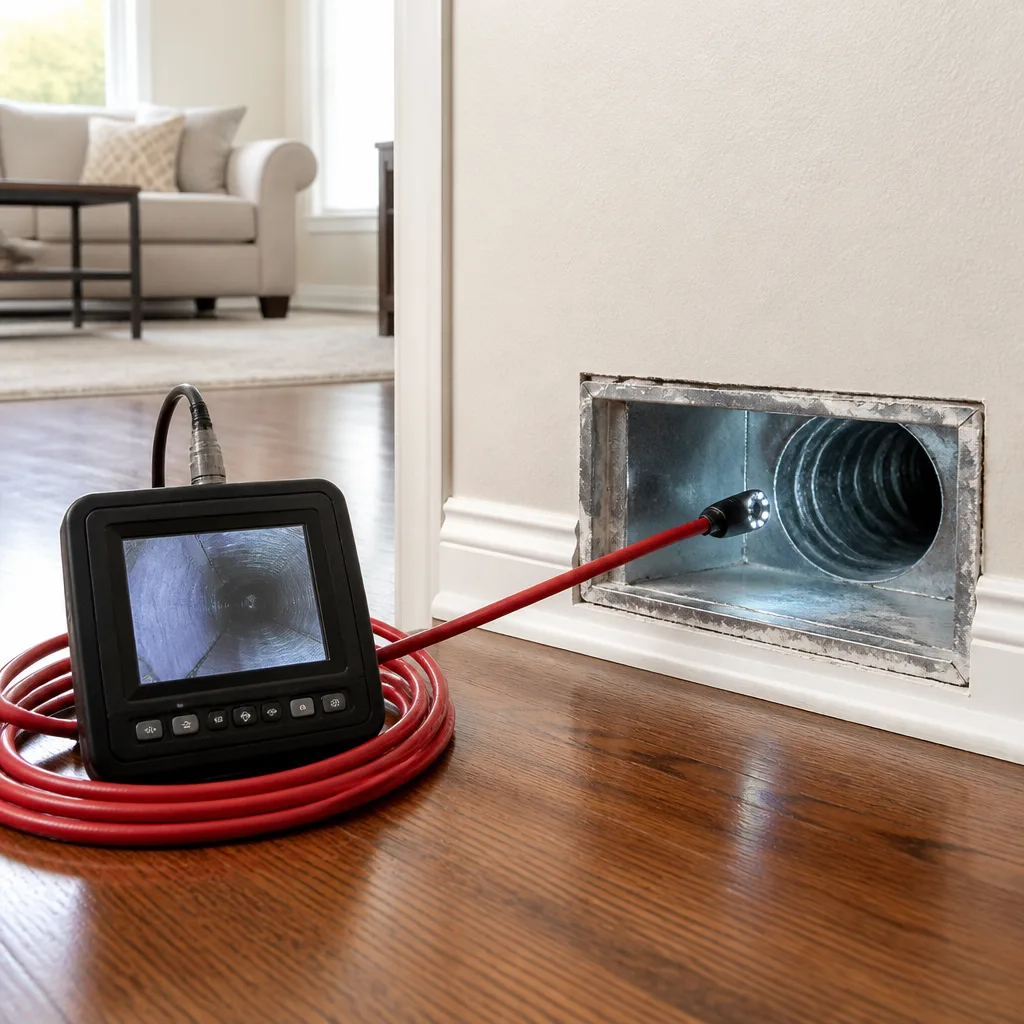 Camera inspection
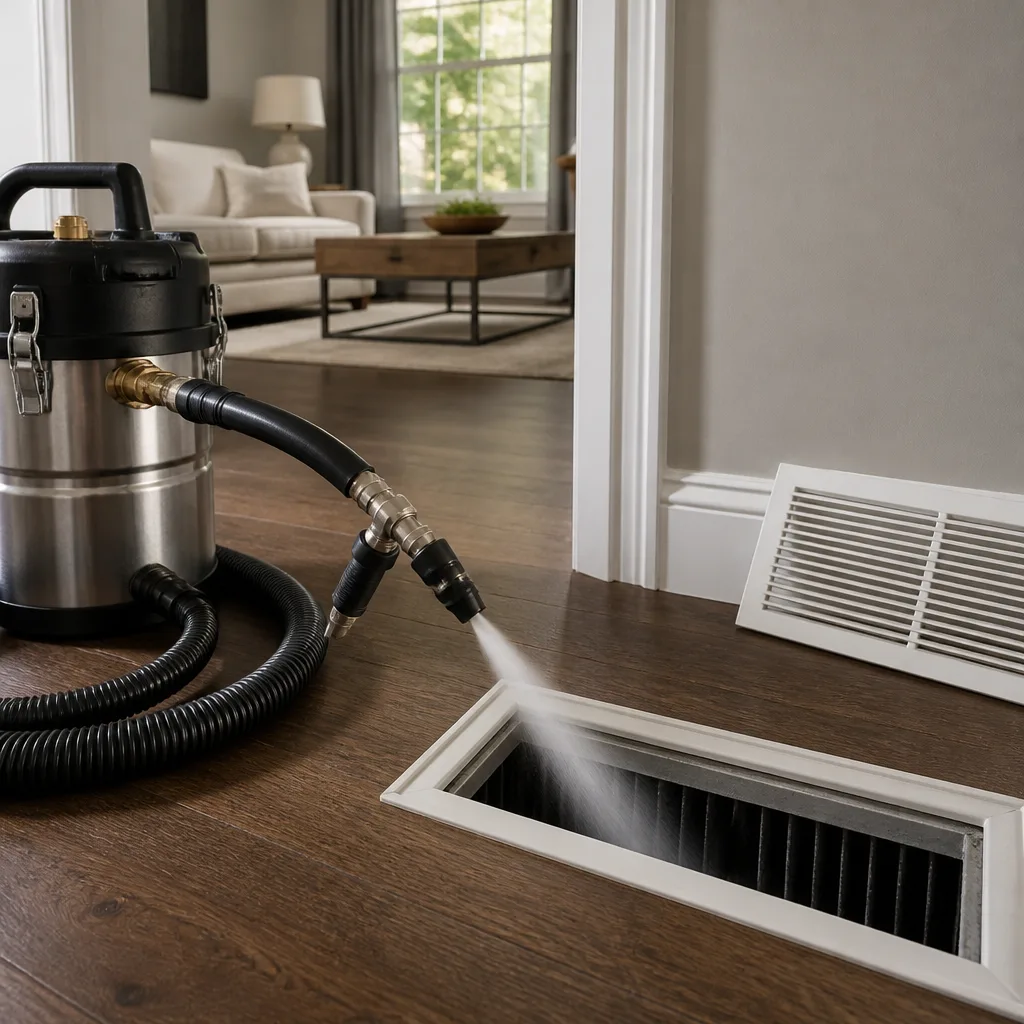 Sanitizing & deodorizing
Whole-system duct and dryer vent check with before-and-after photos - you see exactly what came out of your vents
That "$99 whole-house special" is a bait ad - the real number appears once they are in your hallway, or the "clean" is a shop-vac at the register. We photograph the inside of your ducts before and after instead.
Air Duct Cleaning Permits, Codes & Inspections in Spring Branch, TX: What You Need to Know
Most homeowners assume that any work touching their ductwork falls under the same rules. It doesn’t. Cleaning the inside of a duct is not a permitted trade in Texas, but repairing that duct, applying an antimicrobial inside it, or replacing the coil it connects to can be regulated work performed under a state license. The line between those activities is where problems start. In Spring Branch, TX, we’ve watched homeowners sign off on duct repairs and sanitizing treatments without ever asking who was licensed to do them. This guide explains exactly where that line sits, which agency regulates what, how Harris County and City of Houston jurisdiction overlap here, and how to check a contractor before anyone touches your air system.
Quick Answer
Air duct cleaning itself does not require a permit in Texas and is not a licensed trade. What does require licensing is the surrounding work: HVAC duct repair, duct modification, and coil work fall under Texas Department of Licensing and Regulation (TDLR) HVAC contractor licensing, while mold assessment and mold remediation in ductwork, including antimicrobial application that goes beyond routine cleaning, fall under Texas Department of State Health Services (TDSHS) mold licensing. Mechanical permits for duct modification are pulled through the authority having jurisdiction over your address, which in the Spring Branch area is either the City of Houston or Harris County depending on whether you’re inside Houston city limits.
Styles & brands we work with
- Whole-home duct cleaning
- Dryer vent cleaning
- Camera inspection
- Sanitizing & deodorizing
Table of Contents
- Which duct-related tasks require TDLR HVAC licensing in Texas?
- When does mold licensing apply to ductwork and antimicrobials?
- Harris County and City of Houston jurisdiction in Spring Branch
- When is a mechanical permit pulled for duct modification?
- How to verify a contractor’s TDLR and mold credentials
- What documentation to keep after duct-adjacent work
- What an inspection actually looks like on a Spring Branch home
Which duct-related tasks require TDLR HVAC licensing in Texas?
Any work that alters, repairs, or replaces the mechanical components of your HVAC system requires a TDLR-licensed HVAC contractor. That includes duct repair, duct modification, sealing breaches in hard duct, reconnecting disconnected runs, and any work involving the air handler or coil. Cleaning is not in that category.
The distinction matters because a duct cleaning company that finds a disconnected run or a crushed flex duct during a job is now standing at a fork: fix it under appropriate licensing, or hand the repair off. A company without HVAC licensing that welds a patch onto your ductwork is performing regulated work without the credential, and any resulting damage or failure can become an insurance claim problem. Your insurer may decline coverage for work installed out of compliance, which is not a risk worth taking on a system that runs every day in a Spring Branch home.
What falls under TDLR HVAC licensing
- Duct repair, including sealing separations and patching holes in hard duct
- Duct modification, including adding, removing, or rerouting runs
- Air handler and coil work
- Connecting new ductwork to the plenum or trunk line
- Any installation or replacement of components within the air distribution system
What does not require TDLR HVAC licensing
- Source removal cleaning of duct interiors
- Cleaning of registers, grilles, and diffusers
- Vacuuming out the air handler cabinet and blower compartment (cleaning, not repair)
- Dryer vent cleaning, which is a separate pathway entirely
- Visual air quality assessment
The gap between “cleaning” and “repair” is where we see homeowners get caught. Our approach is to offer Air Duct Cleaning Spring Branch work as a full-system service that includes in-house duct repair and sealing, so an inspection and the fix that follows don’t require a second contractor or a second series of questions. One visit covers the assessment, the cleaning, and the repair, with the documentation that follows.
When does mold licensing apply to ductwork and antimicrobials?
Texas regulates mold assessment and mold remediation under the Texas Department of State Health Services. Applying an antimicrobial inside ductwork can cross into remediation territory depending on what’s being treated and why, and the credential required depends on the scope.
The distinction comes down to whether the work is a routine post-cleaning sanitizing step or a response to confirmed microbial growth. Routine sanitizing after source removal cleaning is not a mold remediation project. When a technician finds evidence of mold growth within the duct system and proposes treating it as remediation, the licensing rules for remediation contractors apply, and separate assessment may be needed before remediation begins. This is a real gap in the market: some companies sell a spray and call it remediation without holding the credential.
Our position on this is straightforward. Guardsman-branded sanitizing treatments are applied after cleaning as a documented step in the process, with the product named and traceable. When a job crosses into what looks like remediation, we say so and explain what the next step should be. We don’t blur the line to close a sale.
Signs a duct job may actually be a mold project
- Visible growth inside the air handler, plenum, or duct interior
- Persistent musty odor that returns after cleaning
- A history of water intrusion or a moisture source connected to the system
- Allergy or respiratory symptoms that spike when the system runs
Any of those signs is a reason to have the system looked at by someone who can tell you honestly whether you’re looking at cleaning or remediation. That’s a different conversation, and the questions are different. Spring Branch homes sit in a humid climate where a cooling system running most of the year keeps duct interiors conditioned, which makes the difference between surface dust and actual growth easier to read on inspection.
Harris County and City of Houston jurisdiction in Spring Branch
Spring Branch is one of those pockets of the Houston area where the authority having jurisdiction depends entirely on your address. Parts of Spring Branch are inside Houston city limits, parts are in unincorporated Harris County, and the permitting process is different for each.
If your address is inside Houston city limits, mechanical permits for duct modification are pulled through the City of Houston’s permitting system. If your address is in unincorporated Harris County, the process runs through Harris County. There’s also a strip of Spring Branch where a handful of homes sit inside smaller municipal boundaries, in which case that city’s permitting department is the one to call. This is why a company working across the Spring Branch area cannot assume one process applies everywhere.
How to determine which jurisdiction you’re in
- Look at your property tax statement. The taxing authority listed tells you which entity assesses your property.
- Check your water and sewer bill. The billing entity usually matches the municipal service boundary.
- Search your address on the Harris County Appraisal District site to see which jurisdiction is listed.
- Call your city or county’s building department directly and ask which authority issues mechanical permits for your address.
The overlap confuses homeowners, and it also confuses some contractors. If a company tells you “you don’t need a permit for that” without asking your address, that’s worth a follow-up question. Our technicians have up to 14 years of experience working across the Spring Branch area and know the difference between the two permitting processes, but we always verify by address before telling a homeowner what’s required.
When is a mechanical permit pulled for duct modification?
A mechanical permit is required when ductwork is being modified in a way that changes the system’s distribution or capacity. Cleaning alone does not trigger a permit. Repair may or may not, depending on scope.
As a general rule, the permit threshold is about whether the work changes the system. Cleaning out what’s already there doesn’t. Cutting in a new run, relocating a register, upsizing a return, or adding a zone does. Patching a separation in a flex duct joint usually falls below the threshold; replacing a section of hard duct with new material may cross it. The safest answer for a homeowner is to ask the licensed HVAC contractor doing the work whether the specific job triggers a permit, and get that answer in writing.
Typical permit-triggering work
- Adding a new supply register or return
- Relocating existing registers or grilles
- Rebalancing duct size to correct static pressure problems
- Replacing sections of duct trunk line
- Adding a zoning system
- Modifying the plenum connection
Work that generally does not require a permit
- Cleaning duct interiors
- Sealing visible joint separations with mastic or approved tape
- Replacing a section of flexible duct with like-for-like material
- Sanitizing after cleaning
- Dryer vent cleaning, which is separate from the HVAC system
When we perform air duct cleaning in Spring Branch and find a duct breach, we explain whether the repair needs a permit and what the next step is. That conversation happens before the work does. We don’t want a homeowner finding out after the fact that a permit should have been pulled.
How to verify a contractor’s TDLR and mold credentials
Verifying a contractor takes about five minutes and is the single most useful thing you can do before signing anything. Both licensing lookups are public, free, and online.
Every licensed HVAC contractor in Texas has a TDLR license number. Every licensed mold remediation contractor has a TDSHS license number. Both can be looked up through each agency’s public license search. A contractor who can’t produce the number, or whose name doesn’t match the license, is one to walk away from.
Step-by-step verification
- Ask for the license number in writing before any work is scheduled. This applies to HVAC duct repair and to any mold remediation work.
- Look up the number on the TDLR license search for HVAC work, or the TDSHS mold license search for remediation. Confirm the license is active and matches the company name.
- Verify the physical business address matches what’s on the license.
- Ask for proof of insurance and check the coverage is general liability, not just a vehicle policy.
- Ask whether the company performing the work is the one holding the license, or whether they subcontract. Both can be legitimate, but you should know which applies to your job.
This applies to us too. Air Duct Cleaning Spring Branch connects homeowners with independent local professionals who are licensed and insured as their state requires, and we’re happy to walk anyone through what to verify before work begins. The lookups are public and nobody should skip them. A licensed pro will not hesitate when asked. If the answer is a brush-off, that’s the answer.
What documentation to keep after duct-adjacent work
Homeowners should retain a specific set of records after any duct work for three reasons: insurance claims, resale disclosure, and manufacturer warranty protection. The records are simple, but most people don’t collect them until they need them.
The documentation file
- The written estimate showing scope of work and the price agreed before the work started
- The invoice with the doing-business-as name, the license number if applicable, and the date of service
- A copy of the permit if one was pulled, plus the final inspection sign-off
- Before-and-after photographs of the ductwork and air handler
- Product documentation for any sanitizer or filtration product applied or installed, including the product name
- Warranty paperwork for any component installed (filtration system, duct sealant, or replacement duct)
For resale, Texas sellers complete a Seller’s Disclosure Notice that includes questions about known defects and repairs. Having clear records of any duct work performed protects against a buyer’s inspector finding something unexplained a few years down the line. For insurance, having before-and-after photos of an air handler and visible ductwork establishes baseline condition if a future water intrusion claim comes up. If your homeowner’s policy offers a mold rider, having the sanitizing product documented matters.
Our practice on HVAC cleaning jobs is to produce the before-and-after photos as a normal part of the visit. You see your own ducts, not a stock image. That’s the baseline condition file you’ll want to hold on to.
What an inspection actually looks like on a Spring Branch home
There is no single “duct inspection” in Texas that’s a regulated, permitted event for a residential cleaning job. What exists is a set of overlapping inspections that depend on the work: mechanical inspection when a permit is pulled, mold assessment when remediation is in scope, and the standard visual assessment a qualified technician performs at the start of every cleaning job.
The mechanical inspection happens only if a permit was pulled. That inspection is performed by the jurisdiction issuing the permit (City of Houston, Harris County, or the specific municipality) and focuses on whether the installed work meets code. It is not a duct cleanliness inspection. It does not evaluate whether there’s growth inside the duct. It’s a code compliance check.
Mold assessment is a separate professional step and is performed by a licensed mold assessment consultant, not by the remediation contractor. When remediation is needed, the assessment and the remediation are deliberately kept separate under TDSHS rules. That separation exists to protect the homeowner.
What happens at the start of every cleaning job
- A visual assessment of accessible ductwork, the air handler cabinet, the blower, and the supply and return runs
- Verification that the system is running correctly before cleaning begins
- Identification of any disconnected runs, crushed flex, or breaches that may need repair
- Setting up negative air containment so dislodged material doesn’t migrate into the living space
- Source-removal cleaning with rotary brush and HEPA vacuum equipment appropriate to the duct type
- Post-cleaning verification with photos and a final walk-through of any findings
Our negative-air setup uses Nikro equipment and Abatement Technologies HEPA vacuums, the same standard applied in mold and hazardous-material abatement work. The reason is practical: cleaning without containment can move more debris into the living space than it removes. Our rotary work uses Rotobrush systems built for residential duct interiors. On the same visit, dryer vent cleaning is typically scheduled separately because the dryer vent cleaning pathway is a fire-safety job distinct from the HVAC system, even though both are air pathways in the same house.
Common Mistakes to Avoid
- Assuming all duct work is unregulated. Cleaning isn’t regulated. Duct repair and mold remediation are. Homeowners who ask “do I need a permit for duct cleaning?” get the right answer for the wrong question and skip the licensing check on the repair that follows.
- Accepting a spray as remediation. A company that finds visible growth inside the air handler and treats it with a generic antimicrobial without a TDSHS remediation license is doing regulated work it isn’t licensed to do. Ask for the number before anyone sprays anything.
- Skipping the address check on permitting. A Spring Branch address in unincorporated Harris County does not go through the City of Houston permitting process, and vice versa. If a contractor quotes you one process without verifying, ask again.
- Not collecting the before-and-after photos. The photos are the record that proves what condition the system was in. Without them, a resale disclosure question or an insurance claim later becomes your word against an inspector’s.
- Letting a generalist patch a duct without a license. A shop-vac crew or handyman that reconnects a flex run without TDLR HVAC licensing is performing regulated work. The gap isn’t cosmetic; it can void coverage on the repair.
- Assuming the mechanical permit inspection checks duct cleanliness. It doesn’t. The permit inspection is a code compliance check on installed work, not a cleanliness or air quality verification.
- Missing that antimicrobial products need to be named. If a company won’t tell you the product name, you can’t confirm it’s the right product for what it’s being applied to, or produce documentation for your file. Branded, traceable products are the standard.
See the difference
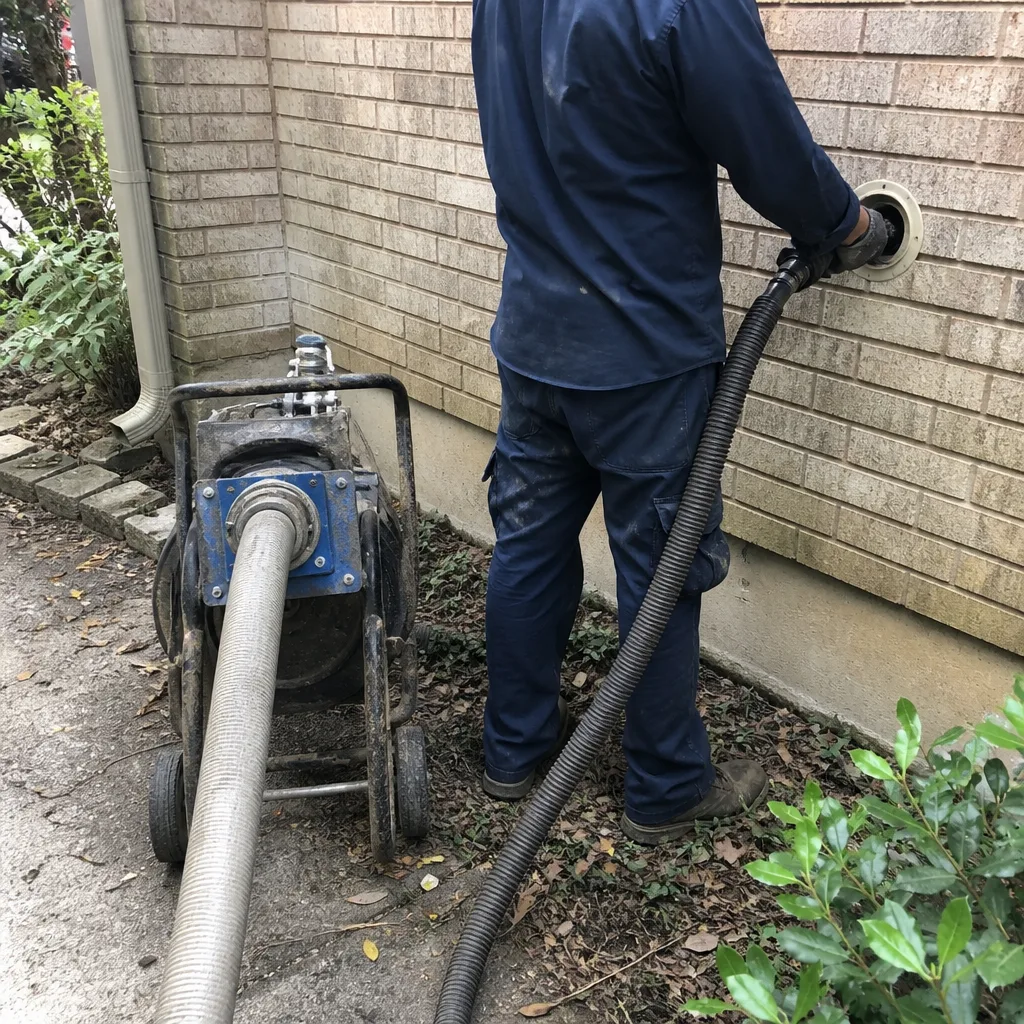 Before
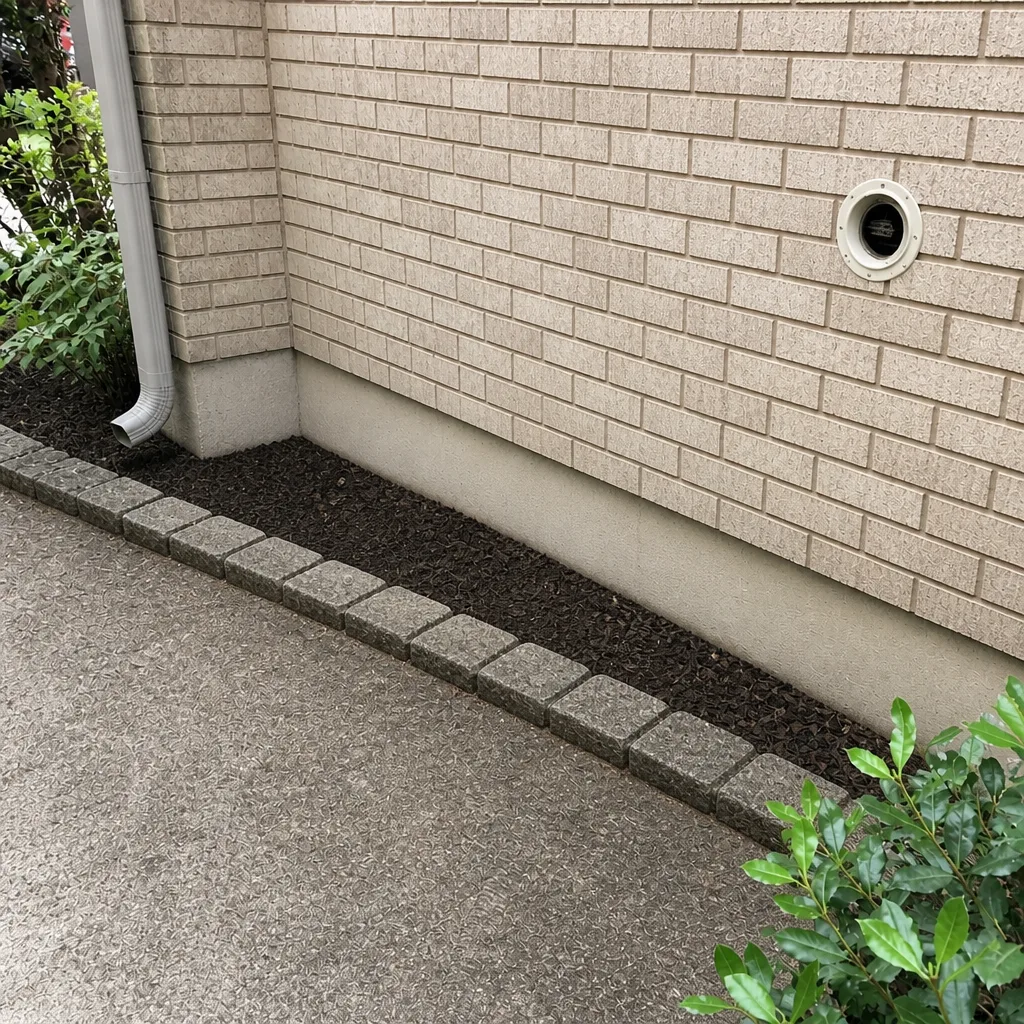 After
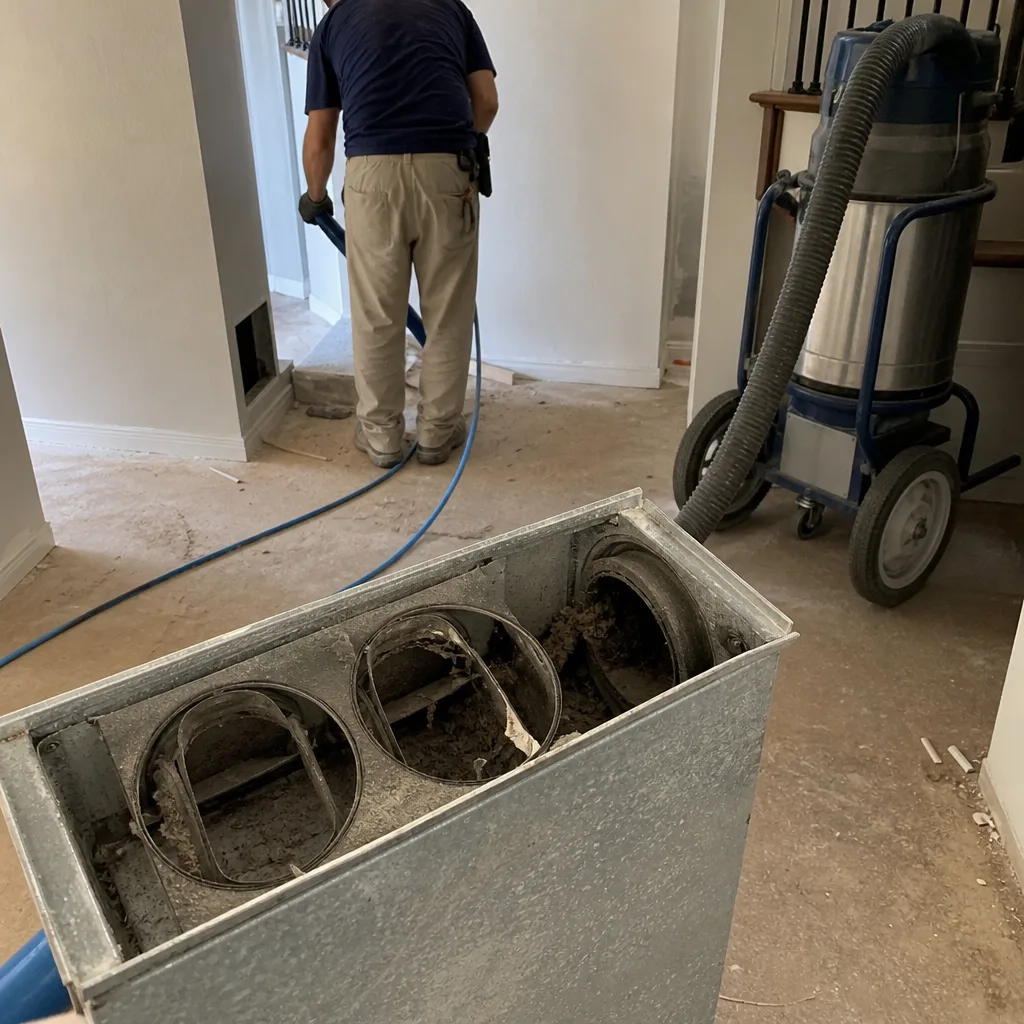 Before
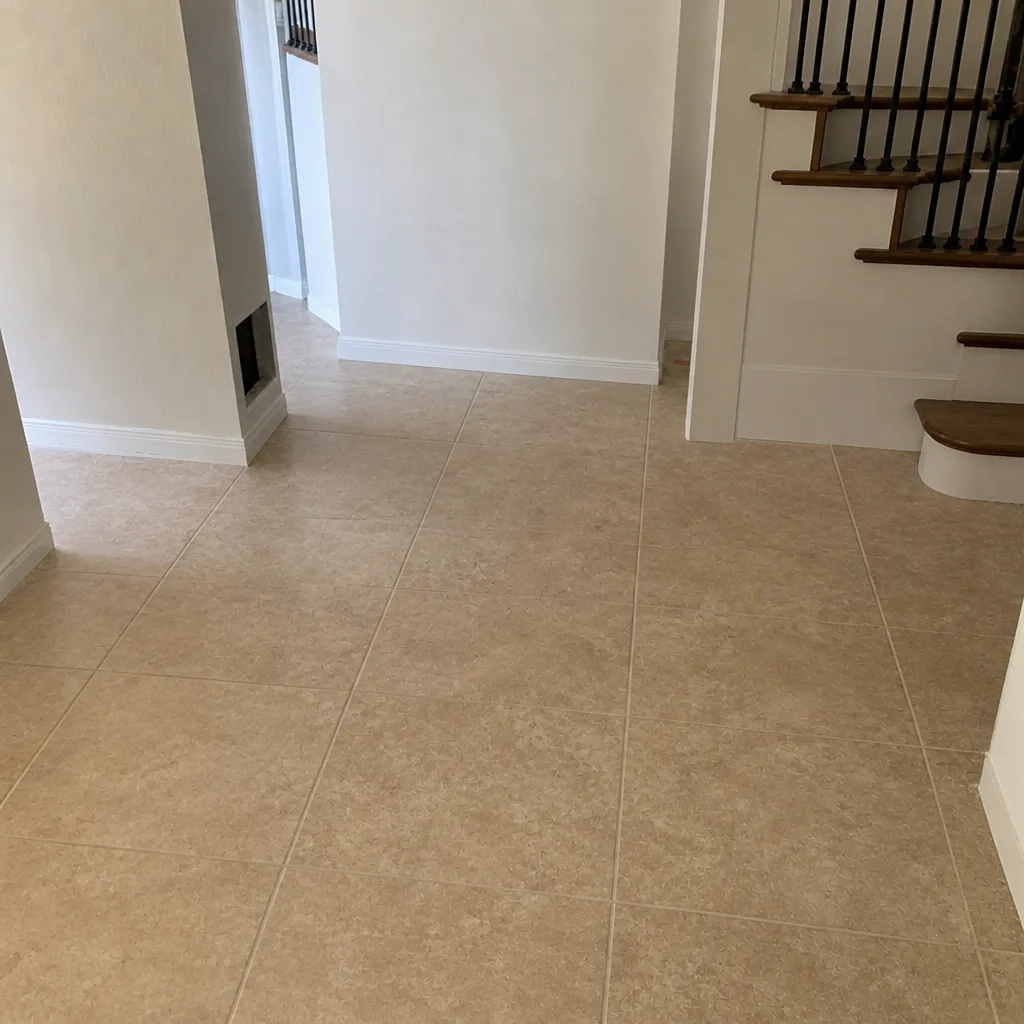 After
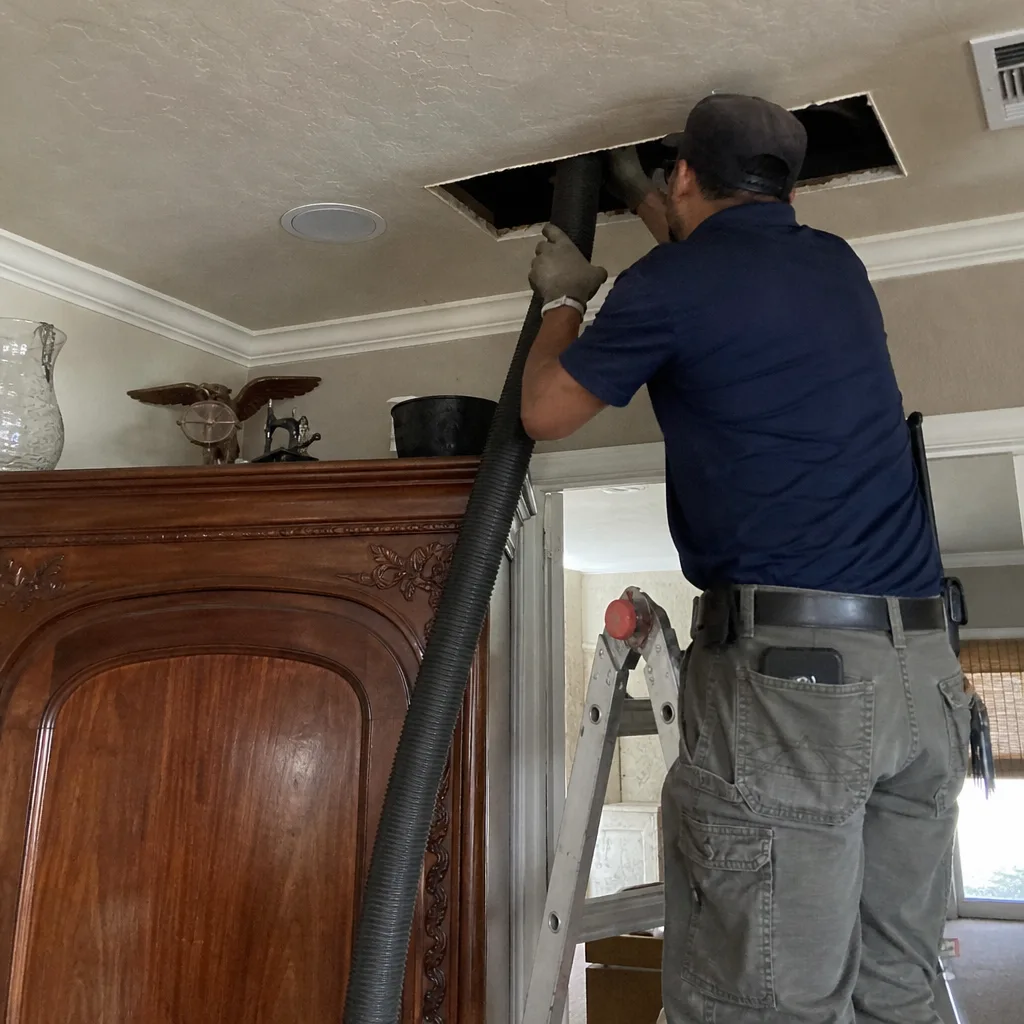 Before
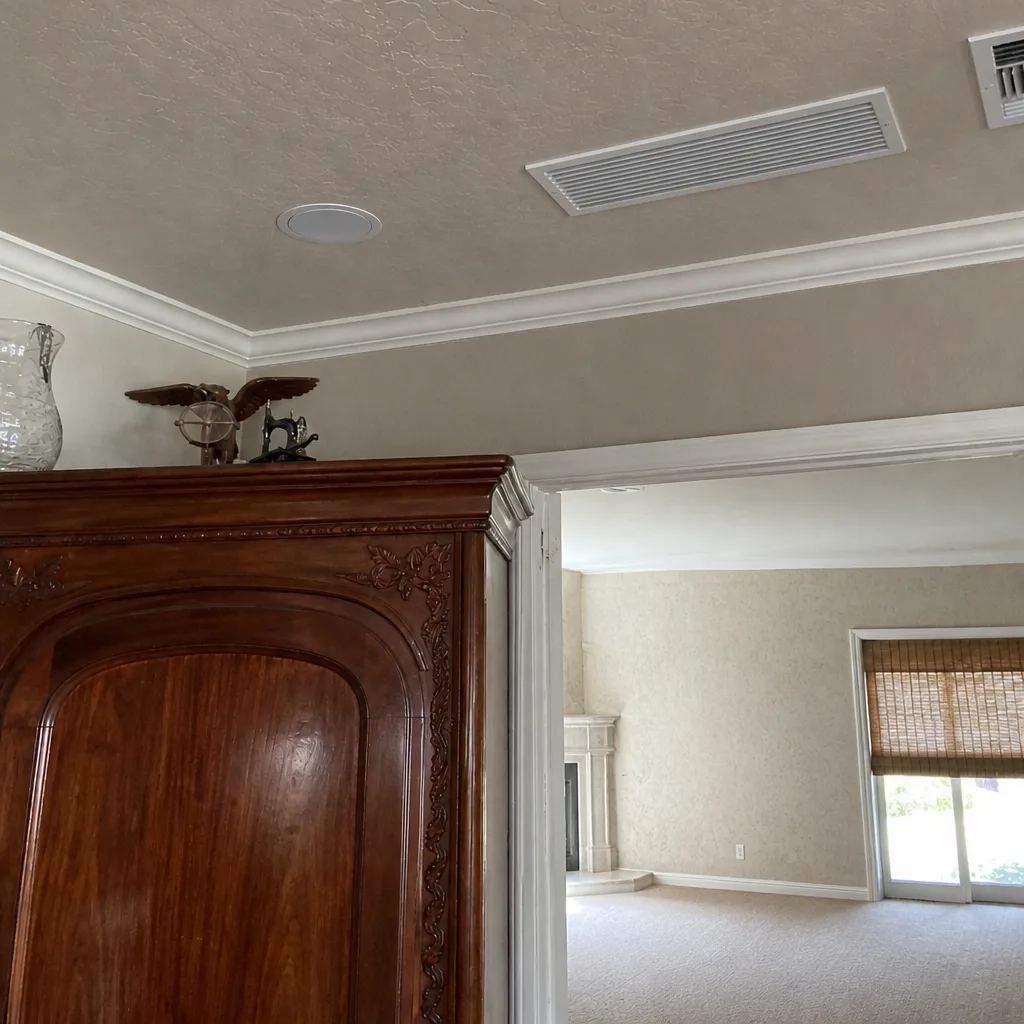 After
When to Call a Professional
Call a professional when you smell something musty from the vents that doesn’t clear after cleaning, when a renovation generated construction dust inside the system, when a new pet or allergy diagnosis has you weighing whether the ducts are contributing, or when you find a duct separation and need to know whether the repair crosses into permit territory. Call when someone has proposed mold remediation in your ductwork and you want a straight answer about what that actually requires. Call when your energy bill jumped and you suspect duct leakage somewhere in the system.
Air Duct Cleaning Spring Branch offers free estimates in Spring Branch. Call (855) 359-1727. We answer 24/7. Fast dispatch from 7am to 7pm, Sunday through Friday. See what’s actually inside your ducts, then decide.
Frequently Asked Questions
No. Routine air duct cleaning in Spring Branch does not require a permit. Permits are pulled for duct modification or installation that changes the system, and those permits go through the authority having jurisdiction for your specific address, which may be City of Houston or Harris County depending on where you are. Cleaning alone is not a permitted event. Call (855) 359-1727 for a free estimate.
Yes. Duct repair, duct modification, and coil work are HVAC activities licensed under the Texas Department of Licensing and Regulation. A company patching ductwork without a TDLR license is performing regulated work without the credential, which can create insurance coverage problems if a failure occurs. Verify the license number on the TDLR public search before work begins. Call (855) 359-1727 to discuss your repair and we’ll confirm what’s required for your job.
When the work is mold remediation. Routine sanitizing after source-removal cleaning is a separate step. When a technician identifies actual mold growth inside the duct system and the job becomes remediation, Texas Department of State Health Services mold licensing applies to the remediation contractor, and the assessment step is performed by a separate licensed assessor. Ask the number before you accept a spray treatment. Call (855) 359-1727 with questions about what your inspection found.
The cheap quotes are usually cleaning only, with nothing in scope for the repair or documentation you may end up needing. What’s not in the quote is what turns into a second invoice: duct repair that isn’t itemized, a sanitizing spray that isn’t named, or a permit that wasn’t discussed. Air Duct Cleaning Spring Branch prices per system, with one flat price agreed before work starts and before-and-after photos of your own ducts as standard. Call (855) 359-1727 for an honest whole-system estimate.
You should see before-and-after photos of your own ductwork and air handler, and a written invoice documenting what was performed with the product names used. The photos are the record that proves condition before and after, and they belong in your homeowner documentation file. Our practice is to produce them as a normal part of the visit. Call (855) 359-1727 to schedule.
Keep the written estimate, the invoice with the company name and date of service, any permit and final inspection sign-off, before-and-after photos, product documentation for any sanitizer or filtration product applied or installed, and warranty paperwork for components. Together these protect you on a Texas Seller’s Disclosure Notice and establish baseline condition for a future insurance claim. Call (855) 359-1727 for a free estimate and we’ll walk you through what you’ll get.
The Bottom Line
Duct cleaning itself is unregulated in Texas. What surrounds it is regulated, and the line between them is where the real risk lives. TDLR HVAC licensing governs duct repair, modification, and coil work. TDSHS mold licensing governs remediation, including antimicrobials applied in response to confirmed growth. Mechanical permits go through the authority having jurisdiction over your specific Spring Branch address, which may be the City of Houston or Harris County. Verify licenses on the public search. Keep documentation. Ask what’s in writing before work starts. Air Duct Cleaning Spring Branch brings Rotobrush, Nikro, and Abatement Technologies equipment to residential jobs, applies Guardsman-branded sanitizing as a named step, and handles duct repair and sealing in-house so a single visit addresses what the inspection finds. Cleaning is step one. Sealing the leaks is how you keep it clean.
Call (855) 359-1727 for a free estimate. We answer 24/7. Fast dispatch from 7am to 7pm, Sunday through Friday. One flat price per system agreed before work starts, before-and-after photos of your own ducts, and honest answers about what your job actually requires.
Written by the team at Air Duct Cleaning Spring Branch.