
Last updated November 25, 2026
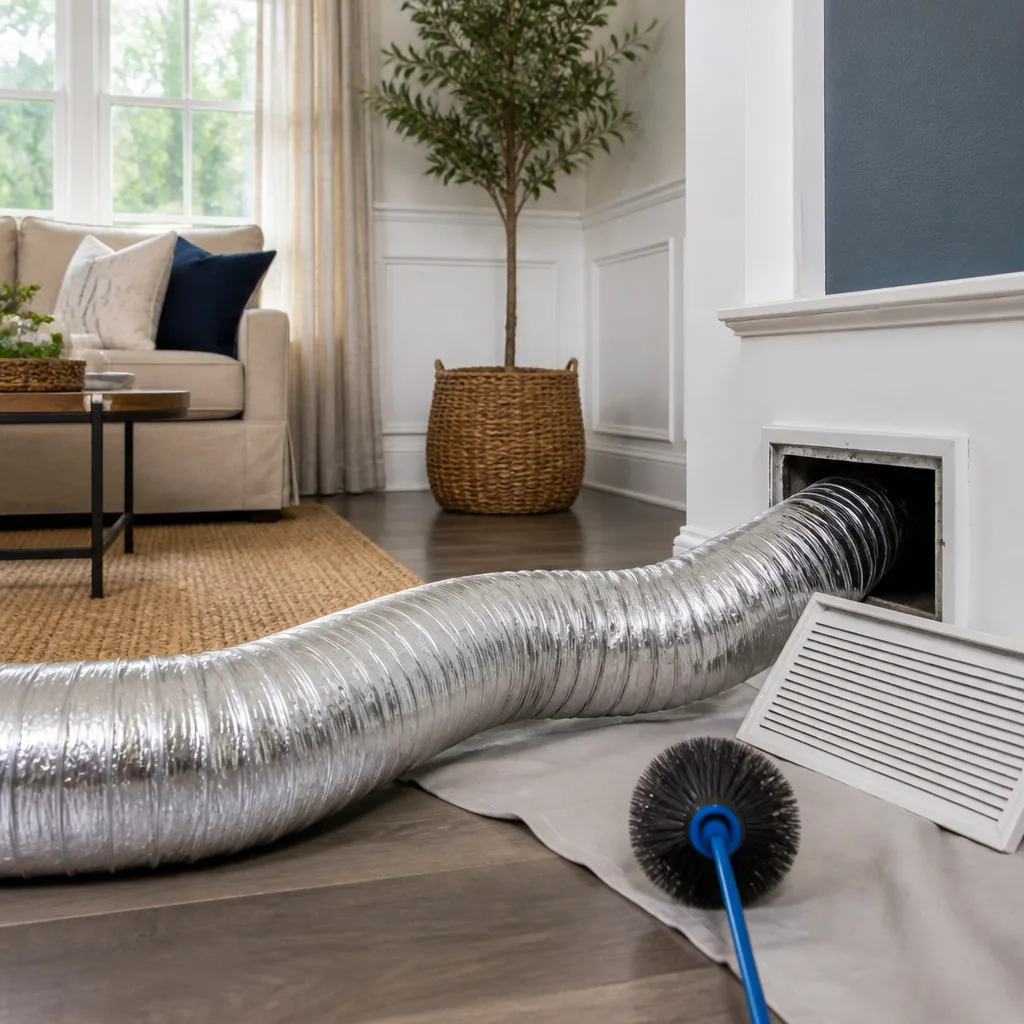 Whole-home duct cleaning
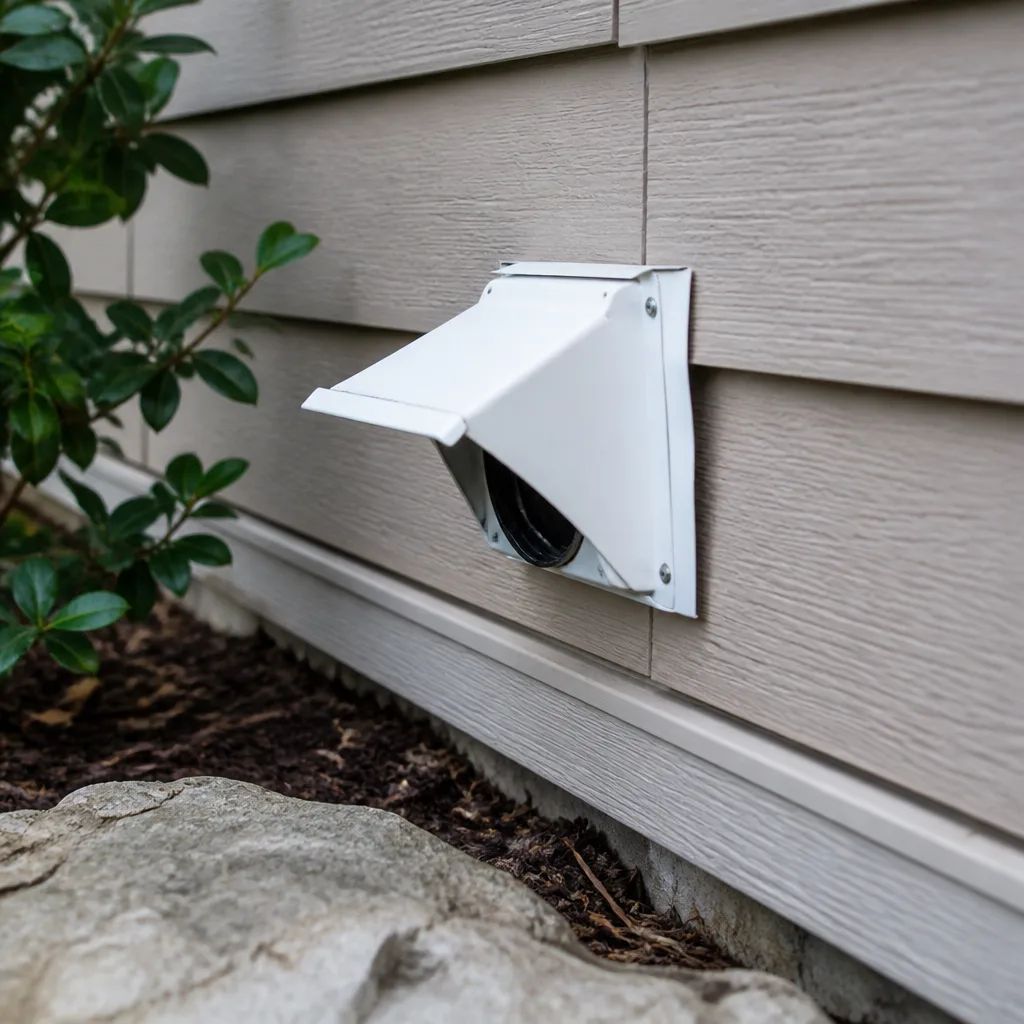 Dryer vent cleaning
 Camera inspection
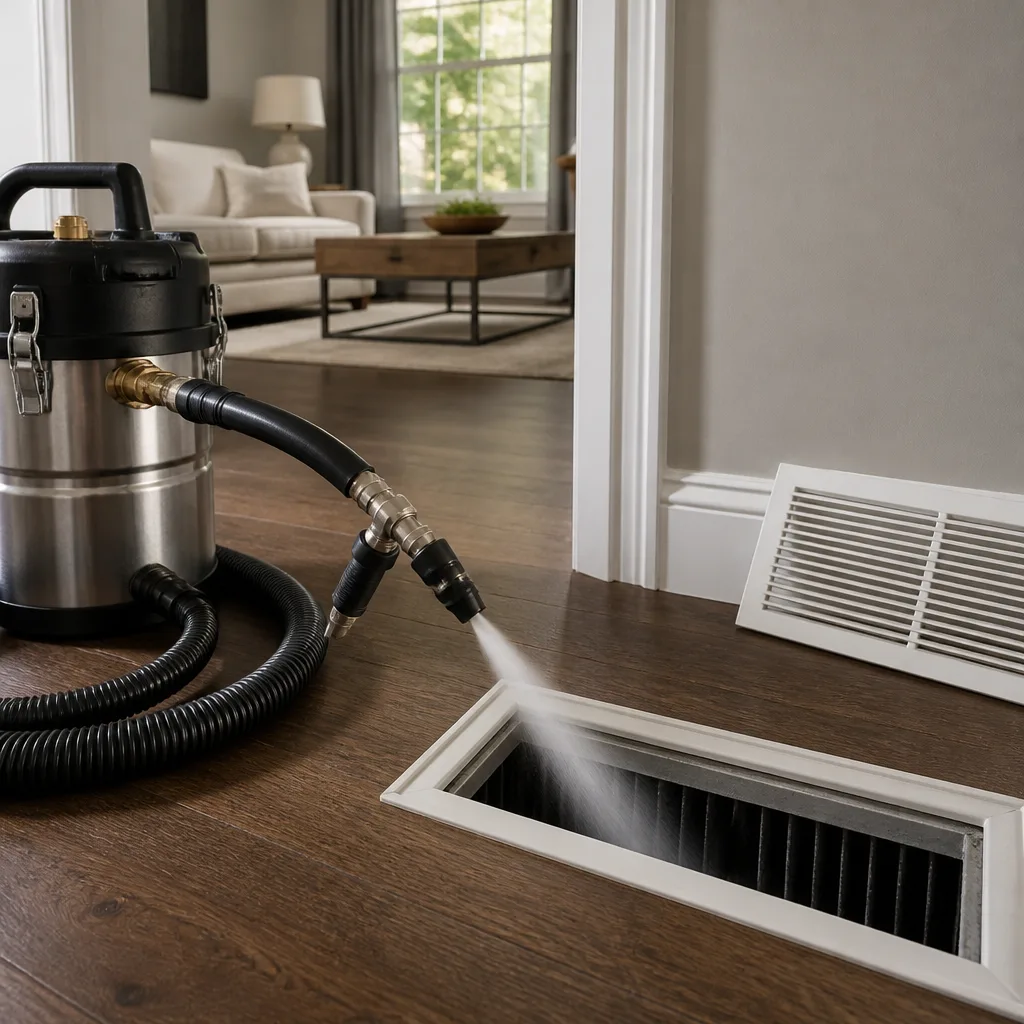 Sanitizing & deodorizing
Whole-system duct and dryer vent check with before-and-after photos - you see exactly what came out of your vents
That "$99 whole-house special" is a bait ad - the real number appears once they are in your hallway, or the "clean" is a shop-vac at the register. We photograph the inside of your ducts before and after instead.
Air Duct Cleaning Troubleshooting in Spring Branch: Common Problems and How to Fix Them
Closing a vent to “redirect” airflow does the opposite of what most homeowners expect. It raises static pressure across the whole duct system, and that extra pressure pushes more loose debris toward the air handler instead of away from your living space. We see this constantly in Spring Branch, where closing registers in unused rooms is a common habit. The same pattern shows up with thicker filters, longer fan run times, and foil tape wrapped over gaps. None of those fixes treat the actual problem. This guide walks you through how to tell a contamination issue from an airflow issue, what each odor in your ductwork tends to point to, and how to test your own registers before you call anyone. By the end you’ll know whether cleaning will solve it, or whether something structural in the ductwork is the real cause.
Quick Answer
Most air duct problems in Spring Branch fall into two buckets: contamination (debris, dust, microbial growth, or a failing liner) and airflow restriction (leaks, crushed runs, closed dampers, or undersized returns). Cleaning fixes the first. Sealing and repair fix the second. If you close vents, run a thicker filter, or tape over gaps and the symptom doesn’t improve, you’re likely dealing with the second problem, not the first, and a full-system inspection should come before any cleaning.
Styles & brands we work with
- Whole-home duct cleaning
- Dryer vent cleaning
- Camera inspection
- Sanitizing & deodorizing
Table of Contents
- How Do You Tell a Contamination Problem From an Airflow Problem?
- What Do Musty, Burnt, and Chemical Odors in Your Ducts Actually Mean?
- How Do You Use a Tissue Test to Map Restricted Duct Branches?
- Why Does DIY Foil Tape Often Make Duct Problems Worse?
- When a Cleaning Won’t Fix the Symptom
- What Spring Branch Housing Stock Does to Ductwork
- How Do You Spot Liner Degradation Before It Spreads?
- Why the Dryer Vent Belongs in Any Duct Diagnosis
How Do You Tell a Contamination Problem From an Airflow Problem?
Contamination shows up as visible dust plumes at registers, dark staining around the grille, musty odors, or allergy symptoms that get worse when the system runs. Airflow problems show up as weak or uneven airflow, rooms that never condition properly, a system that runs longer than it should, or whistling at registers. The two get confused because the symptoms overlap: both can leave a room stuffy, and both can make the whole house feel off.
The quickest divider is timing. Contamination symptoms tend to be steady and get worse slowly. Airflow symptoms track the system cycling: a room is cool when the fan is off and warm when it’s on, or a register blows hard for a few minutes and then fades. That’s pressure behavior, not dirt behavior.
Here’s how we sort them in the field:
- Contamination indicators: visible debris at supply registers, a dark ring on the ceiling around a grille, musty smell that intensifies when the fan runs, or a filter that loads up in a few weeks.
- Airflow indicators: a room that won’t hold temperature, a register with almost no flow, whistle or rattle at a grille, or high static pressure at the air handler.
- Both at once: the most common case in older Spring Branch homes. A leak pulls attic dust into the return, and the extra load also throws off pressure. Cleaning without sealing just re-introduces the same debris.
Which is why we treat the ductwork as a diagnostic system, not just a cleaning target. Before recommending a full air duct cleaning, we want to know if the ducts are simply dirty or if they’re actively drawing contamination from somewhere. If it’s the second, cleaning alone won’t hold.
What Do Musty, Burnt, and Chemical Odors in Your Ducts Actually Mean?
Each odor type points to a different source, and treating the wrong source wastes time and money. Musty means moisture and microbial growth. Burnt or hot-plastic means heat near a component or a motor running hot. Chemical or solvent smell points at off-gassing from something installed or stored near the system, or a failing liner material.
Musty or earthy odor
This is the most common complaint we get in Spring Branch. It usually traces to a damp return or a condensation issue inside the air handler cabinet, or to a saturated filter that’s been left in too long. Spring Branch’s warm, humid summers keep the system cycling in a way that lets condensation sit on cold surfaces. If a return duct runs through an unconditioned attic, that run is the first place we look. A musty smell is not the same as visible mold; it’s a moisture signal that needs a source identified before any sanitation treatment is applied.
Burnt or hot-plastic odor
This points toward the equipment, not the ductwork. A motor running hot, a failing blower, or a heat element issue upstream of the ducts. This is a stop-and-call category. Turn the system off and have it looked at before running it again. Duct cleaning won’t fix a burnt smell and shouldn’t be sold as if it will.
Chemical or solvent odor
This is the one most often misread. A sharp, plasticky smell right after a renovation or paint job is usually off-gassing being pulled through the return. A persistent chemical smell that’s been there for months with no recent work can indicate a degrading duct liner, especially on older internal-lined runs. That’s a different job entirely: the liner has to be assessed, not just cleaned. In either case, running a HEPA-equipped machine during the work with Abatement Technologies-grade filtration is the right standard, because it captures fine particulate instead of blowing it back into the room.
How Do You Use a Tissue Test to Map Restricted Duct Branches?
The tissue test tells you which branches are weak without any special tools. You hold a single-ply tissue against each supply register while the fan runs and compare how strongly it’s pulled or pushed. Registers that barely move the tissue, or move it in a different direction from the rest, are your restricted branches.
Here’s the sequence we suggest:
- Run the fan only (fan-on, no cooling or heating) so airflow is steady and constant.
- Hold a tissue against each supply register for about five seconds. Note whether it flutters, holds flat, or gets pulled tight.
- Compare across rooms. The weakest two or three registers are your restricted branches, not necessarily the dirtiest.
- Repeat at the returns to check whether the return side is pulling evenly.
- Write down the comparison. A simple list of “strong, medium, weak” per room is enough to bring to an inspection.
What the results mean: a single weak branch usually points at a collapsed or disconnected run, a closed damper, or a kinked flex duct. Several weak branches on one side of the house points at a main trunk issue or an undersized system. Everything weak points at a blower or filter problem, not the ducts. When we come out on a Spring Branch call, the tissue map gives us a starting point so we’re not guessing which run to open first.
Why Does DIY Foil Tape Often Make Duct Problems Worse?
Foil tape traps existing debris against the joint and hides the joint from view. The gap that was leaking before is still there after taping, often wider than it was, because the tape is bridging over a gap that continues to move with the system cycling. Tape also blocks the inspection that would have caught a disconnected run underneath.
The pattern we see: a homeowner notices a temperature difference in a room, wraps foil tape around a joint at the plenum, and finds the room is still cool two weeks later. What happened is that the tape sealed over the visible leak but didn’t address the pressure imbalance that’s pulling air through a different gap the tape can’t reach. Worse, the tape bridges a joint that has already lost its mechanical connection, so the joint keeps separating under load and eventually the tape fails too.
Sealing is still the right fix. It just isn’t a tape fix. Proper sealing requires a mastic or a code-approved sealant applied to a joint that’s first re-connected mechanically, and the seal has to be inspected and documented. That’s why we offer HVAC cleaning and duct repair and sealing as one scope. When we find a breach during a cleaning, we can fix it on the same visit rather than scheduling a second contractor. Cleaning is step one. Sealing the leaks is how you keep it clean.
When a Cleaning Won’t Fix the Symptom
A cleaning won’t fix a symptom when the root cause is geometry or liner failure rather than accumulated debris. If a run is crushed, kinked, or sized too small for the room it serves, cleaning it will change nothing about the airflow. If an internal liner has delaminated, cleaning it can actually make things worse by disturbing the failing material.
Three cases where we steer homeowners away from a cleaning-first approach:
- Crushed or kinked flex duct. Common in attic runs where a flexible duct has been stepped on or pinched against a truss. The airflow restriction is physical. Cleaning won’t reopen it.
- Disconnected or separated runs. A run that’s pulled loose at a boot or a takeoff is dumping conditioned air into the attic. Cleaning the duct just means cleaning a duct that isn’t delivering air where it should.
- Failing internal liner. Older duct systems with an internal acoustic or thermal liner can delaminate over time, especially in high-humidity attic environments. Once the liner is shedding, cleaning it can spread the shedding further downstream, and the fix is replacement of the affected section, not another cleaning.
In all three cases, an honest inspection first is the right move. Duct repair and sealing is a service we run in-house because so many Spring Branch homes need it alongside the cleaning, not instead of it.
What Spring Branch Housing Stock Does to Ductwork
Spring Branch covers a wide range of build years, and that range is why no single diagnosis fits every home here. Older sections of Spring Branch have a lot of homes built in the 1960s and 1970s with original ductwork, often rigid metal runs in the slab or a mix of metal and short flex runs in the attic. Those systems are more likely to show seam separation, internal liner problems, and small return-side leaks that pull attic dust into the house. Homes built more recently are more likely to have longer flex runs in the attic and tighter construction. Those tend to show sharp static pressure issues and single-branch restrictions rather than debris problems throughout the system.
The other local variable is the attic. Spring Branch attics run hot for most of the year, and any duct run through that space loses a little efficiency to heat gain. When we run a full-system assessment on a Spring Branch home, we look at the return first, because a return that draws from the attic space is the single biggest contamination source we encounter. Fixing the return side often does more for indoor air quality than cleaning the supply side.
The best starting point for any Spring Branch homeowner is a proper air duct cleaning in Spring Branch assessment rather than a guess about which room is the problem. We look at what’s actually inside the ducts, then decide what to recommend.
How Do You Spot Liner Degradation Before It Spreads?
Liner degradation shows up as visible flaking at the duct interior, a soft or powdery texture on the duct wall, or tiny dark particles showing up on registers and filter frames. If you’re seeing speckled debris on a return grille that doesn’t match the usual dust pattern, suspect the liner.
Internal-lined duct systems use a thin acoustic or thermal layer bonded to the inside of the metal. That layer is bonded, not permanent, and it ages faster in humid attics. When it starts to release, the symptoms are:
- Fine dark flakes on register faces or in the filter
- A musty or chemical smell that returns within weeks of a cleaning
- Visible flaking inside a supply boot when you look with a flashlight
- An audible change in airflow noise at a specific register
If any of those show up, don’t run a rotary brush through the affected run without an inspection first. A rotary brush system like the ones we carry, such as Rotobrush, is the right tool for standard duct cleaning but the wrong tool for a duct whose liner is already failing. The brush will lift more liner. The correct next step is to have the run assessed and repaired or replaced. Our technicians have up to 14 years of experience identifying this pattern, and it’s one of the reasons we don’t quote a cleaning without looking first.
Why the Dryer Vent Belongs in Any Duct Diagnosis
The dryer vent is a separate air pathway from the HVAC ductwork, but it shares the same failure modes and the same safety stakes. A dryer vent that’s clogged with lint restricts airflow, causes the dryer to run hot and long, and is a genuine fire-safety issue. It should be checked any time a homeowner is thinking about ductwork, because the same house conditions that load up HVAC ducts (long runs, vertical stretches, warm attic space) also load up a dryer vent faster.
Signs your dryer vent needs attention: the dryer takes two cycles to dry a load, the outside vent flap barely moves, lint is visible around the dryer connection, or the laundry room gets noticeably more humid than the rest of the house. None of those are cosmetic. Dryer vent cleaning is one visit and dramatically reduces the risk.
We run it as part of the full air-pathway scope, because when we’re in a Spring Branch home for ducts, the dryer line is one more thing worth checking while we’re there.
Common Mistakes to Avoid
- Closing vents to “balance” the system. This raises static pressure across the entire ductwork and pushes more debris into the air handler. It’s the single most common mistake we see in Spring Branch.
- Buying a thicker MERV filter without checking your blower. A higher-MERV filter that’s too restrictive for your blower causes the same pressure problem as closing vents. Clean the filter more often; don’t just upgrade it blindly.
- Wrapping foil tape over joint gaps. It traps debris, hides the leak from inspection, and bridges a mechanical connection that’s already failing.
- Running the fan longer to “flush” the system. More fan hours mean more debris pulled through a dirty filter and more condensation on cold surfaces. It doesn’t clean anything.
- Skipping the return side of the system. The returns often carry more contamination than the supplies, especially when a return draws from the attic space in a Spring Branch home.
- Assuming a musty smell means you need a spray treatment. A musty smell is a moisture signal. Find the source first, then sanitize the source-free ductwork. We use Guardsman-branded sanitation as a named product, applied after the clean, not as a cover-up.
- Treating the dryer vent as a separate, later problem. A clogged dryer vent is a safety issue, not a tidiness issue. Check it whenever you’re thinking about the rest of the air pathway.
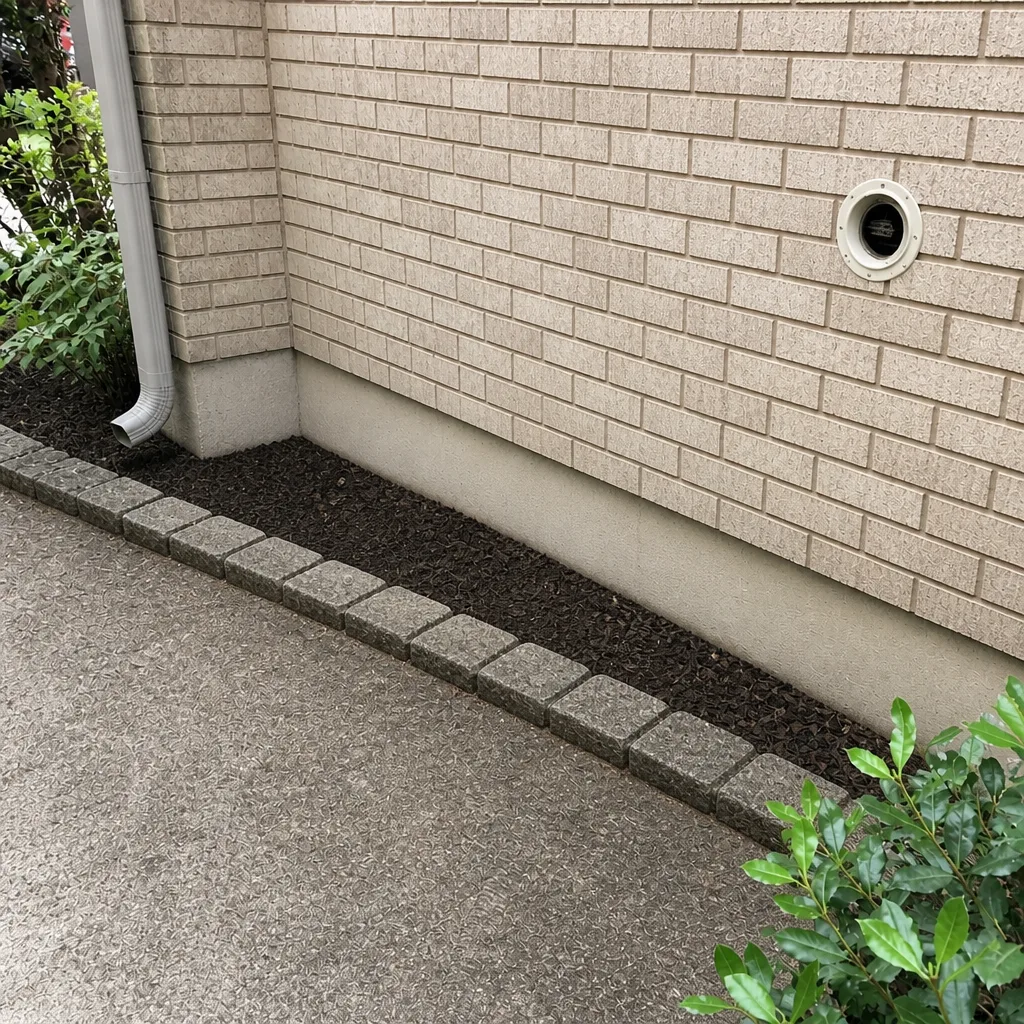
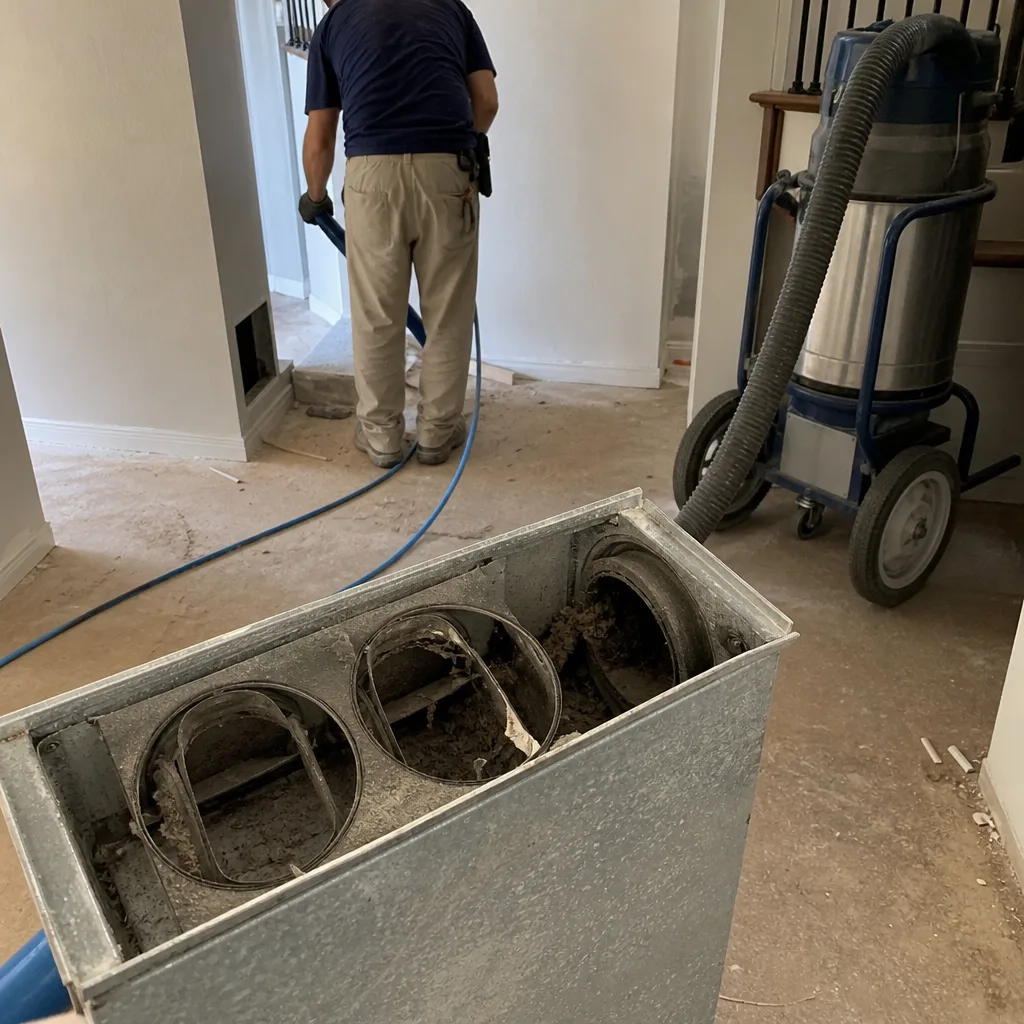
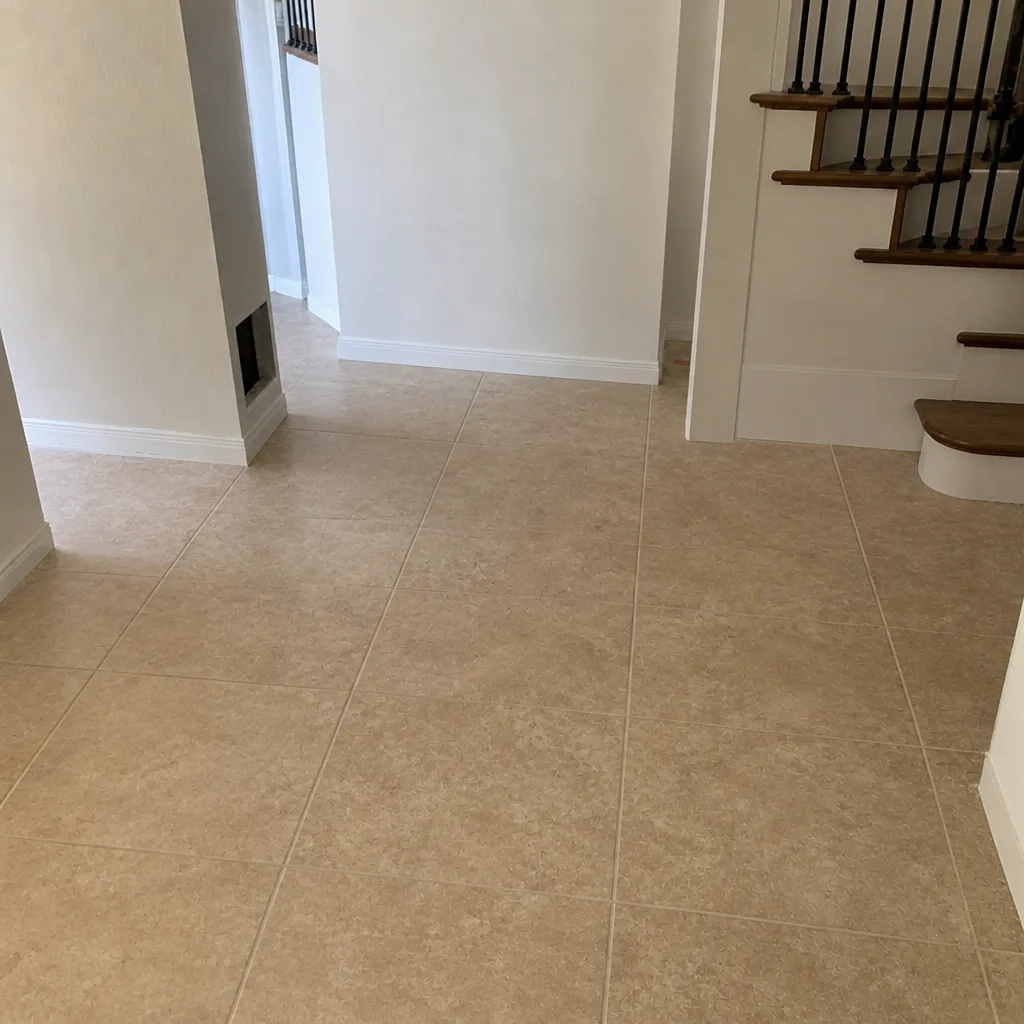
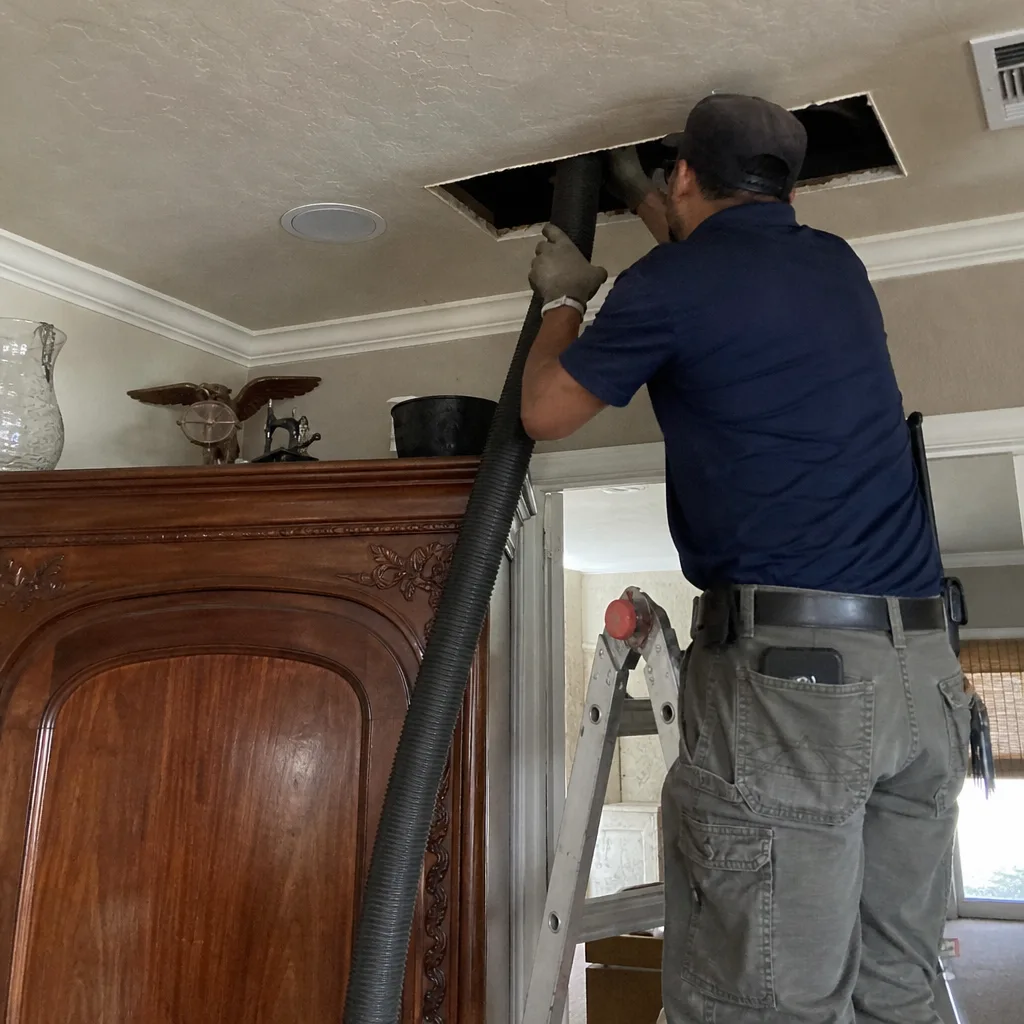
See the difference
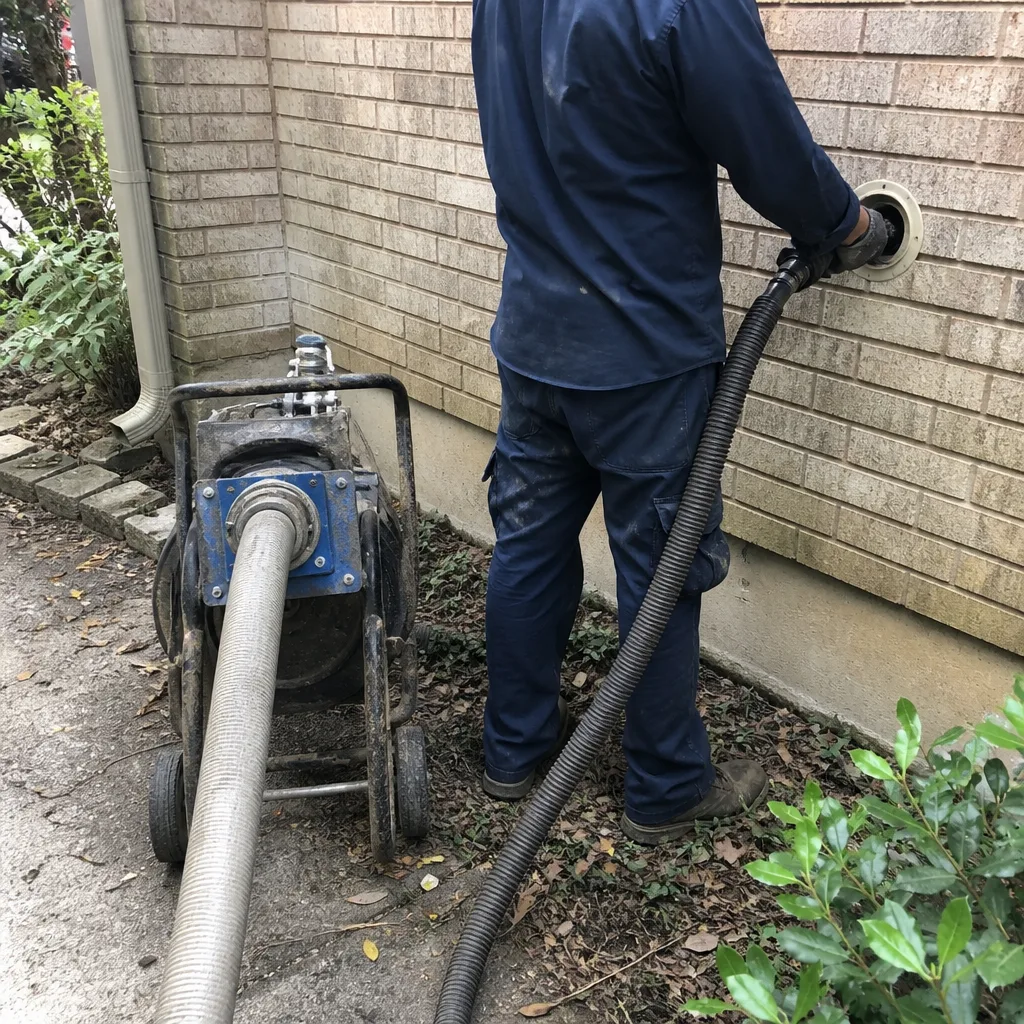 Before
 After
 Before
 After
 Before
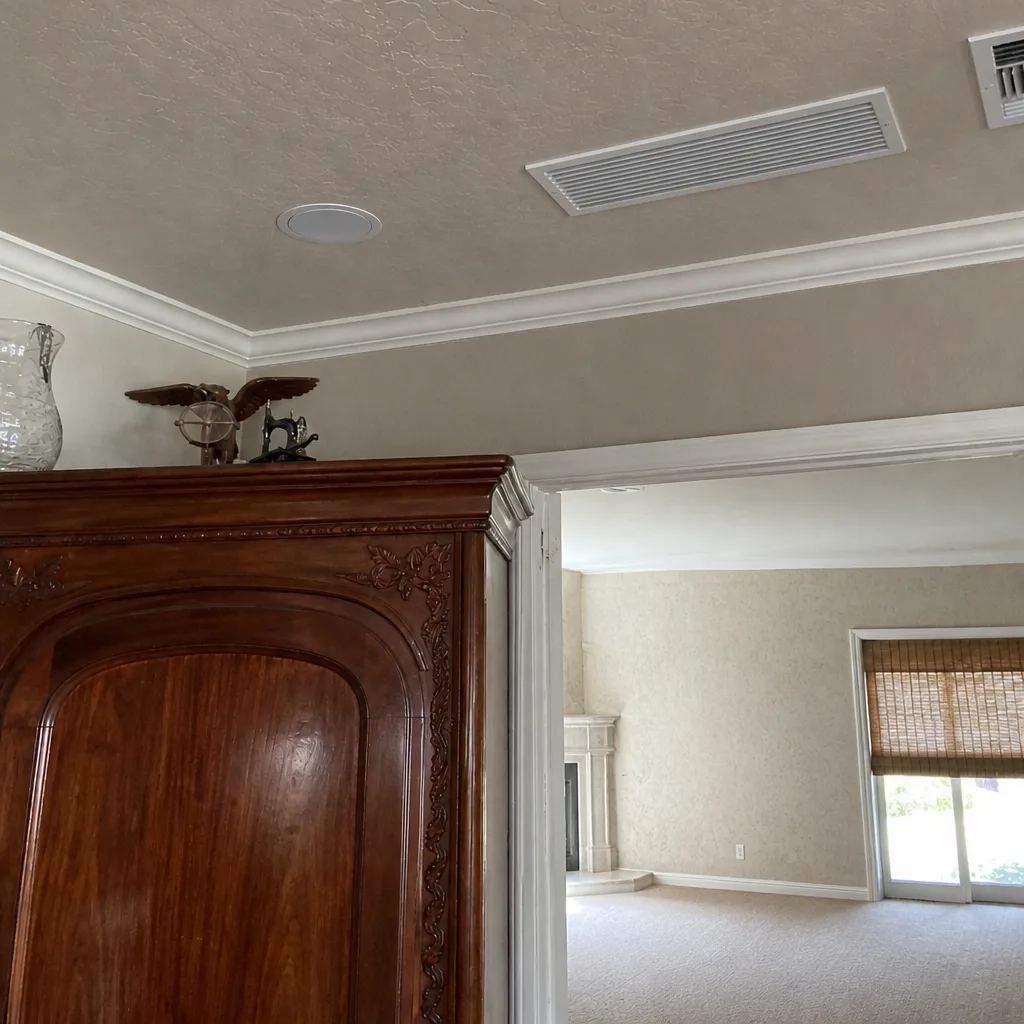 After
When to Call a Professional
Call a professional when any of these show up: visible debris or dark staining at your registers, a musty smell you can’t trace, a burnt or hot smell (turn the system off first), a room that won’t hold temperature no matter what you do, or a dryer that takes more than one cycle to get a load dry. Also call if you’ve just finished a renovation, added a pet, or moved into a home in Spring Branch where the duct history is unknown and the previous owner didn’t keep records. Those are the triggering events where a full-system assessment earns its keep.
The one case that always needs a pro: a suspected failing liner or a crushed run. Cleaning that with a brush without checking the liner first can turn a repairable problem into a replacement. Air Duct Cleaning Spring Branch offers free estimates in Spring Branch – call (855) 359-1727. We answer 24/7, with fast dispatch from 7am to 7pm, Sunday through Friday.
Frequently Asked Questions
Air duct cleaning in Spring Branch is priced per system by a written estimate, not per vent, and the estimate is free. Most jobs fall into a range based on the number of runs, the condition of the returns, and whether a duct repair or sealing scope is included. We quote the whole job in writing before any work starts, so the final invoice matches the estimate. Call (855) 359-1727 for an exact quote – estimates are free.
Cheap quotes usually price per vent and assume a standard clean without an inspection. That looks cheaper on paper, but it often becomes a second larger invoice once the technician is on site and finds a disconnected run or failing liner. One flat price per system, agreed in writing before work starts, is what protects you from that pattern. Call (855) 359-1727 and we’ll give you a whole-system estimate.
The clearest answer is before-and-after photos of your own ducts, taken during the job, plus a full-system scope that includes the returns. We use Rotobrush rotary brush systems and Abatement Technologies HEPA machines on site, and we document what the machine pulls out. If a company can’t show you photos of your ducts, ask why. Call (855) 359-1727 to book an assessment.
There’s no universal interval. A home with pets, recent renovations, allergy sufferers, or a return that draws from the attic will need attention more often than a low-occupancy home with clean filters changed on schedule. The trigger is condition, not a calendar. If you’re seeing debris at registers or smelling something musty, that’s the call to make. Call (855) 359-1727 for a free assessment.
Not if the cause is airflow restriction. A room that never holds temperature is usually a crushed run, a closed damper, or a disconnected boot, and cleaning won’t reopen a restricted duct. That’s why we offer duct repair and sealing in-house: the inspection tells us which problem you actually have. Call (855) 359-1727 and we’ll tell you what we find.
Yes. Dryer vent cleaning is a separate service from HVAC ductwork, and we run it as part of the full air-pathway scope. If we’re already in your Spring Branch home for ducts, the dryer line is one more pathway worth checking while we’re there. Call (855) 359-1727 to include it in your estimate.
The Bottom Line
Most duct problems in Spring Branch trace back to one of two causes: contamination or airflow restriction. Cleaning fixes contamination. Sealing and repair fix airflow. Closing vents, running the fan longer, and taping over joints don’t fix either; they raise static pressure and make the underlying issue worse. Use the tissue test to map weak registers, pay attention to what an odor is telling you, and get an inspection before you commit to a cleaning. When a cleaning is the right call, we bring commercial-grade equipment (Rotobrush, Nikro, Abatement Technologies) to a residential job and document what we find. If a repair is needed, we handle that the same visit. Honeywell and Aprilaire filtration is available where it makes sense for your home. See what’s actually inside your ducts – then decide.
Call (855) 359-1727 for a free estimate. We answer 24/7. Fast dispatch from 7am to 7pm, Sunday through Friday.
Written by the team at Air Duct Cleaning Spring Branch.